The modern wearables landscape finds itself at a peculiar cultural and technological crossroads. Following years of mainstream fascination with smart frames equipped with forward-facing cameras—popularized heavily by Meta and its partners—public sentiment has increasingly shifted. Devices capable of perpetual environmental capture and subtle life-logging have drawn intense scrutiny, with critics frequently labeling them "pervert glasses" due to pervasive privacy concerns. Into this tense climate steps the Even Realities Even G2 smart display glasses, marketed as a privacy-conscious antidote for consumers seeking digital integration without the baggage of lenses that record their surroundings.
Priced at $599 / £599 / AU$649, with prescription lenses demanding an additional investment ranging from $150 to $350, the Even Realities G2 positions itself firmly in the premium tier of minimalist eyewear. Rather than offering immersive, full-color augmented reality (AR), the hardware relies on binocular, monochromatic waveguide displays that project eye-level notifications, translations, and notes directly into the user’s field of vision. While the device successfully avoids the controversy surrounding cameras, its execution, software limitations, and high price tag raise fundamental questions about the viability of half-way smart eyewear in an increasingly sophisticated mobile ecosystem.
Design, Hardware Engineering, and Aesthetics
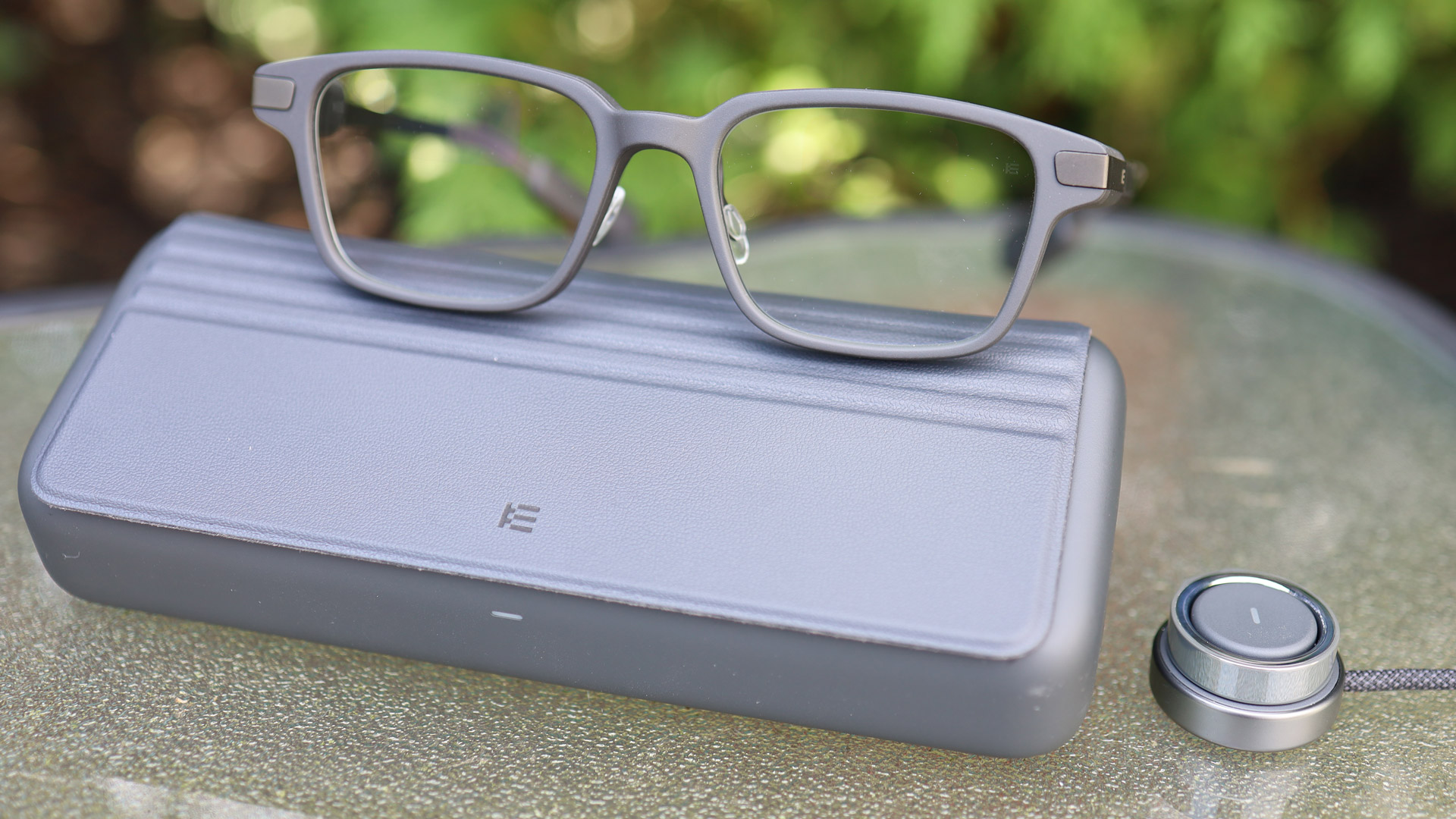
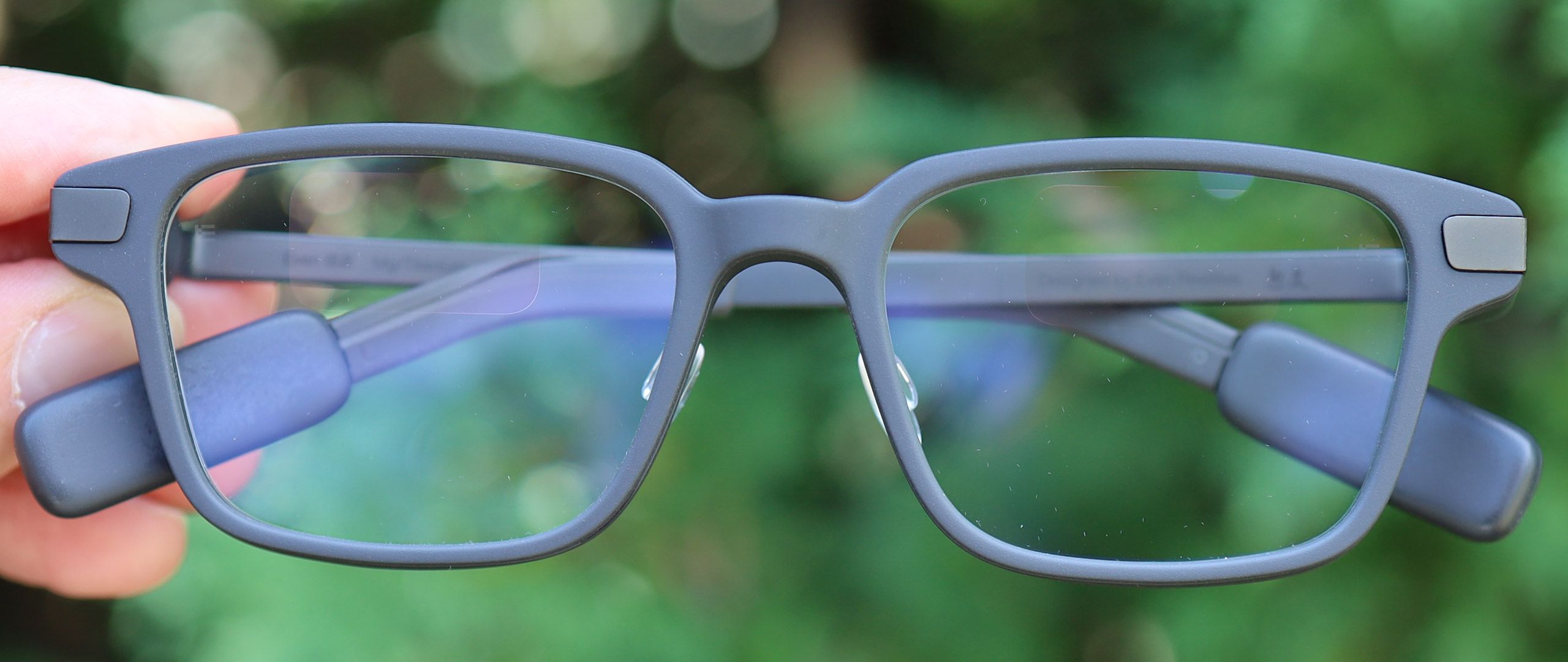
From an aesthetic standpoint, the Even Realities G2 achieves what few competitors have managed: it looks and feels remarkably like a pair of conventional prescription glasses. Crafted from a blend of gray titanium and magnesium, the frames are thin, remarkably light, and devoid of the bulky, futuristic heft that typically plagues extended-reality (XR) devices. The structural engineering successfully conceals necessary electronics, including the batteries and touch sensors, within the pill-shaped nodules at the termination of each stem.
Despite the sleek exterior, compromises were required to achieve this slim profile. The front surfaces of the lenses are notably flat and reflective to accommodate the internal waveguide optics, a visual quirk that immediately distinguishes them from standard curved eyewear to observant onlookers. Furthermore, the G2 completely omits onboard speakers, relying exclusively on a four-microphone array to capture voice commands. Because the device cannot generate audio output, all interactions with the proprietary "Even AI" assistant are rendered visually as text across the display screens.
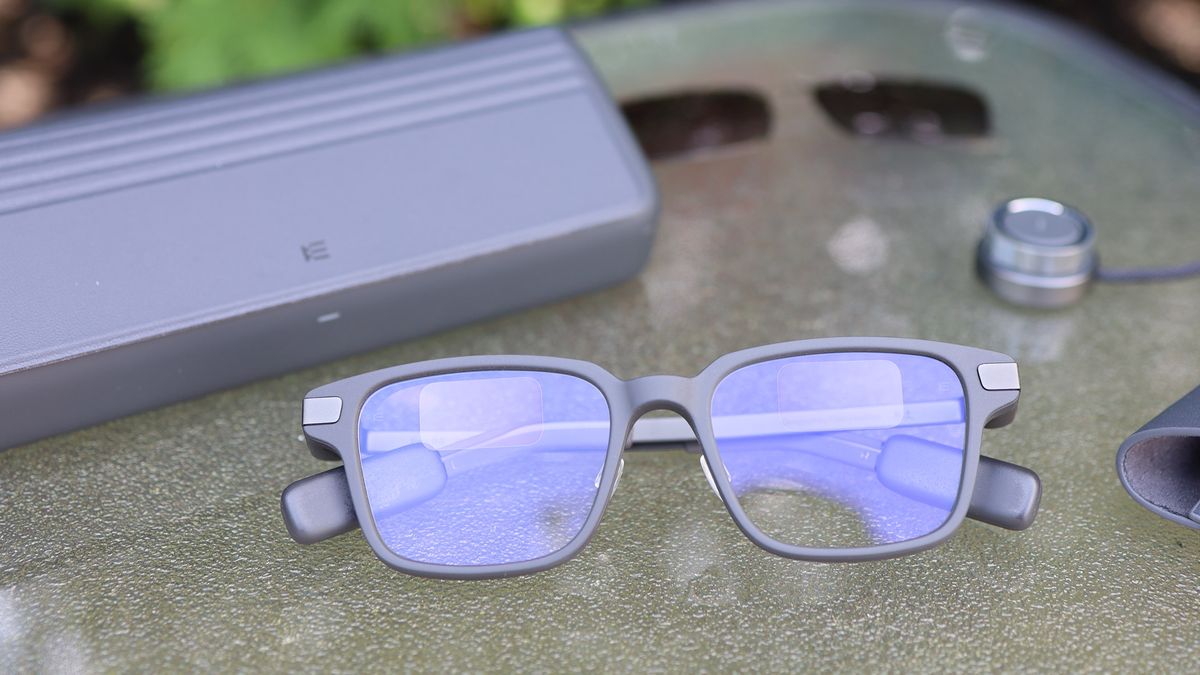
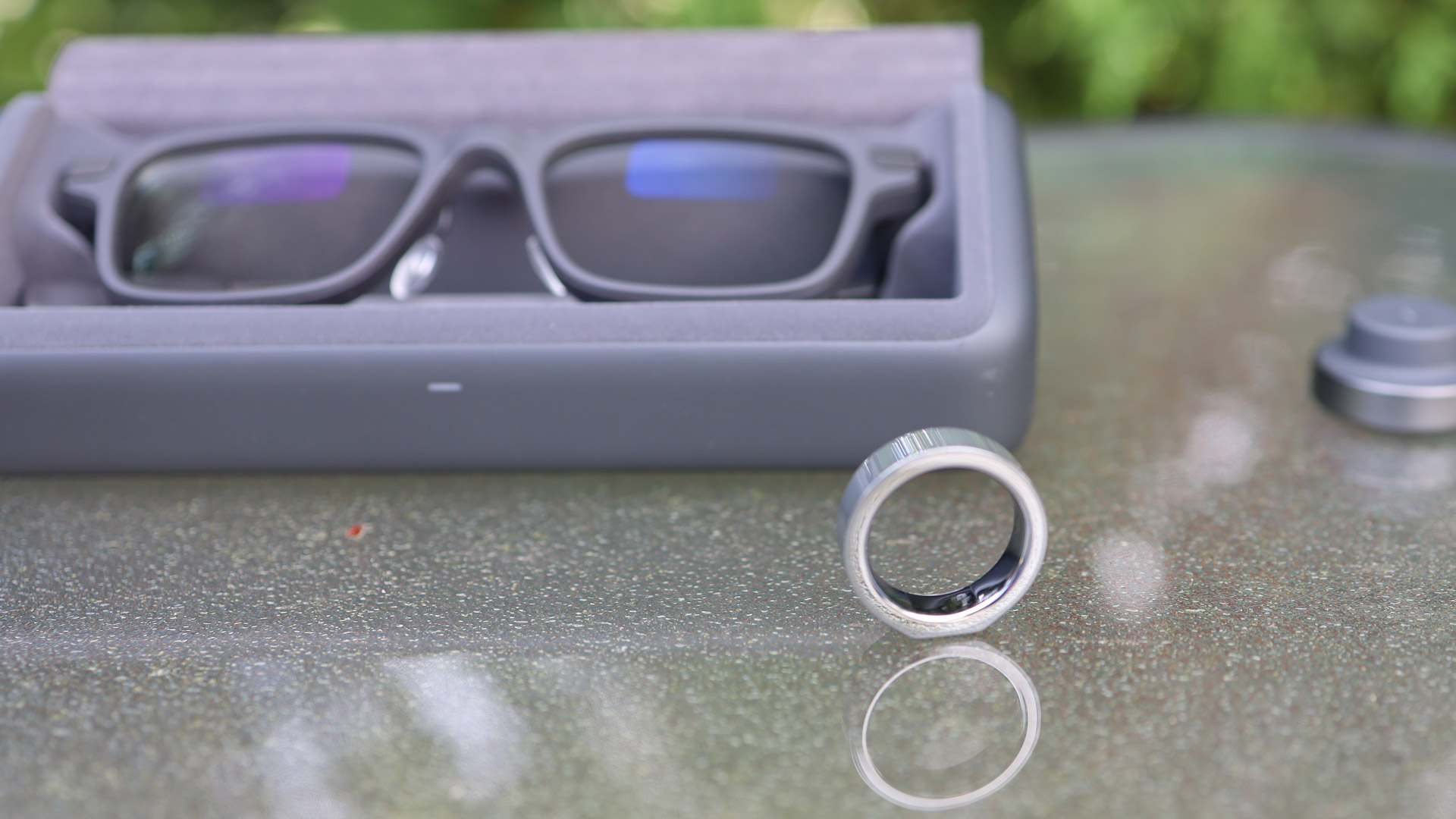
Controlling the device presents a mixed user experience. Users can navigate menus using touch gestures along the stems behind their ears, though this method is frequently finicky and cumbersome in public settings. To alleviate this friction, Even Realities offers the optional $249 Even R1 smart ring. Worn on the index finger, the ring allows users to execute taps, long presses, and swipes via thumb movements while simultaneously tracking physiological metrics such as temperature, heart rate, and step counts.
Display Performance and Visual Fidelity

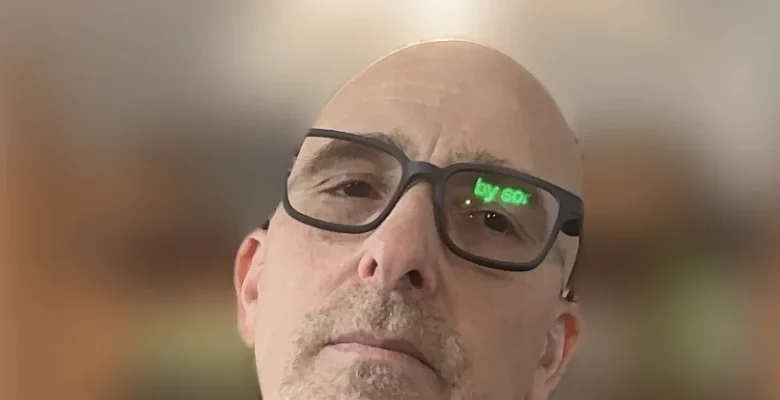
The cornerstone of the Even Realities G2 is its optical projection system, which utilizes embedded micro-LEDs paired with waveguide technology to cast a 640 x 350 day-glo green monochrome image across both eyes. Unlike bulky VR headsets or heavily tinted AR visors, the G2’s displays are nearly imperceptible to outside observers, ensuring total user discretion.
Once calibrated with prescription lenses, the floating image effect closely mimics a 15-inch monochromatic monitor suspended slightly above the natural eyeline. This placement allows users to glance upward to read notifications or downward to maintain uninterrupted eye contact with the physical world. Pushing 1,200 nits of peak brightness, the display remains crisp and legible even under direct daylight conditions. While the resolution numbers appear modest on paper, the CRT-grade imagery is more than adequate for rendering glanceable text, schedules, and directional prompts.
Software Ecosystem and Core Features
Operating on a relatively streamlined software architecture, the G2 relies heavily on the companion iPhone application to manage its primary functions. A double-tap on the temple sensor or the R1 ring summons the Dashboard—a retro-styled interface presenting the time, date, local temperature, unread notification counts, and an integrated news feed.
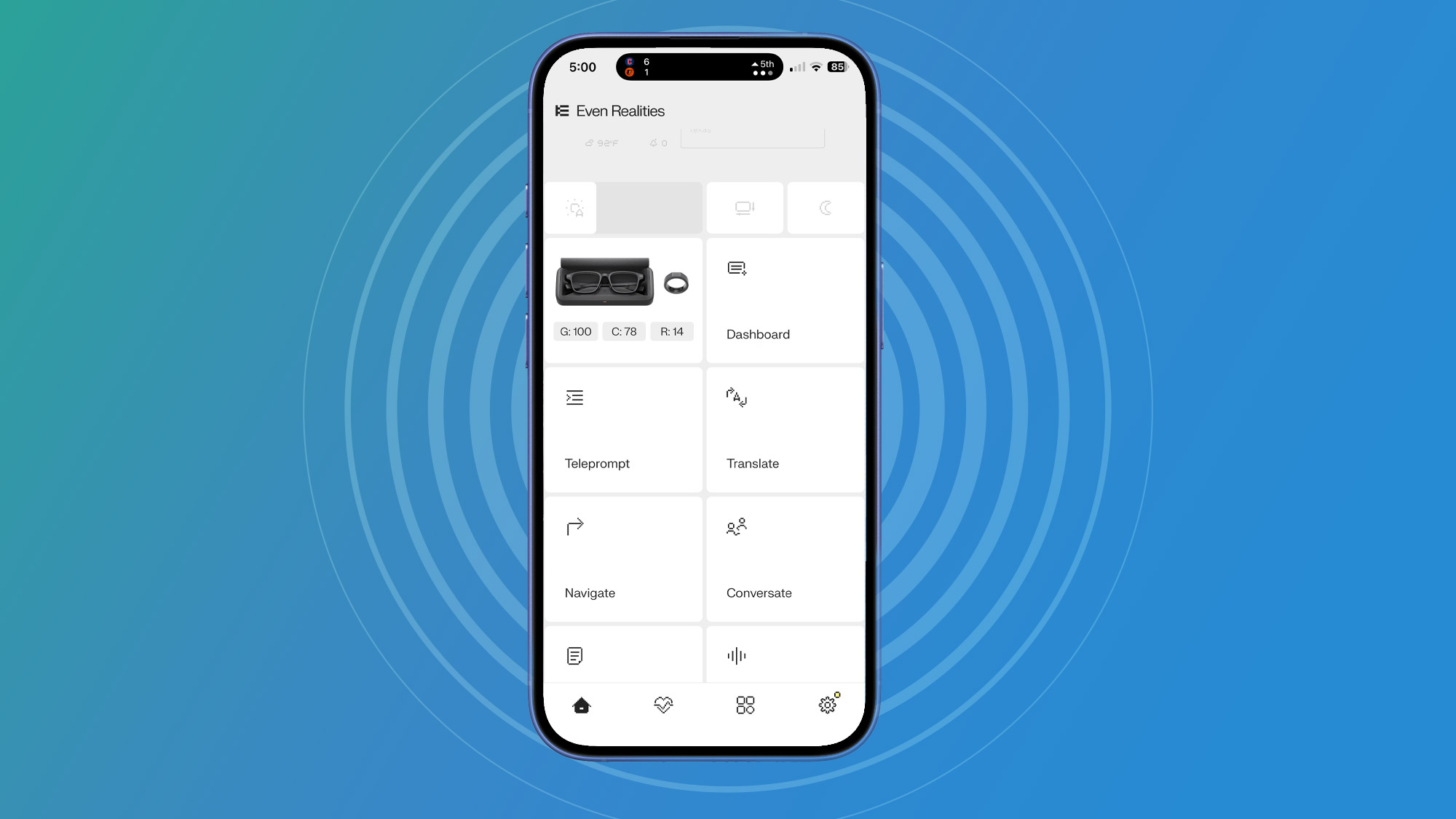
The software suite centers around several distinct productivity tools:
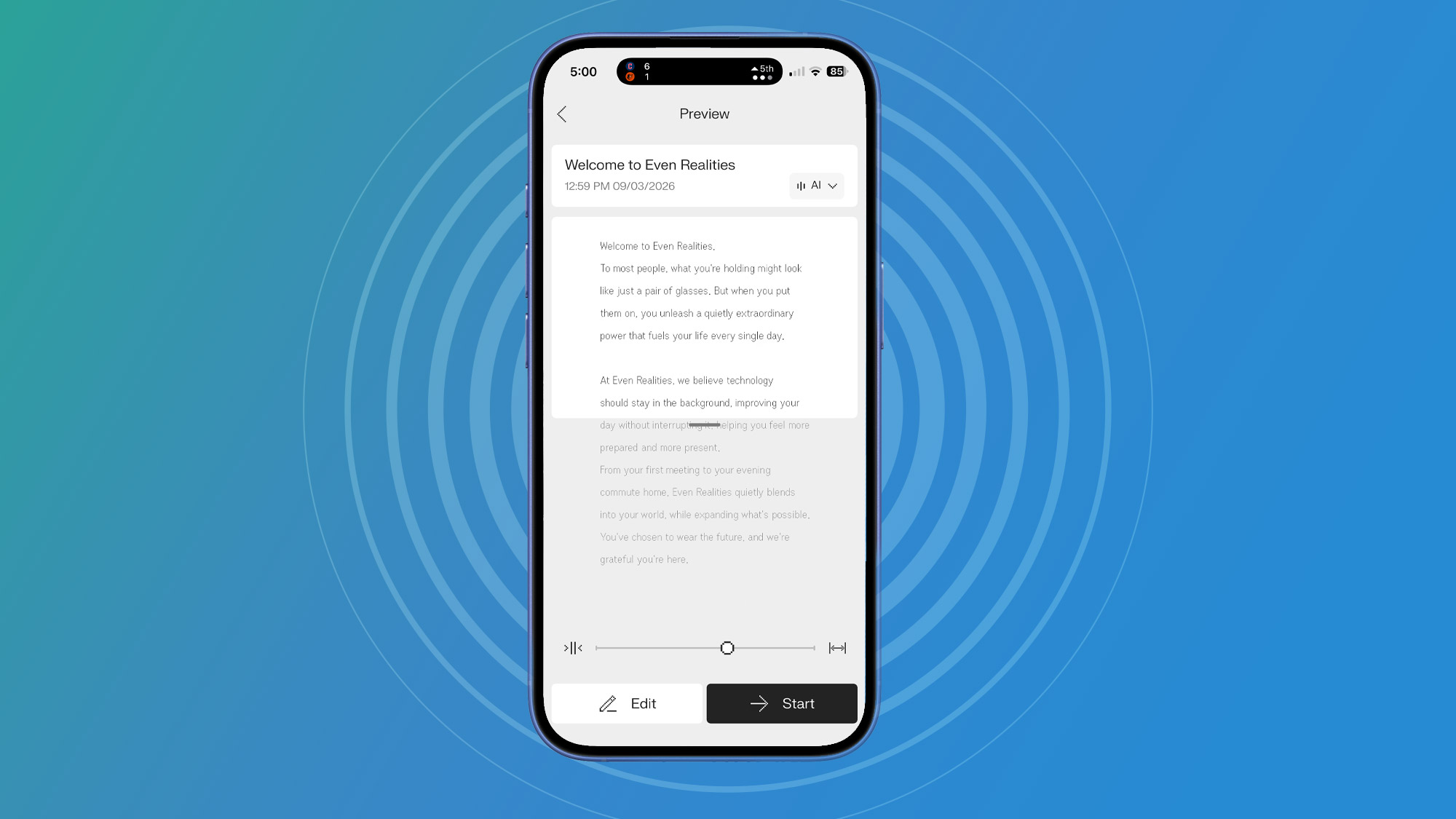
- Teleprompt: Arguably the device’s most compelling feature, the voice-activated teleprompter projects imported documents (.txt, .docx, and .pdf) directly into the user’s view. Unlike traditional prompters that rely on manual scrolling speeds, the G2 utilizes onboard voice recognition to advance the text dynamically as the user speaks. However, practical application reveals an ergonomic hurdle: users must constantly tilt their gaze slightly upward, which can alter natural posture during public speaking engagements.
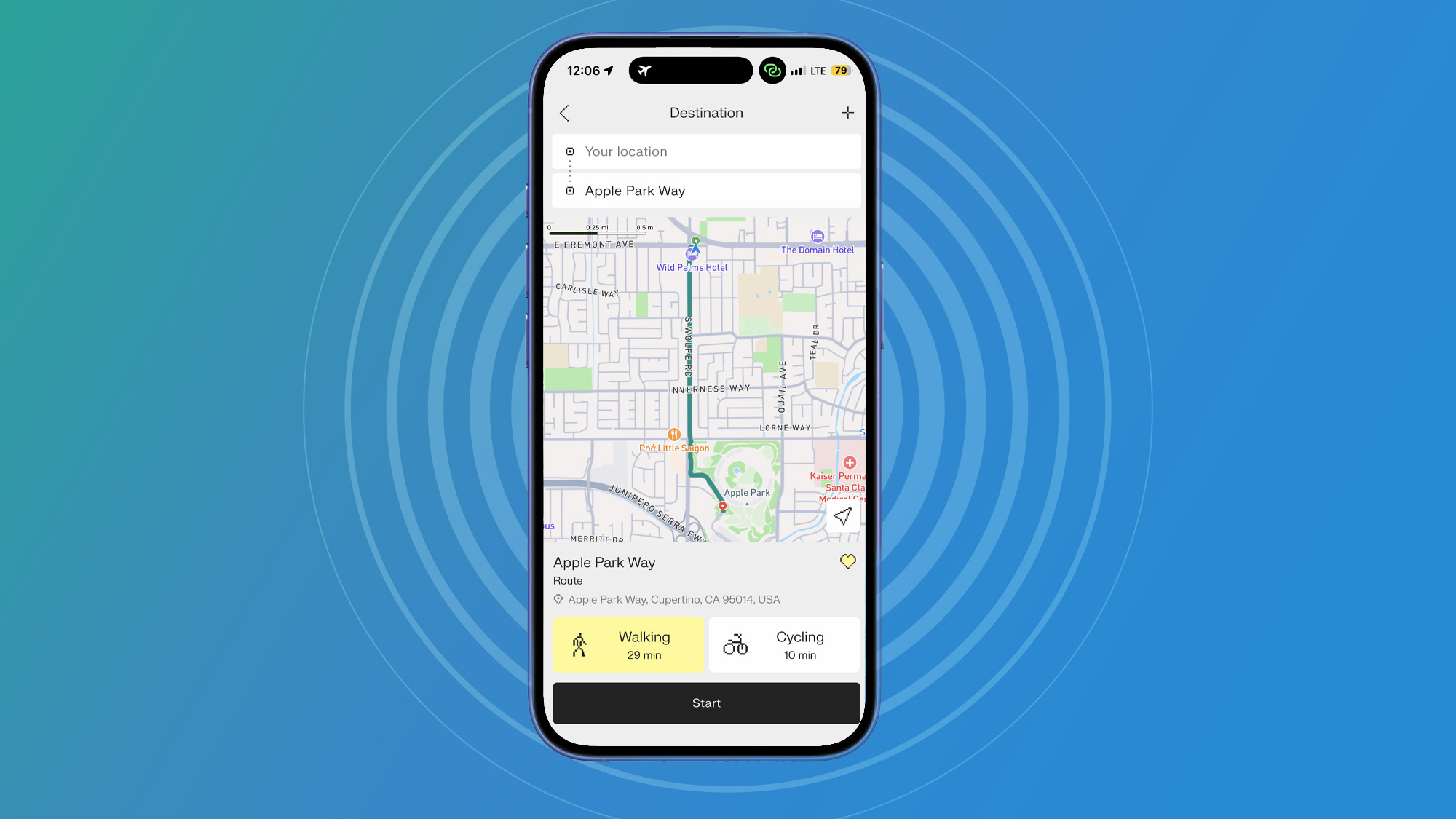
- Navigate: Turn-by-turn directions are supported exclusively for walking and cycling. Even Realities intentionally omitted driving directions from the heads-up display to mitigate potential safety hazards and driver distraction. While defensible from a regulatory standpoint, the limitation curtails the device’s utility for commuters. Furthermore, active navigation renders a simplified, monochromatic map route devoid of street labels, offering limited contextual awareness.
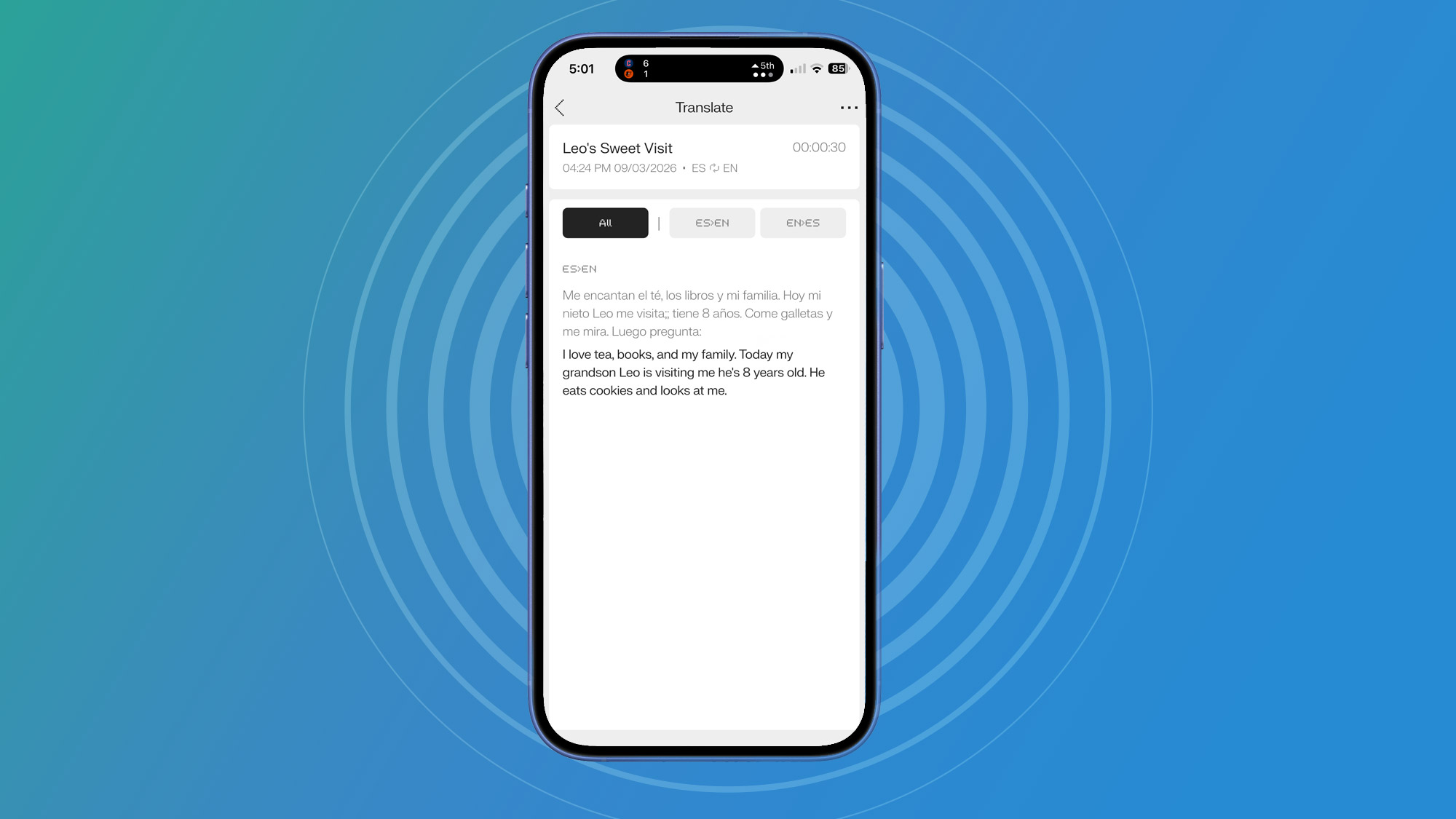
- Translate: The translation software functions reliably when paired with pre-selected language pairs configured within the mobile app. By streaming live transcription from foreign-language audio sources, it serves as a competent travel companion, though it lacks real-time auto-detection capabilities via the onboard microphones.
- Even AI: Summoned via the "Hey Even" voice prompt, the assistant provides summaries of current events and handles basic queries. However, its integration is strictly siloed within the Even Realities application ecosystem, preventing it from interacting deeply with broader smartphone functions, third-party apps, or external file directories like Apple Notes.
Battery Life and Power Management
Powering the lightweight frames is a modest 192mAh internal battery rated for up to two days of intermittent use under normal operating conditions. Real-world testing suggests that heavy feature utilization—particularly continuous notification syncing and active AI queries—will exhaust the battery closer to the 48-hour mark. To compensate, the device ships with a robust charging case featuring an integrated 2,000mAh battery capable of delivering up to seven full recharges. While the power endurance is acceptable given the remarkably thin chassis, consumers may reasonably expect extended longevity from a device entirely devoid of power-hungry camera sensors and audio amplifiers.
Market Position, Competitive Landscape, and Industry Implications
The launch of the Even Realities G2 underscores a profound strategic divide within the burgeoning smart eyewear market. On one side are mass-market products like Meta’s EssilorLuxottica collaboration glasses, which offer robust multimedia capabilities, cameras, and integrated audio at a significantly more aggressive price point of $299. On the other side are specialized, minimalist productivity tools like the G2, which prioritize discretion, privacy, and traditional aesthetics at double the cost.
Alternative options in the broader XR and smart display sector—such as the lightweight RayNeo X3 Pro or the display-centric Xreal Air series—illustrate the ongoing engineering struggle to balance thermal management, display fidelity, and battery capacity within facial hardware. By stripping away cameras and audio hardware, Even Realities successfully bypassed the severe social friction and regulatory backlash currently facing life-logging competitors. Yet, this conservative design philosophy has yielded a high-priced niche device whose occasional moments of functional brilliance are frequently undermined by inconsistent software performance, limited third-party app integration, and a persistent lack of essential utility.
For enterprise professionals requiring a discreet teleprompter or users strictly opposed to camera-equipped frames, the Even G2 represents a fascinating technical proof of concept. For the broader consumer market, however, the steep financial investment—compounded by prescription lens costs and restricted functionality—suggests that truly seamless, indispensable smart eyewear remains a horizon technology rather than an everyday reality.
Related posts: