Tech Giants and OpenSSF Unite to Formalize Sustainable Funding for Global Package Registries

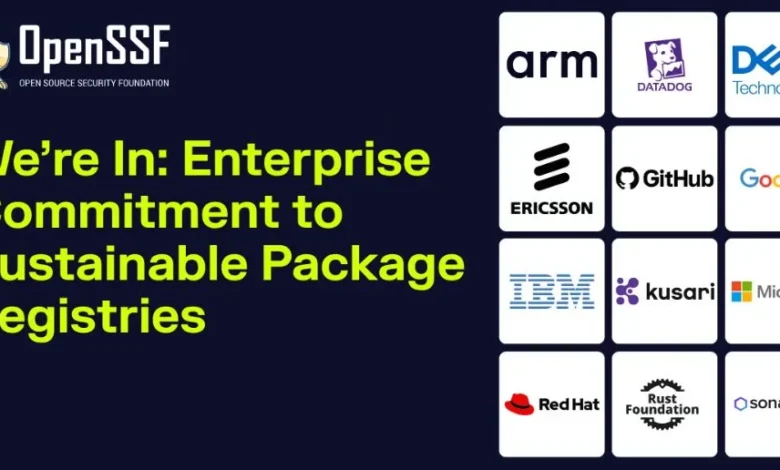
The foundational architecture of the modern internet—the global software supply chain—is facing a structural crisis that has finally prompted a historic, industry-wide intervention. In a landmark joint statement, a coalition of the world’s most influential technology corporations, including Arm, Datadog, Dell Technologies, Ericsson, GitHub, Google, IBM, Kusari, Microsoft, Red Hat, the Rust Foundation, and Sonatype, have declared the current funding model for public package registries to be fundamentally unsustainable. Backed by the Open Source Security Foundation (OpenSSF), these enterprise leaders are moving beyond symbolic support, committing to a new paradigm where commercial entities directly participate as paying customers to ensure the viability of the hubs that power virtually every digital service in existence.
Public package registries, including stalwarts such as PyPI, Maven Central, crates.io, RubyGems, npm, NuGet, OpenVSX, and Packagist, have long functioned as the invisible backbone of the global digital economy. These repositories host the libraries, frameworks, and dependencies that developers worldwide download trillions of times annually. Historically, these hubs have survived on a patchwork of donated infrastructure credits, corporate goodwill, and the tireless, often uncompensated efforts of small, volunteer-led operational teams. However, the rapid acceleration of artificial intelligence (AI) adoption and an increasingly sophisticated threat landscape have rendered this "charity-first" model obsolete.
The Catalyst: AI-Driven Demand and the Security Tipping Point
The impetus for this pivot is rooted in a massive surge in technical and operational demand. Annual download volumes across major package registries are currently climbing at a rate of 30% to 50% year over year. This growth is being fundamentally reshaped by the proliferation of autonomous AI coding agents, which can generate, request, and integrate software packages at speeds and volumes that far outpace human developers.
Parallel to this operational strain is a burgeoning security crisis. As the software supply chain becomes the primary vector for cyberattacks, the volume of malicious actors attempting to inject compromised code into registries has reached unprecedented levels. Security researchers identified over 1.8 million malicious packages in 2026 alone, a figure that eclipsed the total volume recorded in the entirety of 2025. With the rise of AI-powered vulnerability discovery, the industry expects a 3x to 5x increase in package publish events. For a registry managed by a team of three people, the capacity to manually vet or even adequately monitor these surges is functionally non-existent.
Chronology of a Growing Infrastructure Deficit
The transition toward a formal funding model follows a decade of increasing reliance on open-source components by the enterprise sector.
- 2015–2020: The Scaling Era: As the software industry embraced microservices and cloud-native development, package consumption exploded. Registries transitioned from boutique developer tools to critical national infrastructure.
- 2021–2023: The Security Wake-up Call: High-profile supply chain attacks, such as the SolarWinds incident and the Log4j vulnerability, highlighted the fragility of relying on volunteer-maintained open-source infrastructure.
- 2024: The AI Inflection Point: The widespread release of LLM-powered coding assistants leads to a dramatic, non-linear increase in API traffic and dependency management requests on registries.
- 2025–2026: The Sustainability Gap: Malicious package injection reaches record levels. The disparity between enterprise dependency on these platforms and the lack of dedicated, recurring funding becomes impossible for industry leaders to ignore.
- 2027: The Formalization Initiative: The OpenSSF and the Sustaining Package Registries Working Group launch the new commitment model, establishing the first formal path toward enterprise-backed registry sustainability.
The Role of the Sustaining Package Registries Working Group
To manage this complex transition, the Linux Foundation has established the Sustaining Package Registries Working Group. This body acts as the central forum for cross-registry governance and strategic planning. The mission of the working group is to move registries out of "survival mode" and into a state of professionalized, enterprise-ready operation.
By bringing together registry stewards—the individuals who keep the servers running—and the enterprise consumers who derive massive value from them, the working group is tasked with designing sustainable business models. These include, but are not limited to, enterprise-tier usage agreements, commercial service-level agreements (SLAs), and shared infrastructure funding pools. This collaborative approach ensures that the solutions are not fragmented but represent a unified industry standard for how corporations contribute back to the software ecosystem.

Security Implications: From Reactive to Proactive
The move toward enterprise funding is not merely about server costs; it is a critical security upgrade for the global economy. Predictable, recurring revenue will allow registries to move beyond basic hosting and implement advanced protective measures that were previously unaffordable.
Key capabilities slated for deployment under the new funding model include:
- Artifact Signing: Ensuring the integrity of code from the author to the final build.
- Trusted Publishing: Eliminating reliance on long-lived credentials, which are frequent targets for theft.
- Automated Malware Quarantine: Utilizing AI-driven analysis to catch malicious submissions before they reach the general developer population.
- Build Provenance and SBOM Generation: Providing organizations with the transparency needed to verify the lineage of their dependencies, a requirement now mandated by many government and financial regulations.
The signatories to the OpenSSF statement have been explicit: these upgrades are not optional. As the software supply chain continues to face sophisticated, automated threats, the cost of inaction—measured in potential data breaches and compromised critical systems—far outweighs the cost of sustaining the registries.
Addressing Community Concerns: The Open Source Promise
A central concern regarding the formalization of registry funding is the potential impact on individual developers and hobbyists. The coalition has provided a firm guarantee: open-source software will remain free and accessible. The proposed enterprise funding models are explicitly targeted at large-scale commercial entities that derive massive profit from these systems. By shifting the burden of infrastructure support to these enterprise consumers, the registries aim to insulate the broader community from any barriers to entry, ensuring that innovation remains open, inclusive, and unencumbered by paywalls.
Analysis: A Shift in the Enterprise Software Contract
The formal commitment from companies like Google, Microsoft, and IBM represents a fundamental shift in the "social contract" of open source. For decades, the industry operated under an implicit assumption that open source was a "free lunch." The realization that this model is unsustainable in an era of AI and high-frequency cyber warfare marks a maturation of the tech sector.
For the enterprise, the transition to a paying model is essentially an act of risk mitigation. For the maintainers and registries, it is a professionalization of a vital, yet chronically under-resourced, function. While the transition will require significant coordination and the development of new governance models, the consensus among the industry leaders is clear: the infrastructure that powers the global economy must be treated with the same level of investment and scrutiny as any other critical piece of industrial or financial infrastructure.
As the Sustaining Package Registries Working Group begins its work, the eyes of the software world will be on the efficacy of these pilot programs. If successful, this model could set a precedent for how the tech industry funds other essential, shared-resource components of the digital commons. In a future defined by AI-augmented development, the stability of these registries is no longer just a technical detail—it is the bedrock upon which the next decade of global innovation will be built.
Related posts: