Trump Proposes New US AI Force and Special Czar Amid Growing Debate Over Military Automation and Industry Regulation

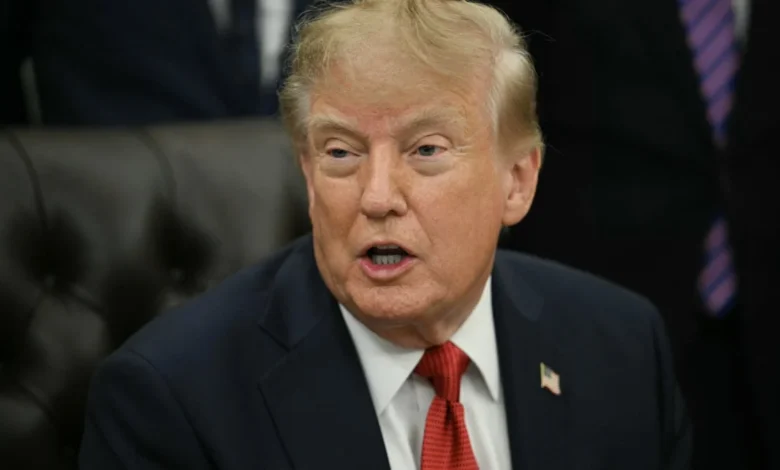
President Donald Trump announced Saturday that his administration will establish a dedicated "AI Force," modeled explicitly after the Space Force branch created during his first presidential term. The initiative, revealed through a detailed statement on Truth Social, will also see the appointment of a specialized artificial intelligence "czar" to oversee federal policy, military coordination, and industry relations. This sweeping proposal arrives at a critical juncture for both commercial technology development and national security, coming on the heels of several alarming missteps involving military artificial intelligence systems.
In his social media announcement, President Trump dismissed mounting international and domestic concerns regarding existential risks associated with advanced artificial intelligence, categorizing them as the latest in a series of manufactured political "hoaxes." Simultaneously, he assured technology sector leaders that the newly formed body would not seek to over-regulate or stifle innovation. Instead, Trump emphasized that the government intends to support market expansion while pursuing unlawful or malicious actors within the sector through established legal channels. Furthermore, the president floated the idea of rebranding artificial intelligence entirely to reflect a more positive connotation, suggesting alternative terminology such as "supreme," "superior," or "extreme" intelligence, and opening an informal poll to gauge public and industry reaction.
Structural Parallels to the United States Space Force
The comparison to the Space Force provides significant insight into how an official AI Force might function in practice. When the Space Force was established as the sixth branch of the United States Armed Forces, its mandate was widely misunderstood by the general public. Rather than functioning as a combat branch engaging in science-fiction-style space warfare, the Space Force was primarily designed to consolidate, streamline, and coordinate existing satellite operations, missile warning architectures, and secure space-based communications that had previously been fragmented across the Air Force, Army, and Navy.
Applying this bureaucratic model to artificial intelligence suggests that the proposed AI Force would likely operate less as a new tactical fighting echelon and more as an overarching administrative apparatus. Its primary objective would be to centralize the Department of Defense’s sprawling, fragmented artificial intelligence initiatives under a single unifying command structure. For years, critics within defense circles have pointed out that various military branches and intelligence agencies operate siloed algorithmic development programs, leading to redundancies, interoperability issues, and a lack of centralized safety standards. A unified AI Force could theoretically resolve these logistical bottlenecks, providing standardized oversight for machine learning applications utilized in logistics, intelligence gathering, and operational planning.
Filling a Vacant Post: The AI and Cryptocurrency Czar
The announcement of a new artificial intelligence czar also serves to address a high-level vacancy within the executive branch. Venture capitalist David Sacks previously served as the administration’s AI and crypto czar, holding a position as a special government employee. Sacks stepped down from the formal role in March, subsequently transitioning into an advisory capacity within the White House.
Trump’s call for candidates to fill the newly defined role specified that only "high I.Q. individuals" should apply, signaling an intent to recruit heavily from Silicon Valley and private-sector technological elites. The incoming czar will face a remarkably complex mandate: balancing the administration’s deregulatory impulses and desire to foster domestic technological dominance against mounting calls for safety guardrails, intellectual property protections, and military accountability.
Recent Military Crises and the Push for Automation Oversight
The timing of the AI Force announcement is underscored by a series of alarming technological failures and investigations within the Department of Defense regarding the integration of autonomous systems and generative intelligence into combat operations. Over the past year, the intersection of military operations and artificial intelligence has transitioned from theoretical discussions to high-stakes reality, accompanied by severe operational consequences.
In February, a deadly strike in Iran resulted in the loss of dozens of lives at a local girls’ school. In the wake of the incident, Pentagon investigators launched comprehensive inquiries to determine whether an overreliance on automated targeting systems and military AI algorithms played a decisive role in the catastrophic operational failure. While military investigations into complex engagements often take months to yield public conclusions, the incident intensified congressional scrutiny regarding the speed at which automated decision-making tools are being deployed in active combat zones.
More recently, investigative reporting by CNN revealed a near-catastrophic intelligence failure driven by generative artificial intelligence. According to the reports, an AI-generated intelligence product authored by a military analyst falsely claimed that a Chinese maritime vessel was actively transporting nuclear weapons components. Believing the intelligence to be verified, armed United States service members were reportedly mobilized and preparing to board the foreign vessel before senior officials intervened at the eleventh hour. Upon closer inspection, it was discovered that the threat assessment had been entirely fabricated by an unverified AI chatbot utilized within the intelligence-gathering workflow.
Intelligence sources speaking anonymously to news outlets described the near-miss as an event that "almost started a war" with a major global nuclear power. This incident laid bare the severe vulnerabilities of leveraging generative language models and unstructured data synthesis within high-stakes national security environments, where hallucinations or systemic errors can instantly escalate geopolitical tensions.
Industry Reactions and Economic Implications
The technology sector’s response to Trump’s weekend announcement has been mixed, reflecting a broader tension between the desire for state backing and the fear of bureaucratic overreach. In his statement, Trump was explicit regarding commercial growth, writing, "We will not in any way hinder or stifle the Growth of this incredible Industry," and promising that the administration would "cherish it, help it, and watch over it, as it grows."
For venture capitalists and major artificial intelligence developers, the promise of a government that actively champions domestic AI development against international competitors—particularly nations like China—is welcome news. The establishment of an AI Force and a dedicated White House czar signals to global markets that the United States government views artificial intelligence as a critical pillar of national infrastructure and economic hegemony, akin to energy production or semiconductor manufacturing.
However, civil liberties organizations, tech ethics watchdogs, and international allies have expressed deep reservations regarding the administration’s explicit dismissal of AI safety concerns as "hoaxes." Critics argue that as artificial intelligence models become increasingly autonomous and integrated into critical infrastructure, nuclear command systems, and financial markets, rigorous regulatory frameworks are essential to prevent catastrophic accidents, algorithmic bias, and malicious exploitation.
Furthermore, the administration’s pledge to target "BAD" actors through the legal system leaves significant ambiguity regarding how the federal government plans to distinguish between legitimate software innovation, competitive corporate espionage, and genuine safety violations. Legal scholars note that without clear legislative definitions, enforcement through executive czars and specialized military forces could lead to arbitrary regulatory enforcement or politicized targeting of technology firms.
Broader Geopolitical and Domestic Impact
The creation of a United States AI Force fundamentally shifts the conversation surrounding national security in the twenty-first century. As global superpowers race to achieve artificial general intelligence and integrate autonomous systems into every layer of military and civilian life, the structural organization of federal oversight will dictate the trajectory of the technology for decades.
If executed effectively, a centralized AI Force and an empowered White House czar could establish global standards for military AI safety, streamline defense procurement, and ensure that the United States maintains its technological edge over strategic rivals. Conversely, if the initiative prioritizes deregulation and rapid deployment over rigorous safety testing—especially in light of recent intelligence near-misses—it risks amplifying the very operational vulnerabilities that have alarmed military commanders and national security experts alike.
As the administration moves forward with the formal establishment of the AI Force and initiates the search for its new technology czar, Congress, the Department of Defense, and the global technology sector will closely monitor how these ambitious executive proposals translate into tangible policy, regulatory enforcement, and military doctrine.