Google Crowned Industry Leader in 2026 Gartner Magic Quadrant for Container Management Amid Surging AI Adoption

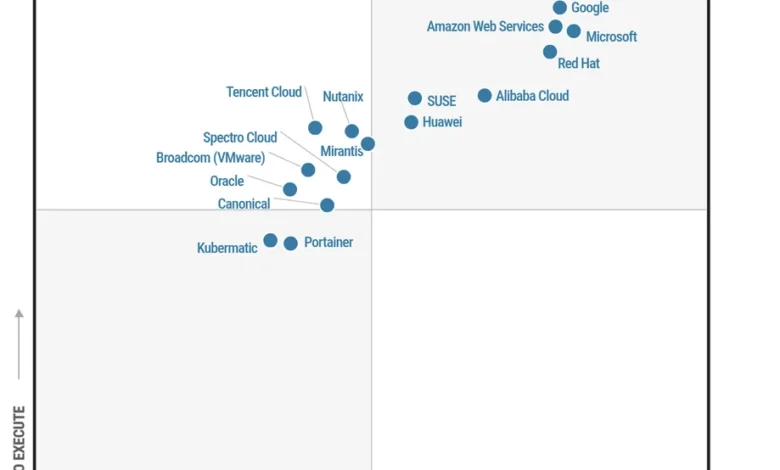
Google has officially secured its position as a Leader in the 2026 Gartner Magic Quadrant for Container Management for the fourth consecutive year, achieving the highest placement in the Ability to Execute category among all evaluated vendors. This distinction, based on an exhaustive evaluation of completeness of vision and operational execution, underscores the ongoing success of Google Cloud’s mission to provide highly optimized, scalable container infrastructure for enterprises worldwide.
The announcement coincides with the release of the companion 2026 Gartner Critical Capabilities for Container Management report, where Google Cloud swept the evaluation by ranking first across every designated use case. These include New Cloud Native Applications, Containerized Existing Applications, AI Training, AI Inference, Edge Applications, and Hybrid Applications.
Industry analysts point to a massive paradigm shift in enterprise technology as the primary driver behind these evaluations. According to recent Gartner projections cited in the research, 95 percent of new artificial intelligence deployments are expected to utilize Kubernetes by 2028, a dramatic leap from fewer than 30 percent in 2025. As enterprises race to deploy complex autonomous systems, agentic applications, and heavy inference workloads, containerization has transformed from a foundational developer tool into the core architecture powering global business transformation.
A Legacy of Cloud-Native Innovation: The Journey to 2026
To understand Google’s current dominance in the container management landscape, industry observers must look back at the company’s pioneering role in the cloud-native revolution. In 2014, Google open-sourced Kubernetes, drawing from its internal experience running billions of containerized workloads weekly through its Borg system. This move fundamentally reshaped how software is packaged, deployed, and scaled across modern data centers.
Building upon this foundation, Google launched Google Kubernetes Engine (GKE) in 2015 as the world’s first managed Kubernetes service. Over the subsequent decade, the company steadily expanded its container ecosystem to address emerging architectural demands, introducing serverless container solutions such as GKE Autopilot and Cloud Run. These innovations were engineered to abstract away infrastructure management complexities, allowing development teams to accelerate time-to-market while reducing operational overhead.
The acceleration of enterprise artificial intelligence over the past two years prompted a comprehensive re-engineering of Google’s infrastructure stack. Throughout 2026, the company rolled out foundational platform updates designed to shift GKE and Cloud Run from traditional deployment environments into agent-native, high-performance engines capable of supporting autonomous AI agents, massive model training, and rigorous runtime security isolation.
Comprehensive Dominance Across Gartner Critical Capabilities
The clean sweep of the 2026 Gartner Critical Capabilities for Container Management report highlights the versatility of Google Cloud’s portfolio. By capturing the top ranking across all six use cases, Google demonstrated that its platforms are equally adept at maintaining legacy enterprise applications as they are at fueling bleeding-edge artificial intelligence infrastructure.
In the categories of AI Training and AI Inference, GKE has become the de facto environment for organizations seeking to harness massive compute clusters without sacrificing performance or efficiency. By integrating high-speed networking, specialized accelerator management, and optimized workload scheduling, Google has addressed the primary bottlenecks facing machine learning engineers.
Concurrently, the recognition in Hybrid and Edge Applications reflects the enterprise demand for seamless workload portability. Organizations operating across multi-cloud and on-premises environments rely on Google’s Anthos and distributed container management tools to maintain consistent security policies and operational controls, regardless of where the physical infrastructure resides.
The Rise of Agentic Infrastructure and Serverless Containers
The convergence of containers and artificial intelligence is reshaping corporate IT strategies. As enterprises transition from simple generative AI chat interfaces to autonomous agentic systems—software agents capable of executing multi-step workflows, calling external APIs, and making complex decisions—the underlying infrastructure must evolve accordingly.
Google’s recent infrastructure enhancements target this exact requirement. By introducing specialized isolation boundaries and high-throughput execution models, GKE and Cloud Run are positioned to host the next generation of enterprise AI agents securely.
In the realm of developer experience, serverless containers continue to gain momentum. Cloud Run has emerged as a unifying abstraction layer capable of hosting standard web APIs, heavy batch data processing pipelines, asynchronous message queues, and complex AI agents under a single operational model. This unified approach maximizes engineering velocity by eliminating the traditional boundaries between serverless functions and containerized microservices.
Industry Implications and the Future of Cloud Computing
The findings of the 2026 Gartner reports carry significant implications for the broader enterprise technology market. As the market approaches the projected 2028 threshold where nearly all new AI deployments will rely on Kubernetes, vendor selection in container management has become a strategic boardroom decision.
Organizations are no longer simply looking for orchestration tools; they require robust ecosystems capable of guaranteeing uptime, security, and financial efficiency at scale. Google’s top ranking in Ability to Execute suggests that the company not only possesses a compelling long-term vision for cloud architecture but also maintains the operational maturity required to deliver mission-critical reliability to the world’s largest enterprises.
As cloud providers continue to compete on AI readiness, developer velocity, and multi-cloud flexibility, the bar has been raised significantly. Google Cloud’s consecutive recognitions serve as a benchmark for the industry, signaling that the future of enterprise computing will be defined by intelligent, agent-native, and highly optimized container ecosystems.
Related posts: