Google Security Teams Validate Gemini-Powered C-to-Rust Codebase Translation to Eliminate Legacy Memory Vulnerabilities

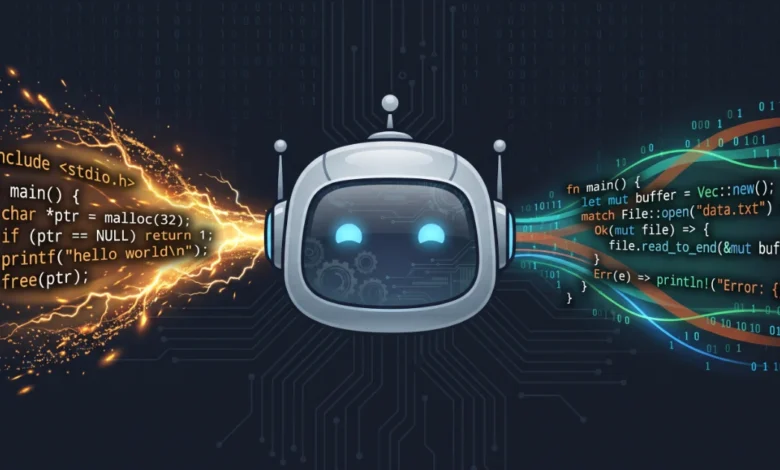
Google security researchers have successfully demonstrated a groundbreaking automated pathway for eradicating legacy memory corruption vulnerabilities from foundational software infrastructure. By harnessing the capabilities of Google’s Gemini artificial intelligence model, engineering teams translated the aging C-based giflib image-processing library into a secure, memory-safe Rust equivalent. This pioneering initiative, spearheaded by software engineers Bastian Kersting and Max Hils, resulted in the creation of a drop-in, ABI-compatible Rust library. Crucially, the deployment of this synthetic translation not only neutralized an unpatched heap write zero-day vulnerability—catalogued subsequently as CVE-2026-26740—prior to its public disclosure, but it also enabled Google to decommission resource-intensive process isolation sandboxes without sacrificing operational latency.
The announcement underscores a transformative approach to addressing one of the software industry’s most persistent security challenges. For decades, memory safety vulnerabilities have plagued mature C and C++ codebases, accounting for roughly 70 percent of all severe security bugs in enterprise-grade stacks. Historically, mitigating these risks required multi-year manual rewrites or the implementation of performance-heavy runtime bounds checking. By pioneering an autonomous, closed-loop automated migration framework, Google has outlined a scalable methodology that could fundamentally alter how legacy infrastructure is modernized across the technology sector.
Background Context: The Enduring Peril of Memory Corruption in C Stacks
Memory safety issues, such as buffer overflows, use-after-free conditions, and out-of-bounds writes, have long been the Achilles’ heel of systems programming. Languages like C and C++ grant developers direct, unmanaged access to system memory, prioritizing execution speed and hardware-level control over safety guardrails. While this design philosophy enabled the construction of the modern digital world, it also introduced a vast attack surface for malicious actors. Exploiting these vulnerabilities allows threat actors to achieve arbitrary code execution, escalate privileges, or deploy system-wide denial-of-service attacks.
Industry leaders, alongside regulatory bodies such as the United States Cybersecurity and Infrastructure Security Agency (CISA), have increasingly pressured software vendors to transition away from memory-unsafe languages. However, rewriting millions of lines of foundational legacy code by hand is economically prohibitive and resource-intensive. Automated tools and deterministic transpilers have offered partial relief in the past, but they frequently produce convoluted, unmaintainable code that fails to leverage the idiomatic safety guarantees of modern languages like Rust. Google’s recent initiative represents a significant evolution in this space, combining the generative synthesis of large language models with rigorous, automated differential verification pipelines.
The Three-Stage Automated Migration Methodology
The migration of giflib—a compact yet critical 3,000-line C library responsible for decoding untrusted GIF assets—was executed through a structured, three-stage automated process designed around an autonomous feedback loop.
In the initial phase, engineers utilized a single-shot prompting strategy with Gemini to convert the complete logic of the legacy C library into Rust. Because the newly generated library was mandated to serve as a transparent replacement for existing shared objects without disrupting downstream applications, the system had to strictly preserve original exported symbols and struct definitions.
However, this mechanical translation introduced complex challenges. Modeling foreign function interfaces (FFI) inevitably resulted in unsound raw pointer semantics during early iterations. To resolve this, human domain experts stepped in to inspect and refine pointer ownership and lifetime invariants, bridging the gap between automated generation and low-level systems engineering.
The final stage involved deploying automated differential testing engines. These systems detected behavioral discrepancies between the original C codebase and the nascent Rust translation, feeding failure traces directly back to Gemini for iterative patch synthesis. This closed-loop interaction ensured that the generated code steadily converged toward complete semantic accuracy.
Ensuring Semantic Parity and Fuzzing Validation
Deploying automatically generated code into mission-critical, global production infrastructure demands an extraordinary level of verification. To guarantee that the Rust replacement behaved identically to its historical C counterpart, Google instituted a comprehensive validation pipeline.
This pipeline subjected both codebases to mass-scale regression decoding across more than 30 million real-world GIF assets, verifying bit-for-bit rendering parity. Simultaneously, an automated differential fuzzer executed side-by-side iterations of the two runtimes continuously for six days. Over the course of this rigorous test, the framework racked up 200 million iterations without observing a single instance of functional drift.

Furthermore, the verification architecture incorporated adversarial LLM evaluation prompts configured to scrutinize both repositories for latent behavioral bifurcations. This sophisticated approach yielded immediate dividends: the verification pipeline successfully identified an unhandled edge case within the LZW decompressor and flagged an internal legacy out-of-bounds write that had been inadvertently introduced by an earlier internal patch to the original C source.
Real-World Proof: Neutralizing CVE-2026-26740
The definitive validation of Google’s methodology materialized during the staging phase of the rollout. An external security researcher discovered an out-of-bounds heap write vulnerability in the upstream giflib repository, which was formally catalogued as CVE-2026-26740.
Because production nodes within Google’s ecosystem were already running the compiled Rust replacement, systems were structurally immune to the flaw before the vulnerability was even publicly disclosed. This real-world test case provided empirical proof that architectural language migrations can preempt entire vulnerability classes, shielding infrastructure from zero-day exploits before patch management cycles can even begin.
Performance Optimization and Sandbox Decommissioning
A common apprehension regarding the adoption of Rust in performance-critical environments centers on runtime overhead. Critics often point to Rust’s mandatory bounds checks as a potential bottleneck for high-throughput applications.
However, production telemetry gathered across Google’s global image-decoding clusters dismantled this concern. Data confirmed that the Rust binary operated at complete runtime parity with the original C binary. More importantly, because Rust enforces memory safety guarantees directly within its type system, platform engineers were able to safely dismantle the legacy operating system sandboxes that were previously required to isolate image-decoding tasks.
Eliminating these process isolation boundaries produced a measurable reduction in p99 tail latency, proving that memory safety and high performance are not mutually exclusive.
Community Reactions and Industry Discourse
Following the publication of Google’s engineering blog post, the initiative sparked widespread discussion across developer communities, including Reddit’s r/rust and Hacker News.
Industry professionals roundly praised Google’s rigorous differential fuzzing framework, noting particularly its ability to uncover pre-existing vulnerabilities hidden deep within legacy code. At the same time, commenters engaged in robust debates regarding the scalability and practicality of one-shot AI translations. Many senior engineers emphasized that the human effort required to audit subtle semantic regressions and resolve unsound C FFI boundaries often matches or exceeds the time saved during code generation. Consequently, a segment of the developer community argued that deterministic transpilers, followed by AI-driven refactoring into safe and idiomatic Rust, might offer a more dependable trajectory as libraries scale beyond compact targets like giflib.
Broader Implications for Software Engineering
Google has made the resulting library available to the open-source community as an independent project titled giflib-rs, intending for it to serve as a reference implementation for other organizations evaluating automated language transitions for foundational utilities.
The implications of this milestone extend far beyond image processing libraries. As generative AI models become increasingly sophisticated at parsing complex systems code, the dream of systematically eliminating memory safety vulnerabilities across legacy enterprise stacks is moving closer to reality. While AI-assisted translation is not a hands-off panacea—requiring ongoing maintenance to track upstream modifications and human expertise to manage FFI wrappers—Google’s success demonstrates a viable blueprint for securing the digital supply chain. By proactively transforming legacy codebases into memory-safe equivalents, the technology industry may finally begin to outpace the perpetual cycle of patching memory corruption bugs.