In the realm of professional software engineering, the reliability of a codebase is often measured not by its success, but by how it handles failure. A common architectural weakness in data-heavy applications—particularly in machine learning pipelines—is the reliance on "happy path" cleanup code. When an evaluation script initializes a directory, modifies global environment variables, and silences logging levels to perform a complex model assessment, these settings often persist or leak if the process terminates prematurely. Python’s with statement, widely recognized for file handling, is actually a sophisticated architectural pattern for resource lifecycle management. By moving beyond simple file I/O, developers can enforce deterministic cleanup, ensuring that even when an evaluate() function crashes due to a malformed record, the system state remains pristine for the next user.
The Anatomy of the With Statement
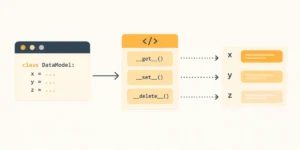
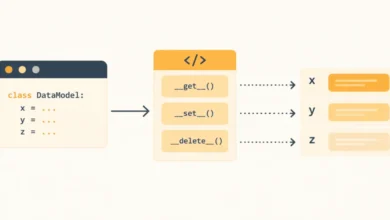
The with statement is a structural boundary that guarantees the execution of exit logic. Internally, it relies on the context manager protocol: the __enter__ method prepares the environment, and the __exit__ method provides a final, non-negotiable teardown phase. Crucially, the __exit__ method is triggered regardless of whether the block completes successfully or raises an exception. This behavior is essential for maintaining production-grade environments where "stale" states—such as an abandoned 3GB scratch directory or a permanently disabled logger—can lead to cascading failures in subsequent tasks.
The mechanics are precise: the __enter__ method runs, its return value is bound to the target specified by as, and the code block proceeds. If an exception occurs, the __exit__ method receives the exception type, value, and traceback as arguments. Developers must be careful with the return value of __exit__. If it returns True, the exception is swallowed, potentially masking critical failures. In standard production environments, it is almost always best practice to return False (or let the method return None), allowing the exception to propagate naturally while still performing the necessary cleanup.
Strategic Instrumentation with Custom Timers
Instrumentation is often the first casualty of a system crash. In standard scripts, developers frequently place a print statement after an expensive function call to track performance. If that function throws an error, the code execution stops before the print statement is reached, leaving the developer in the dark regarding the operation’s duration or its failure point.
By implementing a custom Timer class using __enter__ and __exit__, developers can ensure that timing data is captured and logged with absolute consistency. In the __enter__ phase, the timer initializes a high-resolution clock, such as time.perf_counter(). In the __exit__ phase, the elapsed time is calculated and logged. This approach transforms a fragile tracking method into a robust diagnostic tool. Whether the process finishes in milliseconds or crashes halfway through, the Timer reports the wall-clock time spent on that block, providing invaluable insights into performance bottlenecks and failure modes.
Streamlining with @contextmanager
While custom classes are powerful, they can introduce unnecessary boilerplate for simple state-switching tasks. The contextlib library offers the @contextmanager decorator, which allows developers to define a context manager using a generator function. This is particularly effective for managing logging levels or global configuration flags.
Consider a scenario where a library like transformers floods the console with diagnostic information. A quiet context manager can capture the current logging level, set it to WARNING, and use a try...finally block to restore the original level once the operation concludes. Because the cleanup is wrapped in a finally block, it is guaranteed to execute, preventing the logger from remaining permanently silenced if an error occurs. This pattern effectively replaces manual state management with a declarative, block-scoped lifecycle.
Automating Cleanup with Temporary Directories
The most common source of "disk rot"—the accumulation of temporary files that clutter development environments—is the manual creation and deletion of scratch directories. The tempfile.TemporaryDirectory module provides a context manager that automates this entire lifecycle. Upon entry, it creates a secure, unique directory; upon exit, it recursively removes that directory and all its contents.
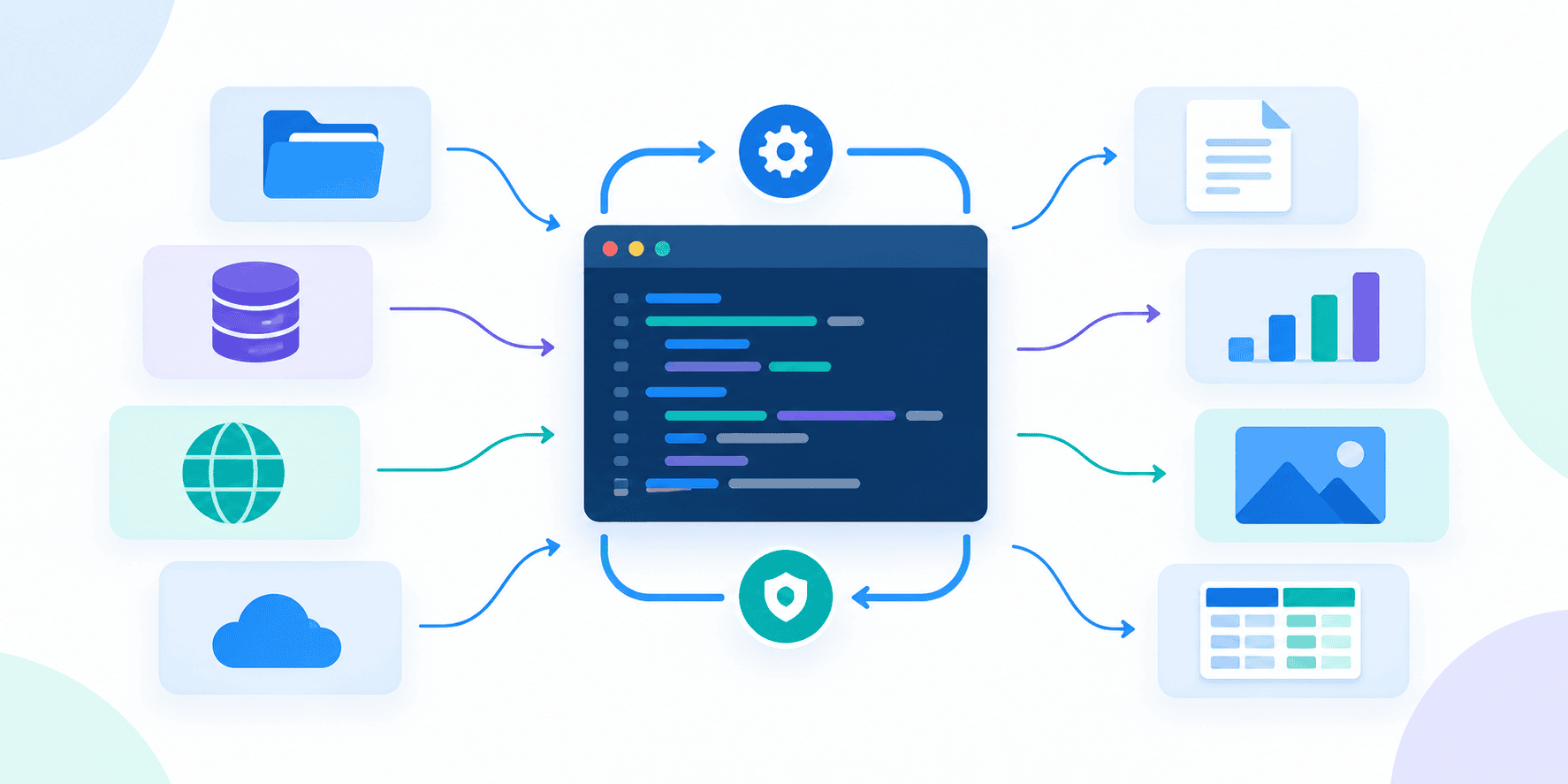
This approach significantly reduces the risk of file system collisions and ensures that failed jobs do not leave behind gigabytes of garbage data. In production environments, this is a critical security and maintenance feature. Furthermore, the ability to inspect these directories while a process is running—simply by referencing the path object—remains intact, providing the flexibility needed for debugging without sacrificing the cleanliness of the production environment.
Managing Complex Dependencies with ExitStack
As projects grow, the need to manage multiple, dynamic resources becomes apparent. A merge operation, for instance, might require opening a variable number of file shards simultaneously. Manually nesting with statements is impractical when the number of files is determined at runtime.
The contextlib.ExitStack is designed precisely for these scenarios. It acts as a container for context managers and cleanup callbacks. When stack.enter_context() is called, the manager is registered, and its exit logic is queued. The ExitStack unwinds this queue in reverse order—Last-In, First-Out (LIFO)—effectively mimicking the behavior of nested with blocks. This ensures that resources are released in the correct order, preventing memory leaks and file handle exhaustion.
Reversible State Changes and Global Configuration
Modifying global state, such as environment variables (os.environ) or configuration dictionaries, is inherently dangerous in a multi-threaded or concurrent application. However, when such changes are necessary, unittest.mock.patch.dict serves as a powerful context manager. It captures the state of a dictionary before modification and automatically restores it upon exit.
This is highly effective for injecting temporary configurations, such as overriding MODEL_CACHE paths for a specific evaluation run. Because the restoration is automated, it eliminates the risk of "configuration drift," where one part of the system inadvertently relies on a setting intended for a short-lived task. While this remains a powerful tool, engineers must be mindful that in multi-threaded environments, global state changes remain visible across all threads; therefore, context managers should be used with caution in asynchronous or highly concurrent architectures.
Conclusion and Best Practices
The transition from simple scripts to professional engineering often involves adopting these patterns to enforce system stability. By treating resources as objects with defined lifetimes, developers can shift from writing code that assumes success to building systems that are resilient to failure.
The selection criteria are straightforward:
- Use classes when state needs to be persisted or accessed after the block concludes.
- Use @contextmanager for linear, setup-yield-cleanup flows.
- Use built-in managers like
TemporaryDirectoryorpatch.dictwhenever possible to leverage battle-tested logic. - Use ExitStack for managing dynamic sets of resources that are not known until execution time.
Ultimately, the goal is to keep cleanup code as close to the initialization as possible. When cleanup is relegated to the bottom of a file, it becomes a "promise" that the system often fails to keep. By utilizing the full capabilities of Python’s context management, engineers ensure that even when the unexpected occurs, their systems recover gracefully, leaving no trace behind.