Seven Common Token-Waste Patterns in Production AI Agent Systems and Their Architectural Fixes

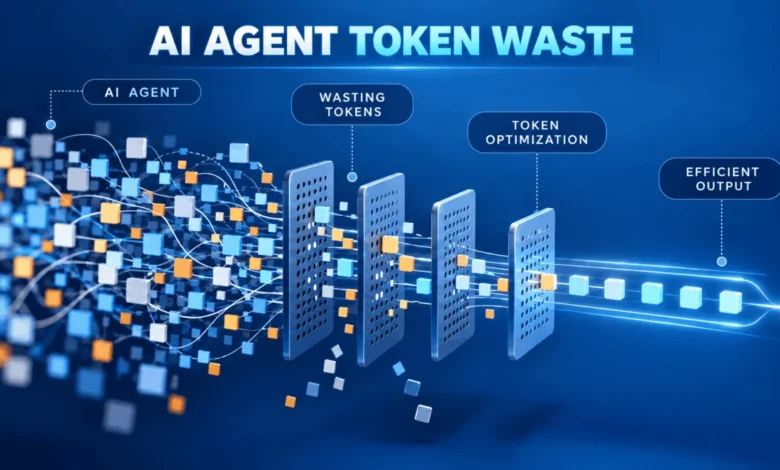
The rapid proliferation of Large Language Model (LLM) agents in enterprise environments has introduced a significant operational challenge: the escalation of inference costs. While prototyping an agent can be achieved over a weekend, scaling that agent to handle thousands of production requests per day often leads to a phenomenon known as "token bloat." This issue is not merely a budgetary concern; it is an architectural failure that manifests as increased latency, higher rates of hallucination, and degraded system reliability. Engineering teams often treat the context window—the limited "workspace" of an AI—as an infinite system of record, a fundamental misconception that leads to quadratic growth in inference costs as session lengths increase.
The Evolution of Agentic Costs
In the early stages of the generative AI boom, circa 2023, the focus was primarily on capability. Could the model perform a task? As we entered 2024 and 2025, the industry shifted its attention to sustainability. Data from recent industry benchmarks suggests that organizations running autonomous agents without optimization see API bills increase by 300% to 500% within the first quarter of deployment. This is driven by the naive "append-only" architecture, where every user interaction, tool output, and internal thought process is concatenated into a single, ever-growing prompt array. By the time an agent reaches its twentieth turn, it is re-processing the entire history of the session, effectively paying a "tax" on every historical interaction for every new prediction.
1. The Append-Only Trap: Context Window Accumulation
The most prevalent failure mode is the failure to distinguish between ephemeral context and durable state. Context should be viewed as the transient payload required for immediate reasoning, whereas state represents the long-term progress of an agent.
To address this, developers must implement sliding context windows paired with semantic rolling summarization. Instead of passing 50 turns of conversation, an architectural shift involves passing the last five turns verbatim while compressing earlier interactions into a dense, background summary. Offloading structural state to deterministic stores—such as Redis for session caching or SQLite for long-term task tracking—prevents the model from needing to re-read its own history. While this introduces the risk of losing exact references like UUIDs, developers can mitigate this by implementing precise key-value lookup tools, ensuring that when specific data is required, it is retrieved via query rather than brute-force context injection.
2. Efficiency in Tool Result Ingestion
Modern agents rely heavily on third-party APIs. However, raw JSON responses from services like Stripe, Jira, or AWS are designed for machine readability, not LLM reasoning. A single webhook response can consume thousands of tokens, the vast majority of which are irrelevant boilerplate, null values, or metadata that serves no purpose in the decision-making process.
The architectural fix is the introduction of a "transformation middleware" layer. This layer acts as a filter, stripping non-essential fields, normalizing deeply nested structures into dense YAML or Markdown, and removing redundant log information. By preprocessing tool outputs, teams have reported token savings of up to 70% per tool invocation. However, this process requires careful configuration; stripping fields like pagination cursors can break an agent’s ability to navigate large datasets, necessitating a balance between aggressive pruning and functional integrity.
3. Addressing Retrieval Thrash
A common error in RAG (Retrieval-Augmented Generation) systems is the "Grep-and-Dump" approach, where an entire document or codebase file is injected into the context window because a single function within that file was relevant. This is akin to reading an entire encyclopedia to verify a single fact.
The shift toward AST-aware (Abstract Syntax Tree) retrieval represents a significant maturity milestone for engineering teams. By parsing code into call graphs, the agent’s orchestrator can retrieve only the function signature, its docstring, and immediate dependencies. Tools like Tree-sitter facilitate this granular extraction, turning 4,000-token file dumps into 300-token structural summaries. The primary implication here is the need for asynchronous indexing pipelines; if the index is not synchronized with the repository’s state, the agent may hallucinate regarding stale function names, leading to costly retry loops.
4. Dynamic Tool Schema Management
In many current architectures, the model is provided with the full list of available tools in every single prompt. For an agent with a registry of 50 tools, this equates to thousands of tokens of schema definitions being processed repeatedly.
Implementing a finite state machine to govern tool injection is the optimal architectural response. By categorizing the agent’s lifecycle into phases—such as "discovery," "planning," and "execution"—the orchestrator can dynamically inject only the relevant tools. A discovery-phase agent requires only search capabilities, while an execution-phase agent requires write-access tools. While this complicates prompt caching strategies, the reduction in token consumption is immediate and quantifiable, particularly for agents with extensive tool libraries.
5. Circuit Breakers for Autonomous Loops
Autonomous agents, by definition, operate without human intervention. This makes them susceptible to "infinite reasoning loops," where a tool failure triggers a retry, which triggers another failure, consuming thousands of output tokens in the process.
A circuit breaker is now considered a mandatory guardrail for any production agent. By setting strict maximum retry counts and capping the output token budget per action, organizations can prevent "runaway" billing events. When an agent exceeds these thresholds, the system must trigger a deterministic fallback or escalate to a human. Though this risks terminating complex, legitimate tasks that require deep multi-step planning, the financial and operational risk of a runaway loop far outweighs the cost of a false-positive termination.
6. Maximizing KV Cache and Prompt Prefixing
The emergence of prompt caching at the provider level—offered by both OpenAI and Anthropic—has fundamentally changed the economics of agent architecture. These providers cache the key-value (KV) representations of static prompt prefixes. However, developers often inadvertently break these caches by injecting dynamic variables, such as timestamps or user-specific IDs, at the very beginning of the prompt.
The fix is a "static-to-dynamic" gradient structure. By placing organizational style guides, static system prompts, and tool schemas at the absolute top of the request, developers ensure these elements remain inside the cache. Dynamic content should only be appended at the end of the payload. This optimization can reduce latency by hundreds of milliseconds and lower costs by 50% or more for high-throughput agents.
7. Cascaded LLM Routing
Using a frontier model (such as GPT-4o or Claude 3.5 Sonnet) for simple tasks like log summarization or intent classification is an inefficient use of resources. This "senior architect for paperwork" problem is a major contributor to bloated overhead.
The industry is trending toward cascaded routing. In this model, a small, low-latency "router" model performs initial classification and simple extraction. Only when the task exceeds a certain complexity threshold is the query routed to a frontier model. Libraries like LiteLLM allow for this provider-agnostic routing. While this introduces a new layer of complexity—specifically the risk of a "routing error" where a simple task is sent to an expensive model or a complex task is handled by an incapable one—the net impact on bottom-line expenditure is typically overwhelmingly positive.
Broader Implications and Future Outlook
As production agents move past their first 100 days, the focus shifts from cost to data quality. Stale facts in vector stores and outdated API documentation can cause an agent to enter reasoning loops that are difficult to debug. Architectural decisions made in the first week of a project compound over time. The consensus among lead systems engineers is clear: token optimization is not just a mechanism for cost reduction; it is a vital discipline for maintaining the stability, predictability, and long-term health of AI-driven systems. Moving forward, the most successful agent deployments will be those that prioritize modular, cached, and context-constrained designs over the monolithic architectures that currently dominate the market.