Podcast: How Honeywell is approaching TinyML and the current state of the smart home industry

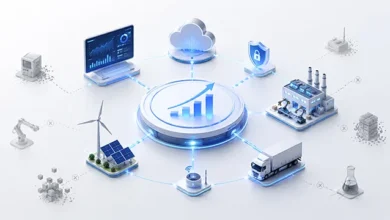
The intersection of artificial intelligence and industrial hardware is reaching a critical inflection point as major conglomerates pivot toward edge computing to solve long-standing operational challenges. This shift, exemplified by Honeywell’s aggressive integration of TinyML—machine learning algorithms designed to run on low-power, resource-constrained microcontrollers—marks a fundamental change in how industrial infrastructure is monitored and maintained. Simultaneously, the broader consumer smart home market is grappling with the growing pains of the Matter interoperability standard, reflecting the complex friction between universal connectivity and proprietary vendor ecosystems.
The Rise of TinyML in Industrial IoT
Honeywell, which manages a global footprint of over one million sensors, is currently spearheading a transition toward localized intelligence. Muthu Sabarethinam, Vice President of AI/ML products and services at Honeywell, recently detailed the company’s strategic move to migrate processing power from the cloud directly to the sensor.
The rationale behind this migration is rooted in three primary technical requirements: security, power consumption, and latency. By deploying TinyML models locally, Honeywell can ensure that sensitive operational data remains on the device, mitigating risks associated with cloud transmission. Furthermore, reducing the frequency of data transmission significantly lowers power requirements for remote battery-operated sensors, while localized processing eliminates the latency inherent in sending telemetry to distant servers for analysis.
The scale of this initiative is substantial. With a million sensors already deployed in the field, the potential for predictive maintenance, real-time anomaly detection, and automated energy optimization is immense. The challenge, according to industry experts, lies in the packaging and deployment of these algorithms. Honeywell’s approach emphasizes modularity, allowing for the scalable deployment of models that can adapt to different environmental conditions without requiring extensive human intervention.
Interoperability and the Matter Protocol Struggle
While industrial IoT advances, the consumer smart home sector faces a fragmented reality. The Matter standard, originally envisioned as the "holy grail" of smart home interoperability, is currently struggling with significant implementation hurdles. Recent reports have highlighted the technical difficulties regarding Thread credentialing and inconsistent device support across the Apple, Google, and Amazon ecosystems.
The core issue, according to analysts, is not the standard itself but the inconsistent implementation by hardware vendors. When major ecosystem players attempt to force proprietary requirements onto a universal standard, the user experience suffers. The current state of "Matter" integration is often characterized by complex setup processes and unstable device discovery, leading to a disconnect between consumer expectations and the reality of cross-platform compatibility.
Cybersecurity and Critical Infrastructure Risks
The vulnerability of industrial sensors has also entered the spotlight following reports of anomalous radiation spikes at the Chernobyl nuclear site. Security researchers have raised concerns regarding the susceptibility of critical environmental sensors to digital tampering. If sensors can be hacked to report false environmental data, the implications for public safety and disaster management are profound. This incident serves as a stark reminder that as infrastructure becomes more "intelligent" and interconnected, the attack surface for bad actors expands proportionally.
Consolidation in the Semiconductor Industry
The hardware enabling these innovations is also undergoing a period of intense consolidation. A notable development is the formation of a new company dedicated to RISC-V, the open-standard instruction set architecture. Major players including Qualcomm, NXP Semiconductors, and Infineon are backing this venture, signaling a collective move to reduce reliance on established, proprietary chip architectures.
This pivot toward RISC-V is intended to foster greater design flexibility and supply chain resilience. Simultaneously, the market has seen aggressive acquisition activity, such as Renesas Electronics’ recent move to acquire a cellular IoT module specialist. These corporate maneuvers underscore a broader industry trend: the race to control the "pipes" of the IoT—the silicon, the connectivity modules, and the edge-processing software.

The Evolution of Smart Energy Management
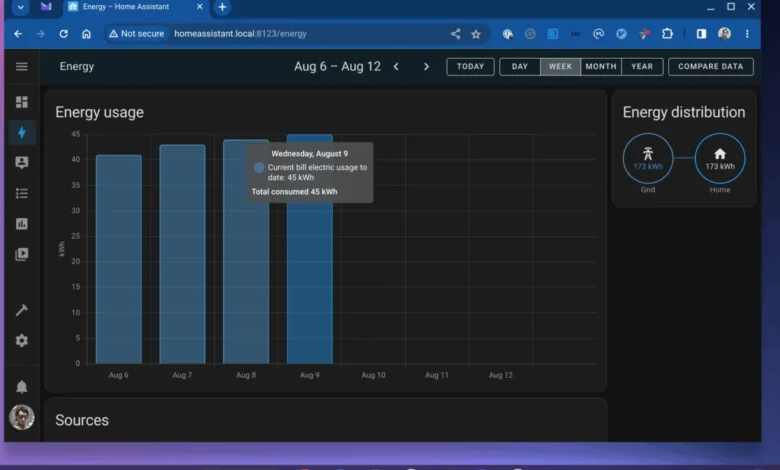
In the consumer sector, the transition toward decentralized energy management is accelerating. Users are increasingly turning to platforms like Home Assistant to gain granular control over their home energy consumption. This shift is driven by a desire for data privacy and local control, moving away from the "black box" models often imposed by utility-provided smart home applications.
For consumers, preparing for smart energy management programs requires more than just installing a smart thermostat. It involves auditing current hardware to ensure local integration, optimizing network stability for high-traffic IoT devices, and understanding the nuances of local automation protocols. Experts advise that as grid-responsive programs become more common, homeowners should prioritize hardware that offers an open API or local control capabilities to ensure their devices remain functional even when third-party cloud services experience outages.
Drone Networks and Aerial Monitoring
The innovation landscape also includes the expansion of drone technology for critical infrastructure protection. Startups like Birdstop are developing on-demand, beyond-visual-line-of-sight (BVLOS) drone networks. By treating drones as a distributed network similar to satellite constellations, these companies aim to provide continuous, autonomous surveillance for power lines, pipelines, and remote industrial facilities.
This "drone-as-a-service" model represents a paradigm shift in physical security. Instead of relying on periodic human patrols, industrial operators can deploy automated drones to verify the integrity of assets in real-time. However, the regulatory environment for such operations remains stringent, with the Federal Aviation Administration (FAA) maintaining rigorous safety standards for autonomous flight in national airspace.
Analysis of Current Industry Implications
The convergence of these diverse technological threads reveals a clear trajectory: the future of IoT is local, resilient, and increasingly autonomous. Whether it is a Honeywell sensor running a localized TinyML model to predict equipment failure, or a homeowner using Home Assistant to manage peak-demand electricity usage, the trend is moving away from the centralized cloud-reliant model that dominated the previous decade.
The implications for the next five years are significant:
- Security-First Design: Manufacturers will face increased pressure to incorporate "security by design" as the risks of tampering with critical sensors become more visible.
- Open Standards Dominance: While Matter is currently struggling, the industry’s investment in RISC-V and similar open standards suggests that proprietary ecosystems will eventually have to adapt or face obsolescence.
- Edge Intelligence: The demand for localized data processing will drive a new generation of microcontrollers that are not only energy-efficient but also capable of high-level inference.
As the industry matures, the divide between industrial IoT and consumer smart homes will continue to narrow. Lessons learned in the high-stakes environment of industrial maintenance—such as the importance of local processing for latency and security—are already beginning to inform the design of consumer-grade devices.
Ultimately, the goal for developers and manufacturers is to create a seamless ecosystem that prioritizes reliability over rapid, feature-based iteration. The current "messy" state of the smart home, while frustrating for early adopters, is a natural phase in the development of a complex, global, and multi-vendor infrastructure. As the technology stabilizes, the focus will shift from simply getting devices to "talk" to one another, to ensuring that the intelligence behind those devices is secure, efficient, and truly beneficial to the end-user.
In conclusion, the technological landscape is currently defined by a tension between the need for open, universal standards and the desire for proprietary control. Whether through the lens of Honeywell’s industrial TinyML advancements, the complexities of the Matter protocol, or the rise of autonomous drone networks, the common denominator is a fundamental re-evaluation of where "intelligence" should reside in a hyper-connected world. The winners in this transition will be those who can provide the stability and security that modern infrastructure—and the modern consumer—demands.