Mastering Python Decorators for Timing, Retries, Caching, and Validation in Professional Workflows


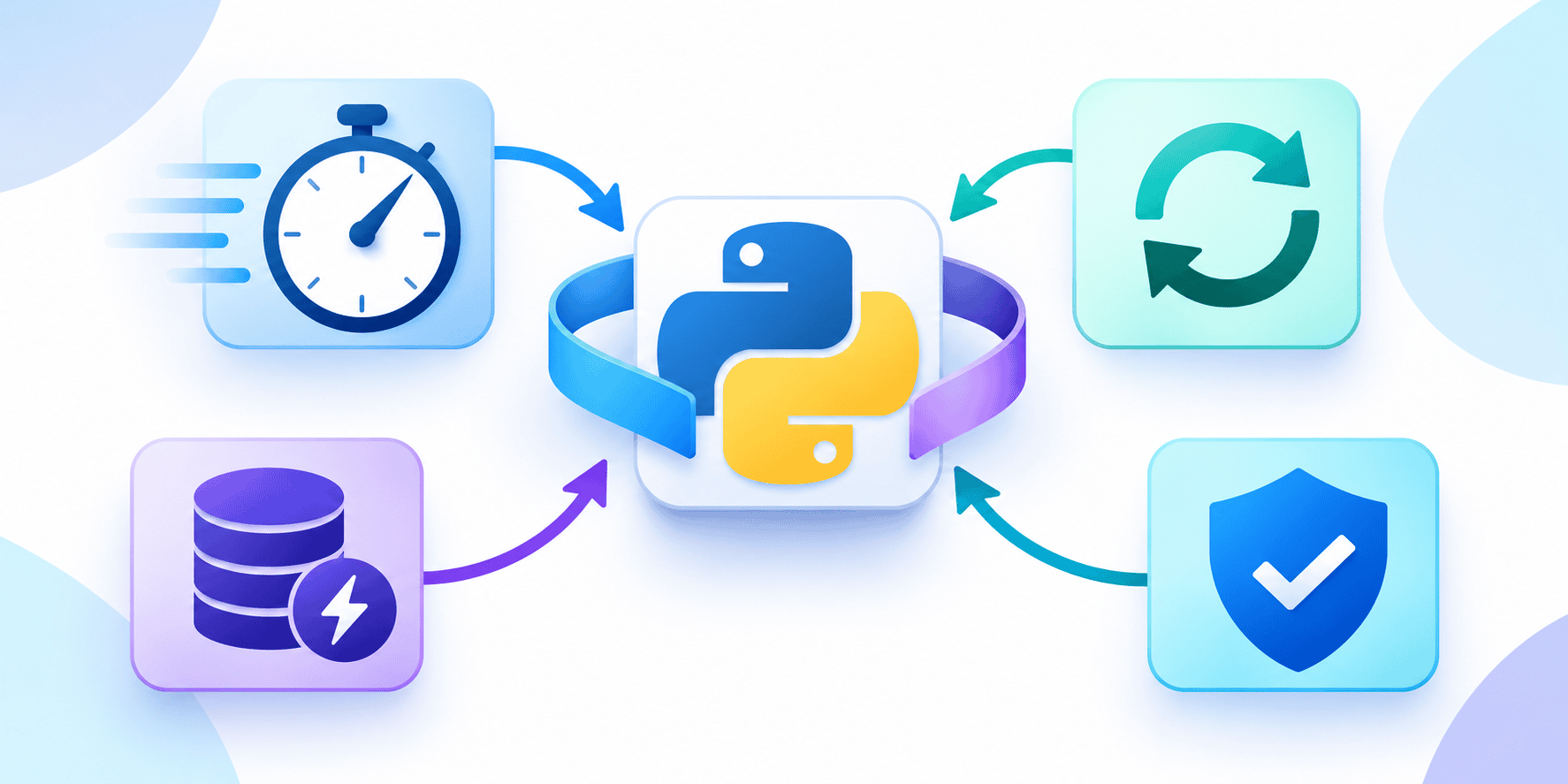
The evolution of a software project often begins with simplicity, but as complexity scales, the "boundary code"—the logic required to manage, monitor, and guard functions—frequently eclipses the core business logic. In a standard data science or machine learning pipeline, a function originally designed to load embeddings or transform data batches can quickly become cluttered with cross-cutting concerns. When developers manually paste code for retries, timing, and input validation into every function, they introduce technical debt, inconsistencies, and significant maintenance burdens. Python decorators offer a sophisticated, modular alternative to this problem by separating the "what" of a function from the "how" of its execution environment.
The Problem of Boundary Creep
In the early stages of a production pipeline, a module might consist of clean, single-responsibility functions. However, as requirements evolve—such as the need for robust error handling in distributed systems or performance monitoring in high-latency environments—boundary code begins to propagate.
For instance, an embedding loader might require path existence checks and batch size validation. A vocabulary service, susceptible to network instability, might require a retry loop with exponential backoff. A batch transformer might necessitate performance profiling via time.perf_counter() and memoization to prevent redundant computations. When these requirements are handled manually within the body of each function, the code base suffers from "boundary creep." This not only violates the Don’t Repeat Yourself (DRY) principle but also makes it impossible to apply consistent standards across a codebase, as different developers will inevitably implement timing or retries in slightly different, often buggy, ways.
Decorators as Architectural Tools
At its core, a decorator is a higher-order function that takes a target function and returns a modified version of it, effectively wrapping the original logic. From a language perspective, the @decorator syntax is "syntactic sugar" for a function reassignment. When Python encounters the @ symbol at the definition stage, it executes the decorator, passing the function object as an argument, and binds the returned wrapper to the original function name.
This mechanism occurs at import time, meaning the decorator’s setup logic runs exactly once. Understanding this timing is critical for performance; if a decorator performs heavy computation, it happens when the module is loaded, not when the function is called. Furthermore, stacked decorators—where multiple decorators are applied to a single function—follow a specific order of operations: func = f1(f2(func)). The innermost decorator is applied first, and the outermost last, a sequence that directly influences how exceptions and cached results are handled.
Building Robust Wrappers: The Closure and Metadata
The power of a decorator lies in the closure—the ability of the inner wrapper function to "remember" the original function even after the decorator has returned. To maintain the integrity of the function’s contract, every professional-grade decorator must leverage functools.wraps. Without it, the decorated function loses its identity: its __name__ becomes the wrapper’s name, its docstring is obscured, and its signature becomes opaque.
functools.wraps copies the metadata from the original function to the wrapper, ensuring that debuggers, profilers, and documentation generators function as expected. Additionally, it preserves the __wrapped__ attribute, which is essential for testing. By calling func.__wrapped__, developers can bypass decorators during unit tests, allowing them to verify the core logic in isolation without triggering network calls or time-consuming caches.
Implementing Timing for Performance Monitoring
The most common application of decorators in data engineering is performance monitoring. By using a try...finally block, a timed decorator can measure execution duration even when a function crashes.
import functools, time

def timed(func):
    @functools.wraps(func)
    def wrapper(*args, **kwargs):
        start = time.perf_counter()
        try:
            return func(*args, **kwargs)
        finally:
            elapsed = time.perf_counter() - start
            print(f"func.__name__ completed in elapsed:.3fs")
    return wrapper
This pattern provides clear, objective metrics. It is important to distinguish between high-resolution measurement (using time.perf_counter()) and system timestamps (using time.time()). For production environments, these timing decorators serve as the first line of defense in identifying bottlenecks in data pipelines, such as slow I/O or inefficient serialization.
The Strategy for Retries and Idempotency
Retries are essential for handling transient failures in cloud-native services, but they must be implemented with care. A poorly implemented retry decorator can inadvertently swallow exceptions or cause "retry storms" that overwhelm downstream services.
A professional retry decorator requires three layers: a factory function to accept configuration (max attempts, delay, exception types), the decorator itself, and the wrapper to handle the execution loop. Crucially, the decorator must only retry on expected exceptions (like TimeoutError or ConnectionError) and must re-raise the final exception if all attempts are exhausted. Furthermore, developers must only apply retries to idempotent operations. Retrying a non-idempotent operation—such as a database insert or a financial transaction—can lead to duplicate data or incorrect account states.
Memoization and Caching
When a function is computationally expensive but deterministic, functools.lru_cache is the industry-standard tool. By caching the results of function calls based on their input arguments, developers can achieve massive performance gains in iterative tasks like tokenization or transformation.
However, the use of lru_cache comes with caveats. It requires that all arguments be hashable; mutable objects like lists will trigger a TypeError. Additionally, because the cache holds references to objects in memory, it can lead to memory leaks if not managed with an appropriate maxsize. For production, it is vital to monitor the cache efficiency via the cache_info() method to ensure that the memory overhead is justified by the hit rate.
Input Validation at the Boundary
The final pillar of decorator utility is input validation. Using the inspect module, developers can build decorators that validate function arguments before the function body is even executed. By binding the arguments to the function signature and applying defaults, a @check decorator can ensure that parameters like size or threshold meet specific criteria (e.g., must be positive).
This approach moves defensive coding out of the business logic and into the interface. It enforces clean, valid inputs, significantly reducing the amount of boilerplate code within the functions themselves. While simple validation is an excellent use case for decorators, complex schema validation—where parameters have interdependencies—is better handled by dedicated data modeling libraries like Pydantic or by using dataclasses.
Implications for Long-term Maintenance
The transition to decorator-based management of boundary code has profound implications for code quality. By centralizing logic such as retries, timing, and validation, teams ensure that these behaviors are applied consistently. When a bug is discovered in the retry logic, fixing it once in the decorator updates the behavior for the entire application, rather than requiring a search-and-replace operation across dozens of files.
However, developers must exercise restraint. Over-reliance on "magic" decorators can lead to code that is difficult to trace. If a decorator obscures too much logic, it ceases to be an asset and becomes a hindrance to new developers trying to understand the system. A general rule of thumb is that if a decorator requires more than three layers of nesting or complex state management, it is likely better to implement the logic explicitly or via a class-based approach.
Ultimately, decorators represent a shift toward declarative programming. By describing what should happen at the boundary of a function—timed, retried, cached, validated—developers can focus on the why of their business logic. When used judiciously and with a firm grasp of the underlying closure and metadata mechanics, decorators transform a fragmented, cluttered codebase into a streamlined, observable, and highly maintainable production system.