OpenSSH 10.6p2 Released to Patch Critical Authentication Bypass Vulnerability Affecting Alpine Linux and Musl-Based Environments

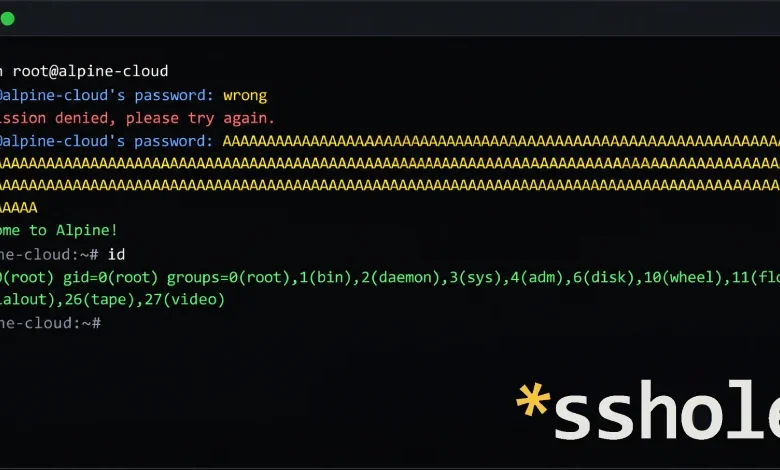
A critical vulnerability within the widely utilized OpenSSH server implementation has exposed numerous lightweight Linux distributions, most notably Alpine Linux, to a severe authentication bypass vector. Disclosed by independent security researcher Özgün Kültekin, the flaw allows unauthorized network attackers to gain administrative or standard shell access to accounts configured without a local password—such as SSH key-only accounts—by supplying an intentionally malformed, oversized password string.
In response to the discovery, the OpenSSH development team escalated the issue to a critical severity rating and rapidly deployed version 10.6p2. Concurrently, the Alpine Linux security team released patched software packages spanning active releases and historical branches dating back to version 3.16. Although no active in-the-wild exploitation has been documented as of publication, the convergence of specific architectural behaviors between the OpenSSH daemon and the musl C standard library has triggered urgent remediation advisories across the global systems administration community.
Technical Anatomy of the Flaw
To understand how the vulnerability manifests, security analysts must examine the complex interplay between password hashing mechanisms, authentication subsystems, and memory safety implementations on minimalist Linux distributions. Unlike mainstream enterprise distributions like Ubuntu, Red Hat Enterprise Linux, or Debian—which traditionally rely upon the GNU C Library (glibc) and the Pluggable Authentication Module (PAM) architecture—Alpine Linux is built upon the lightweight musl C library and often compiles its openssh-server package without PAM support.
When an OpenSSH server operates without PAM, the sshd daemon handles password verification internally. It processes incoming authentication attempts by passing the raw string through the standard crypt() function, a C library utility designed to transform plaintext passwords into secure, salted cryptographic hashes that can be compared against records stored in system configuration files like /etc/shadow.
The vulnerability stems from a structural anomaly involving user accounts that lack an assigned password. In standard Linux environments, such accounts typically feature an asterisk (*) character within the password hash field of the shadow file, indicating that direct password authentication is disabled. Because an asterisk is structurally insufficient to accommodate a cryptographic salt—the randomized data prefix required to protect against rainbow table attacks—sshd attempts to borrow a valid salt from another user account on the same machine that does possess a genuine password hash.
The exploit relies on two historical code decisions made decades apart:
- A modification introduced into the musl C library on August 9, 2012, which dictated that failed crypt() executions return an unmatchable hash string rather than a null pointer, implemented to prevent null-dereference crashes in poorly written software.
- A subsequent restriction added on August 29, 2012, limiting musl’s crypt() function to inputs of 256 bytes or fewer to safeguard systems against algorithmic denial-of-service attacks.
- A measure implemented in OpenSSH on July 15, 2016, to resolve CVE-2016-6210—a vulnerability that inadvertently allowed attackers to enumerate valid usernames based on response timings. This update introduced the fallback salt-borrowing behavior.
When an attacker transmits a specially crafted password string ranging between 257 and 1,024 bytes in length against an unpatched musl-based system running sshd without PAM, musl’s built-in 256-byte limit triggers an internal processing error. Rather than rejecting the authentication attempt safely, the library returns an error indicator that matches the fallback behavior. Combined with the borrowed salt from a secondary account, this error string evaluates as a match against the target account’s placeholder asterisk, successfully authorizing the connection without requiring a valid cryptographic credential.
Exposure Conditions and Vulnerable Vectors
According to official advisories published by the Alpine Linux security team, a server is rendered vulnerable only when a precise set of environmental conditions are met simultaneously:

- The system runs a vulnerable build of the OpenSSH server package compiled without Pluggable Authentication Module (PAM) integration.
- Password-based authentication remains enabled within the SSH configuration files.
- At least one active user account on the target machine possesses a standard, populated password hash (specifically utilizing modern hash formats such as $5$ or $6$).
- The target account being assaulted features no active password of its own, relying entirely on cryptographic public-key authentication or remaining unconfigured.
An attacker requires network-level access to the target server, a valid username corresponding to an account without a password, and the engineered oversized password payload. Crucially, researchers have confirmed that a single connection attempt utilizing the correct payload length will successfully bypass authentication on every targeted attempt, provided the host machine harbors at least one valid password hash belonging to any other user.
The scope of risk extends beyond standard user accounts. While the root user is generally protected by default OpenSSH configurations that prohibit direct password logins (PermitRootLogin prohibit-password), secondary accounts possessing passwordless access can introduce severe privilege escalation pathways. For instance, tiny-cloud deployment images spanning versions 3.18.11 through 3.24.3 provision the default "alpine" user with passwordless doas capabilities. While these instances remain secure upon initial system boot, they instantly become vulnerable the moment an administrator establishes a console password or any other administrative mechanism introduces a standard $6$ hash to the file system. An attacker can subsequently exploit the vulnerability to authenticate as the "alpine" user and execute doas to assume full root privileges.
Industry Scope: Beyond Alpine Linux
Although initial security disclosures have heavily emphasized Alpine Linux due to its heavy reliance on musl and its ubiquity in containerized environments, the underlying architectural flaw is not restricted to a single operating system vendor. Özgün Kültekin’s technical documentation highlights that other minimalist, musl-based distributions—including OpenWrt, Buildroot, and Yocto—warrant rigorous internal auditing.
However, mitigation factors vary significantly across platforms. For example, OpenWrt distributions utilize the Dropbear SSH server by default rather than standard OpenSSH. Security analysis confirms that Dropbear is entirely immune to this specific vulnerability vector, meaning OpenWrt installations are only at risk if an administrator has explicitly uninstalled Dropbear and manually deployed the OpenSSH server package.
Conversely, systems engineered around the glibc C library, non-Linux operating systems, and any environment where sshd delegates authentication procedures to PAM remain completely unaffected by the bug.
Rapid Response and Patching Timeline
The discovery and subsequent remediation timeline underscores an ongoing shift in vulnerability disclosure and response strategies within the open-source cybersecurity community. Damien Miller of the OpenSSH project stated that the core development team was notified of the flaw earlier in the week and prioritized an immediate, expedited release cycle rather than adhering to traditional, prolonged embargo periods.
In public commentary regarding the swift rollout, Miller emphasized that extended disclosure delays primarily benefit malicious actors, noting that modern automated threat actors and artificial intelligence systems frequently rediscover critical software flaws within hours of initial artifact analysis. Consequently, OpenSSH version 10.6p2 was officially released to the public, incorporating a code patch that explicitly forces sshd to reject authentication matches whenever the stored hash field is shorter than four characters.
Simultaneously, the Alpine Linux security infrastructure mobilized to release updated point releases—including versions 3.21.10, 3.22.8, 3.23.8, and 3.24.4—which incorporate the necessary backported patches. In an exceptional move reflecting the severity of the architectural exposure, Alpine maintainers also pushed out patched packages for historical branches ranging from 3.16 to 3.21 that had otherwise reached their formal end-of-life support windows.
Comprehensive Remediation and Mitigation Guidelines
System administrators managing infrastructure utilizing Alpine Linux or other musl-based OpenSSH implementations are urged to execute immediate remediation procedures. Crucially, system maintainers must note that simply updating the Open

SSH software package via a package manager does not automatically restart the active sshd daemon process.
To achieve full remediation on Alpine Linux instances, administrators must execute a dual-step process involving a package upgrade followed by a manual daemon restart:
- Update the local package index and upgrade the openssh server package using the Alpine package manager:
apk update && apk upgrade openssh-server - Restart the active OpenSSH server daemon to flush vulnerable memory states and initialize the patched binary:
/etc/init.d/sshd restart
For cloud instances and virtual machine deployments initialized via legacy tiny-cloud images predating the patched point releases, administrators must apply the package updates immediately or implement direct configuration hardening.
If immediate package updating is logistically unfeasible, system operators can effectively neutralize the attack vector by disabling password authentication globally across vulnerable hosts. Administrators must exercise caution to prevent lockouts by ensuring that public-key authentication is fully functional and keeping active terminal sessions open until a secondary login session is successfully verified:
- Modify the SSH daemon configuration to explicitly disable password logins by setting
PasswordAuthentication no. On modern Alpine installations (version 3.19 onward), administrators can safely deploy this setting via a dedicated drop-in configuration file within the/etc/ssh/sshd_config.d/directory. - Validate the integrity of the updated configuration syntax using the test flag:
sshd -t - Restart the SSH daemon service to enforce the new security posture.
- Verify the active configuration by executing:
sshd -T | grep -i passwordauthentication, which must return the exact outputpasswordauthentication no.
Forensic Audit Recommendations
Given the stealthy nature of the authentication bypass—which relies on standard protocol interactions rather than explicit daemon crashes or memory corruption—system administrators managing potentially exposed infrastructure are strongly advised to conduct thorough post-incident forensic reviews.
Security teams should immediately inspect system log files located at /var/log/messages or query system journal logs for historical log entries reading Accepted password for associated with user accounts that should exclusively rely on SSH keys, such as alpine, root, or designated service accounts. Furthermore, comprehensive audits should be performed on system privilege escalation logs (specifically reviewing doas and sudo invocation histories), newly provisioned user accounts, modified file systems, and authorized key directories.
If system logs or forensic artifacts cannot conclusively rule out unauthorized historical access, security best practices dictate that the affected host machine must be treated as fully compromised, requiring immediate isolation, credential rotation, and complete system re-imaging.
Related posts: