Can ChatGPT provide professional insight into cloud computing or is it merely a reflection of the collective zeitgeist?


The rapid ascent of Large Language Models (LLMs) such as OpenAI’s ChatGPT has ignited a global discourse regarding the capability of artificial intelligence to synthesize complex technical subjects. While these tools have demonstrated an uncanny ability to mimic human professional discourse, a critical examination of their output reveals a persistent tension between breadth and depth. When tasked with explaining core infrastructure concepts like cloud computing and serverless architecture, the AI produces coherent, high-level summaries that mirror industry standard definitions, yet it consistently avoids the nuanced, context-dependent decision-making required for real-world enterprise architecture.
The Rise of the Algorithmic Oracle
To understand the current state of AI as an analytical tool, one must look at the chronology of its deployment. Following the public release of ChatGPT in late 2022, the software was subjected to a barrage of inquiries ranging from creative writing to complex systems engineering. The model’s architectural foundation relies on the Transformer architecture, which processes vast datasets to predict linguistic patterns.
When questioned about technical infrastructure, the model performs with the precision of a corporate communications script. It delivers definitions that are technically accurate, devoid of controversy, and optimized for general consumption. However, this "Miss Universe" style of response—characterized by a polished, agreeable, and comprehensive tone—often masks a lack of original insight. The AI acts as a mirror to the existing body of internet-based literature, aggregating consensus rather than generating novel architectural solutions.
Decoding Cloud Infrastructure: The AI Perspective
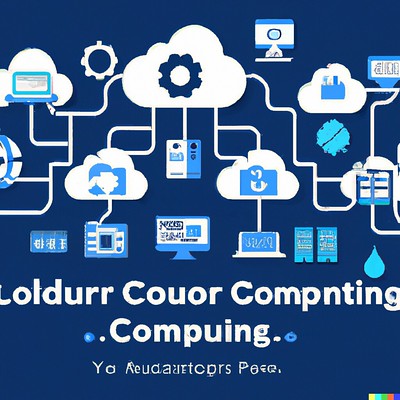
In professional evaluations, ChatGPT defines cloud computing as a paradigm shift where computing services—ranging from storage and networking to complex data processing—are abstracted from the physical hardware. The model correctly identifies the primary value propositions that have driven market growth over the last decade: scalability, elasticity, and the transition from Capital Expenditure (CapEx) to Operational Expenditure (OpEx).
According to data from Gartner, global end-user spending on public cloud services is projected to reach over $675 billion by the end of 2024, representing a massive shift in how global enterprises handle their digital assets. ChatGPT accurately articulates the theoretical benefits of this shift, noting that cloud models allow for "on-demand" resource allocation. However, the model’s inability to synthesize specific organizational contexts—such as the trade-offs between egress costs and the convenience of proprietary managed services—highlights the current limitations of generative AI in high-stakes consulting.
The Limits of Technical Advice
The discrepancy between the AI’s capability and its utility becomes evident when it is presented with specific, high-level industry dilemmas. For instance, when asked about the recent trend of companies opting to move away from public cloud providers toward private, on-premises infrastructure—a movement popularized by firms like 37signals (the creators of HEY and Basecamp)—the model defaults to a neutral stance.
This refusal to take a position is a programmed safeguard, yet it serves as a functional limitation for professionals seeking strategic guidance. Choosing between a multi-cloud strategy, a hybrid-cloud environment, or a private data center is rarely a matter of objective "truth." It is a calculation of cost, team talent, regulatory requirements, and technical debt. By remaining agnostic, the AI fails to provide the synthesis of trade-offs that a senior systems architect would prioritize. It offers the "what" but lacks the "why" that defines expert-level decision-making.
Serverless Computing and the Future of Abstraction
When the focus shifts to serverless computing, the AI’s performance mirrors the industry’s ongoing transition toward higher levels of abstraction. Serverless computing, or Function-as-a-Service (FaaS), represents the logical endpoint of the cloud model: the total removal of the server from the developer’s concern.
The AI identifies the core benefit here: the cloud provider assumes responsibility for the management of the underlying infrastructure, allowing developers to focus solely on code deployment. This aligns with the evolution of software development practices, where the reduction of operational overhead has become a metric for developer productivity.
However, the AI’s analysis of whether serverless is the "future" of the industry remains cautious. It points to the reality that serverless is not a panacea. It mentions the risks of vendor lock-in, the challenges of "cold starts" in application performance, and the complexity of debugging distributed systems. While these points are accurate, they are descriptive rather than prognostic. The model serves as an excellent index of current technical literature, but it is not yet an agent capable of predicting the specific technological shifts that will define the next decade of cloud innovation.
The Human Element in the Age of AI
The broader implication for the technology sector is that AI models are currently best categorized as augmentative tools rather than replacement engines. The AI is a high-speed, high-accuracy research assistant that excels at summarizing existing documentation. It is an "oracle of the zeitgeist," aggregating the common wisdom found in white papers, technical blogs, and official documentation.
However, the human element remains vital for the application of this information. The nuances of business strategy—such as whether a company should repatriate its data to on-premises servers to save on long-term cloud costs—require a level of subjective judgment and risk assessment that LLMs currently lack.
Broader Implications and Industry Impact
The impact of AI on the technical workforce is already being felt across several dimensions:
- Information Retrieval: Technical documentation that previously took hours to parse can now be summarized in seconds. This increases the baseline speed of development for teams that know how to frame their inquiries effectively.
- Standardization: As more developers use AI to generate boilerplate code and architecture diagrams, there is a risk of technical homogenization. If the industry relies on a narrow set of AI-suggested patterns, we may see a decrease in architectural diversity.
- The Talent Gap: The necessity for deep, fundamental knowledge remains unchanged. If a developer uses AI to generate an infrastructure plan without understanding the underlying networking or security protocols, they are susceptible to "hallucinated" errors that can have catastrophic real-world consequences.
Conclusion
ChatGPT represents a significant milestone in natural language processing and information accessibility. It has successfully democratized access to complex technical explanations, making professional-level definitions of cloud and serverless computing available to anyone with an internet connection.
Yet, for the enterprise professional, the tool serves as a starting point rather than a destination. It provides the breadth of an encyclopedia but lacks the depth of an experienced engineer. As these models continue to evolve, their utility will likely grow, particularly as they are integrated into development environments with real-time access to proprietary data and live performance metrics. Until then, the role of the human professional remains secure—not because AI cannot answer the questions, but because it cannot yet live with the consequences of the answers it provides. The future of cloud computing will continue to be written by humans, informed by data, and perhaps, assisted by an algorithmic companion that is increasingly articulate, even if it is not yet wise.