Disney is Grappling with a Paradoxical Problem: Using More Technology to Get Guests Off Their Phones

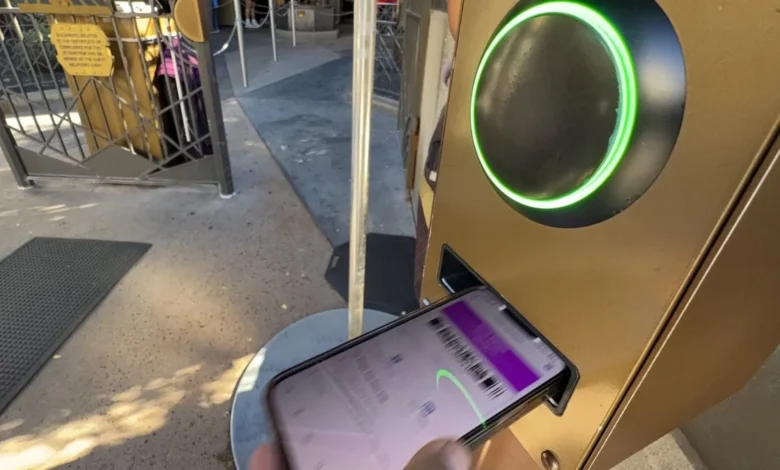
Stepping foot into a Disney theme park has historically promised an escape from the mundane routines of daily life, transporting visitors into meticulously crafted realms of fantasy, nostalgia, and cinematic wonder. For decades, the magic relied on physical immersion—elaborately themed queues, interactive environment details, cast members staying strictly in character, and the simple freedom of wandering without a screen in hand. However, the modern reality of visiting a Disney resort—whether in California, Florida, Paris, Tokyo, or Shanghai—has shifted dramatically. Today, the magic is frequently mediated through a glowing glass screen, turning what should be a sensory-rich holiday into a tedious exercise in app management, notification chasing, and constant digital tethering.
Guests navigating Disneyland or Walt Disney World are expected to juggle an array of dedicated resort applications just to execute basic park functions. Securing a coveted Lightning Lane appointment to bypass hours-long stand-by queues, booking critical dining reservations months or days in advance, and ordering quick-service meals via mobile platforms all demand continuous interaction with digital interfaces. Visitors who fail to keep a vigilant eye on these applications often find themselves facing multi-hour waits for classic attractions like Space Mountain or struggling to secure a table at popular dining spots like the Blue Bayou restaurant. The irony has not escaped Disney’s executive leadership, who have openly admitted that this heavy reliance on digital infrastructure actively works against the company’s core product: authentic, uninterrupted immersion.
The Digital Dilemma: How Smartphones Broke the Magic
The friction between technology and theme park immersion reached a boiling point in recent years, prompting rare public self-reflection from the company’s creative divisions. Walt Disney Imagineering President Bruce Vaughn addressed the issue directly, acknowledging during public presentations that the ubiquitous presence of smartphones and app dependency fundamentally "breaks the spell" of visiting a Disney resort. When families spend their vacation time staring down at mobile devices to refresh wait times, modify reservation windows, or coordinate itineraries across large groups, the carefully engineered illusion of stepping into another world begins to fray.
This over-reliance on digital tools is not accidental; it is the culmination of years of efficiency-driven corporate strategy. Over the last decade, theme park operators worldwide have embraced mobile-first strategies to optimize crowd flow, reduce physical infrastructure costs, and maximize secondary spending. Yet, as consumer fatigue mounted, guest surveys and theme park enthusiast communities began to flag "screen time exhaustion" as a primary detractor from the overall guest experience. Recognizing that telling guests to simply put their phones away was impractical given the systems currently in place, Disney initiated a multi-phase effort to reconcile its digital infrastructure with its physical storytelling mandate.
The Birth of Imagineering Labs and Secrets of the Spire
As part of its ongoing strategy to address digital fatigue, The Walt Disney Company unveiled its latest technological experiment: the Disney Imagineering Labs app. In a twist of corporate irony, the company introduced a brand-new smartphone application specifically designed to help mitigate excessive smartphone usage inside the parks. The initial rollout of the application is currently limited to select participants within the Magic Key annual passholder program, serving as a controlled environment to test new interface concepts and engagement loops.
The first major feature deployed within the Imagineering Labs ecosystem is "Secrets of the Spire," an interactive, location-based augmented experience situated within Star Wars: Galaxy’s Edge at Disneyland. According to reports from specialized theme park chroniclers like the Disney Tourist Blog, the feature integrates minigames and narrative challenges designed to weave the physical environment more deeply into the guest’s digital device. While the game attempts to gamify the physical surroundings rather than just administrative logistics, early observers have noted a philosophical contradiction: introducing yet another interactive layer on a smartphone does not immediately solve the underlying problem of device dependency.
The Disneyland Enchanted Guide: Shifting from Pull to Push Technology
Recognizing the limitations of interactive minigames in reducing screen time, Disney’s more promising upcoming initiative is the Disneyland Enchanted Guide. While the official release date has not yet been locked in by corporate communications, industry analysts and park insiders anticipate a public rollout early next year.
Unlike traditional park applications that require users to constantly open, refresh, and monitor data fields, the Enchanted Guide leverages artificial intelligence to transition the user experience from active searching to passive notification. The AI-powered tool supports both text-based and voice-based natural language queries. Guests can ask conversational questions directly to the system, such as, "How long is the current line at Pirates of the Caribbean?" or "Where should my family eat around noon near Tomorrowland?"
Crucially, the defining feature of the Enchanted Guide is its proactive alert system. Instead of gluing oneself to a screen to monitor fluctuating wait times or sudden dining availability drops, visitors can establish customized parameters. The system monitors the park’s data streams in the background and dispatches a notification only when a specific metric hits a user-defined threshold—such as a wait time falling below twenty minutes. This shifts the psychological burden away from the visitor; rather than actively managing their day through an app, guests can engage in their immediate surroundings until a subtle audio cue alerts them that action is required.
Early Rollout Strategy and User Feedback Loops
In deploying the Imagineering Labs app and its associated modules, Disney has adopted a transparent, iterative development approach. Rather than launching a finished, enterprise-wide software update, the company is actively soliciting qualitative and quantitative feedback directly from high-frequency park visitors and annual passholders participating in the initial test phases.
By engaging park power users—individuals who understand the historical nuances and operational pain points of the resort ecosystems—Disney aims to calibrate the Enchanted Guide to ensure it genuinely reduces cognitive load rather than adding another layer of digital noise. Participants are encouraged within the application interface to report whether specific features successfully kept their devices in their pockets or if the software inadvertently encouraged more screen time.
Integration Challenges and Architectural Hurdles
Despite the promising conceptual framework of the Enchanted Guide, significant logistical questions remain regarding how the new application will interface with Disney’s existing digital infrastructure. Industry observers have pointed out a glaring potential workflow bottleneck: the Imagineering Labs application is currently slated to debut as a standalone utility, separate from the primary Disneyland and My Disney Experience apps.
This structural separation means that a visitor might receive a high-priority alert regarding Lightning Lane availability or dining openings via the Enchanted Guide app, only to be forced to unlock their device, close that program, and open the traditional Disneyland app to complete the actual booking transaction. Without backend consolidation or full application integration, the introduction of a new tool risks fragmenting the user experience further rather than streamlining it. Disney has not yet clarified whether the Imagineering Labs framework will eventually absorb the core operational functions of the older applications or if it will remain a supplementary companion layer.
The Wearable Paradox: Meta, Smart Glasses, and Augmented Reality
Complicating Disney’s narrative around reducing phone usage is its concurrent embrace of wearable technology and augmented reality partnerships. Alongside the software developments of the Enchanted Guide, Disney has begun establishing compatibility frameworks with emerging hardware ecosystems, most notably Meta’s Ray-Ban smart glasses.
Under this integration, users equipped with the AI-enabled eyewear will be able to pair their glasses with the Enchanted Guide app, allowing them to ask contextual, voice-activated questions about physical landmarks, characters, and environments they are directly observing within the park. While proponents argue that heads-up, hands-free wearable technology removes the need to physically hold and look down at a smartphone screen, critics and privacy advocates note that replacing a phone with an always-on camera-equipped wearable device does not fundamentally solve the core issue of digital distraction. Instead of escaping into the physical reality of the park, guests remain engaged with an artificial intelligence layer overlaid onto their field of vision—raising fresh questions about whether Disney is truly moving toward an offline experience or merely shifting the medium of digital dependency.
Broader Implications for the Theme Park Industry
Disney’s experimental push to recalibrate its digital footprint carries significant implications for the wider attractions and hospitality industry. For years, theme parks worldwide have raced to digitize operations, viewing mobile applications as a universal panacea for queue management, labor optimization, and data harvesting. However, as consumer burnout becomes measurable, operators are discovering that excessive technological friction can severely degrade brand sentiment and customer satisfaction.
The success or failure of the Imagineering Labs ecosystem and the Disneyland Enchanted Guide will likely serve as a bellwether for how large-scale entertainment venues balance operational efficiency with human psychology. If artificial intelligence and proactive notification models can successfully alleviate the compulsion to constantly check mobile interfaces, it could establish a new design standard for immersive spaces globally. Conversely, if these tools prove to be redundant overlays that complicate rather than simplify the visitor journey, theme parks may be forced to reckon with more radical structural changes—including the potential reduction of digital gatekeeping mechanisms altogether.
As the early testing phases continue through the winter months and the public release date approaches, parkgoers and industry analysts alike will be watching closely to see whether Disney can successfully banish the digital spell and restore the authentic, unvarnished magic that defined its parks for generations.