Apple Launches New OLED MacBook Pro Featuring Touchscreen Technology and Refined Design

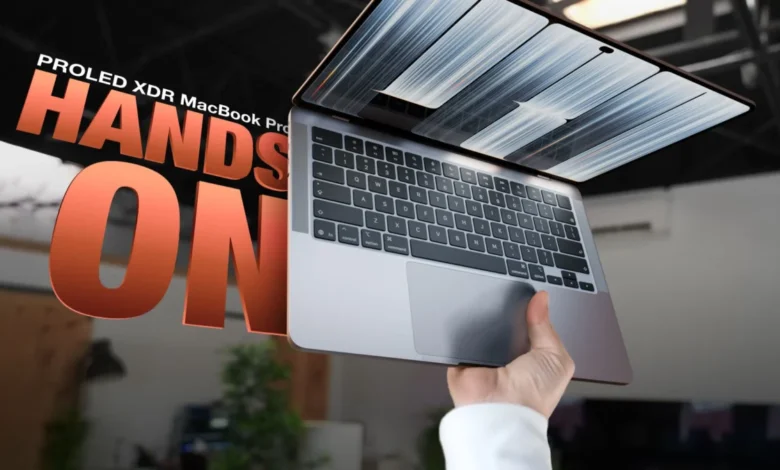
Apple has officially released its latest iteration of the MacBook Pro, marking the most significant physical redesign of the professional laptop line in half a decade. Available in both 14-inch and 16-inch configurations, the new devices—marketed under the PROLED branding—introduce a high-end OLED display panel, integrated touch capabilities, and a notably slimmer, lightweight chassis. As of Friday, November 6, 2026, the machines have begun arriving in the hands of customers, signaling a shift in Apple’s portable computing strategy that integrates touch-based workflows long reserved for the iPad and iPhone.
A Half-Decade in the Making: The Redesign
The previous MacBook Pro design language had remained largely consistent since 2021. The 2026 update represents a departure from that standard, prioritizing portability through material science and structural optimization. The 14-inch model has seen its weight reduced to just over three pounds, a decrease of approximately 0.5 pounds, while the 16-inch model has shed 0.7 pounds, bringing it to a four-pound total. In terms of dimensions, the 14-inch chassis is 0.5 millimeters thinner, and the 16-inch model is nearly a full millimeter thinner.
A notable aesthetic return is the inclusion of the glowing Apple logo on the rear lid, a feature that was phased out in 2016 but has been reintroduced to distinguish the OLED-equipped models from the legacy mini-LED versions. The display bezels have also been trimmed, allowing for a slight increase in the larger model’s screen real estate, which now measures 16.3 inches diagonally.
Chronology of the Development
The path to the 2026 MacBook Pro was characterized by intense industry speculation regarding the integration of touch technology and the potential naming convention of the device.
- October 2026: Throughout the month, industry analysts speculated on the existence of a "MacBook Ultra," a rumored high-end device meant to sit above the Pro line.
- October 19, 2026: Apple issued invitations for a product experience event in Los Angeles, utilizing the tagline "Pro and tell," which effectively silenced rumors of the "Ultra" branding and confirmed the continuation of the Pro nomenclature.
- October 28, 2026: Apple formally announced the OLED MacBook Pro, confirming that the new display technology would support multi-touch gestures and a new Dynamic Island integration.
- November 6, 2026: The global rollout began, with units shipping to customers and appearing in Apple retail locations.
The PROLED Display and Touch Integration
The centerpiece of the new hardware is the PROLED XDR display. Unlike the previous mini-LED technology, which relied on localized dimming zones, the OLED panel offers per-pixel illumination. This results in "true black" levels and eliminates the "bloom" effect common in high-contrast scenes. The display is engineered for high peak brightness, addressing the historical challenges OLED screens have faced in outdoor, high-ambient-light environments.
Perhaps the most controversial and significant change is the implementation of a touch-enabled interface. While the trackpad remains the primary input method for macOS, the screen now responds to tap, swipe, and pinch-to-zoom gestures. To accommodate this, Apple has modified the macOS interface; menu elements expand upon touch interaction, and window resizing hitboxes have been enlarged to facilitate finger-based precision.
A sturdier hinge mechanism has been installed to mitigate screen wobble during touch interaction. However, internal testing confirms that the screen remains subject to minor vibration when force is applied to the upper corners—an inherent challenge when balancing a lightweight, thin display with the physical demands of touch input.
The Dynamic Island and Software Ecosystem
The notch, which housed the webcam in previous models, has been replaced by a Dynamic Island, a feature ported directly from the iPhone line. This space now serves as a central hub for system notifications, Live Activities, and the Siri AI interface. By providing a dynamic visual space at the top of the display, Apple aims to bridge the gap between mobile and desktop user experiences. This integration is particularly relevant given the new touch functionality, as the Dynamic Island is designed to be interactive, allowing users to quickly toggle settings or view real-time data with a simple tap.
Technical Specifications and Performance
Despite the exterior overhaul, the 2026 MacBook Pro retains the M5 Pro and M5 Max silicon found in the previous mini-LED iterations. This decision has met with mixed reactions from hardware enthusiasts, particularly given the entry-level price point of $2,899 for the 14-inch model and $3,399 for the 16-inch model.
Because Apple continues to sell the previous generation of MacBook Pros, the current market presents a clear value proposition: the $400 price premium covers the upgrade to the OLED display, the lighter chassis, the re-engineered hinge, and the touch-enabled interface. For users heavily invested in creative workflows that benefit from the accuracy of OLED color reproduction, the value is clear. For general users, the internal parity suggests that the upgrade may be more of an evolutionary step than a performance-focused leap.
Broader Industry Implications
The transition to touch-enabled laptops among industry leaders like Apple signals a broader trend in personal computing. For years, Apple maintained a strict separation between the touch-first iPad and the mouse-and-keyboard-first Mac. The introduction of touch to the MacBook Pro suggests that the company is responding to evolving consumer expectations, where the boundaries between mobile and desktop operating systems are becoming increasingly fluid.
Competitors in the Windows space have long offered touch-enabled 2-in-1 devices, but Apple’s specific implementation—retaining the clamshell form factor while optimizing macOS for touch—is a distinct strategic choice. By focusing on "touch-as-a-bonus" rather than a total replacement for the trackpad, Apple aims to avoid the ergonomic pitfalls of touch-only laptops while providing additional utility for power users.
Market Reception and Future Outlook
Initial customer feedback highlights the weight reduction as the most immediately noticeable improvement. The ability to carry a high-performance machine with the portability of a sub-three-pound device is a significant draw for professionals who travel frequently.
However, the lack of a new processor generation remains a point of critique. As the industry moves toward faster NPU (Neural Processing Unit) integration and lower power consumption cycles, the reliance on the M5 series suggests that Apple may be preparing for a more significant internal architecture refresh in the following calendar year.
As of the current writing, Apple has not issued specific sales figures for the new units, though high demand for the 16-inch configuration suggests that the professional market is favoring the larger screen for its superior display performance. The success of the PROLED lineup will likely serve as a benchmark for future iterations of the MacBook Air and potentially other professional hardware in the coming years.
In summary, the 2026 MacBook Pro is a refined, albeit iterative, update that successfully brings the company’s highest-quality display technology and mobile-inspired interface elements to the desktop. While the underlying processing power remains consistent with the previous generation, the improvements in ergonomics, weight, and visual fidelity represent a deliberate move toward a more tactile, versatile, and high-performance computing future.