Apple Patches Critical Hide My Email Flaw That Exposed User Identities, Faces Class Action Lawsuit

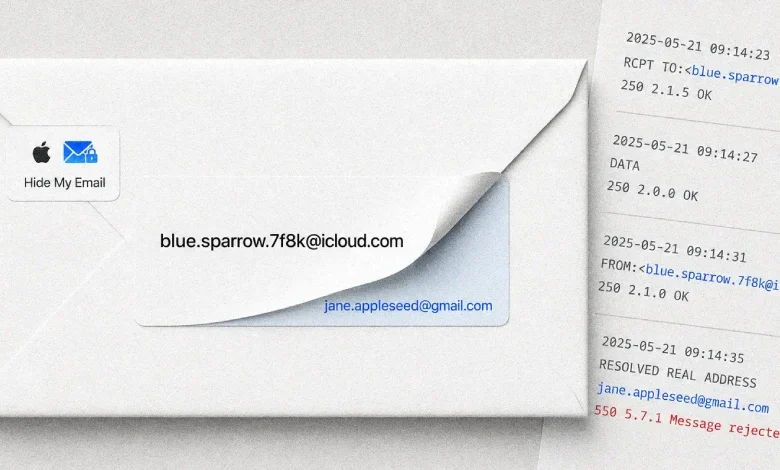
Apple has successfully addressed a significant security vulnerability within its "Hide My Email" service, a premium feature designed to bolster user privacy by masking personal email addresses. The flaw, which allowed for the unmasking of a user’s real email address under specific conditions, effectively undermined the core privacy guarantees of the service and has led to a class-action lawsuit against the technology giant. The long-awaited fix, deployed on July 3, 2026, comes more than a year after the issue was first reported to the company.
Background: The Promise of "Hide My Email"
Launched by Apple in June 2021 as a key component of its iCloud+ subscription service, "Hide My Email" was touted as a robust privacy feature. Its primary function is to generate unique, random email addresses for users, which then automatically forward incoming messages to their personal inbox. The underlying premise is simple yet powerful: by using these disposable, intermediary addresses, users can sign up for newsletters, online services, or make purchases without revealing their primary email address. This mechanism is crucial in combating spam, reducing exposure to phishing attempts, and generally safeguarding a user’s digital identity from unwanted scrutiny and data breaches. For a company like Apple, which frequently positions user privacy as a cornerstone of its ecosystem and a major differentiator from competitors, "Hide My Email" was a strategic offering designed to reinforce this brand image. It became an integral part of the iCloud+ suite, which also includes other privacy-enhancing features like Private Relay and HomeKit Secure Video. The feature’s adoption grew steadily, especially among privacy-conscious users willing to pay for enhanced digital anonymity.
The Unmasking Vulnerability: A Technical Deep Dive
The vulnerability at the heart of this issue was insidious in its simplicity and potentially widespread impact. At the start of July 2026, details began to emerge regarding a flaw that permitted the exposure of a user’s actual email address, despite it being ostensibly hidden behind a "Hide My Email" proxy. The technical crux of the problem lay in how certain email rejections were handled. Specifically, if a message sent to a "Hide My Email" address was automatically rejected as spam by the recipient’s mail server, the sender’s email logs would, under specific circumstances, record the real email address of the "Hide My Email" user, rather than the anonymized one.
This mechanism meant that even a non-malicious, legitimate email, if flagged as spam, could inadvertently leak sensitive user data. Tyler Murphy, co-founder of EasyOptOuts, who initially discovered and reported the flaw, elaborated on this to 404 Media, stating, "We don’t know how often hidden email addresses were leaked in email logs. For many major email hosts, the leak was triggered simply by an email being automatically rejected as spam, even if it was a legitimate message. Such emails probably didn’t make it to your inbox, so you can’t review your spam folder to learn whether you were affected." This highlights the passive and often undetectable nature of the leak from the user’s perspective, making it particularly concerning. The exposure of a real email address, even in mail logs, could be exploited by malicious actors for targeted spam campaigns, phishing, or to correlate user identities across different services, fundamentally undermining the very privacy "Hide My Email" promised.
A Protracted Timeline of Disclosure and Resolution

The journey from discovery to resolution for this vulnerability was a lengthy and convoluted one, spanning over a year and involving multiple unsuccessful patching attempts.
- June 2021: Apple officially announces and subsequently rolls out "Hide My Email" as part of its iCloud+ subscription, marketing it as a robust privacy feature.
- June 13, 2025: Tyler Murphy, co-founder of EasyOptOuts, a service focused on helping users manage their online data, first identifies and formally reports the vulnerability to Apple. This marks the beginning of Apple’s engagement with the issue.
- Over the ensuing year: Murphy and his team engage in ongoing communication with Apple, providing details and likely assisting in reproducing the flaw, as is standard practice in responsible vulnerability disclosure. The sustained engagement underscores the complexity of the issue and the challenges in developing a comprehensive fix.
- March 2026: Apple deploys its first attempt to patch the vulnerability. However, this attempt proves unsuccessful, indicating that the initial fix did not fully mitigate the underlying problem or introduced new complexities. This highlights the intricate nature of security patching in large-scale, interconnected systems.
- June 30, 2026: Apple makes a second attempt to resolve the issue. Similar to the first, this patch also fails to completely address the vulnerability, leaving users exposed for an extended period. The repeated unsuccessful attempts suggest either a deep-seated architectural issue or significant challenges in identifying all edge cases related to email server interactions.
- July 3, 2026: After more than a year since the initial report and two prior unsuccessful attempts, Apple finally deploys a successful fix for the "Hide My Email" vulnerability. This resolution is reported by 404 Media on Tuesday, July 21, 2026.
- July 7, 2026: It is noted that real email addresses linked to "Hide My Email" addresses created before this date may have been captured in mail transfer logs when non-malicious emails bounced. This implies a specific cutoff for potential exposure and suggests the fix fully took effect and prevented future leakage from this date forward.
- July 21, 2026: News outlets, including The Hacker News, publish reports detailing the vulnerability, its resolution, and the ongoing legal ramifications, following the confirmation of the fix by 404 Media. Specifics about the issue, which had been largely withheld by researchers to prevent exploitation, are now made public, given the successful patch.
This extended timeline raises questions about the speed of Apple’s response, especially given the critical nature of a privacy-undermining flaw in a feature specifically marketed for privacy.
The Class Action Lawsuit: Allegations of Deception and Negligence
In parallel with the technical resolution, Apple is now confronting significant legal repercussions. The company is currently facing a class-action lawsuit, filed by plaintiffs who allege that Apple misled customers about the privacy capabilities of its "Hide My Email" feature, particularly while charging for it as part of the iCloud+ subscription.
The complaint, citing court documents from "Alvarez v. Apple Inc.," asserts that "Apple promised Hide My Email as a privacy feature customers paid for, whether directly through iCloud+ or indirectly through Apple’s product-wide privacy representations, and failed to deliver it." The lawsuit further claims that Apple was "fully aware of this problem for over a year and has not fixed it" during the period of alleged exposure.
A particularly damning accusation within the complaint is that "At no point during this period did Apple disable or pause Hide My Email, warn its customers of the flaw, or correct its privacy representations." This suggests a potential lack of transparency and proactive communication with its user base regarding a known security risk. Plaintiffs are seeking damages for what they view as a breach of contract, unjust enrichment, and potentially deceptive trade practices. The legal action underscores the growing scrutiny over tech companies’ claims regarding user privacy and the tangible consequences when those claims are perceived to be unmet. The outcome of such a high-profile lawsuit could set precedents for how companies are held accountable for security flaws in privacy-centric features, especially those offered as paid services.
Broader Implications and Impact on User Trust
The "Hide My Email" vulnerability and its prolonged resolution carry significant implications for Apple’s brand, user trust, and the broader landscape of digital privacy.

- Erosion of Trust: For a company that has invested heavily in differentiating itself through privacy, a flaw that undermines a core privacy feature can severely damage user confidence. Users subscribe to iCloud+ expecting a heightened level of data protection; a breach of this expectation, especially one that went unpatched for over a year, can lead to a perception of negligence or even deception. This could prompt users to reconsider their reliance on Apple’s privacy assurances or even explore alternative services.
- Reputational Damage: While Apple is generally lauded for its security posture, incidents like this can tarnish its reputation, particularly among privacy advocates and security researchers. The public nature of the flaw, coupled with the class-action lawsuit, ensures that this incident will be remembered when evaluating Apple’s commitment to user data protection.
- Challenges in Vulnerability Management: The fact that Apple struggled with multiple unsuccessful patches over a year highlights the inherent difficulties in securing complex software systems. It underscores the need for robust internal security audits, thorough testing of patches, and perhaps a more agile response mechanism for critical privacy flaws.
- Precedent for Accountability: The class-action lawsuit could establish a precedent for how tech companies are held accountable when paid privacy features fail to deliver on their promises. If successful, it might encourage greater transparency, faster patching cycles, and more proactive communication with users when vulnerabilities are discovered.
- The Future of Anonymity Services: This incident also serves as a cautionary tale for the broader industry offering email anonymization or identity protection services. It emphasizes that even well-intentioned features can have unforeseen vulnerabilities, and continuous vigilance is paramount. It may also lead to greater scrutiny of the underlying architecture and implementation details of such services.
Official Responses and Industry Standards
As of the current reporting, Apple has not issued a public statement directly addressing the class-action lawsuit or providing extensive details about the technical nature of the vulnerability beyond the deployment of the fix. Their action of patching the flaw, however, serves as an implicit acknowledgment of its existence and severity. Typically, tech giants respond to such incidents by reaffirming their commitment to user privacy and security, thanking researchers for their disclosure, and detailing the steps taken to mitigate the risk. The lack of a comprehensive public statement regarding the delay in patching or the lawsuit could be a strategic legal decision, but it does leave a gap in transparency for users.
From an industry perspective, the vulnerability disclosure timeline, while lengthy, did follow a responsible path initiated by the researcher. However, the extended period for a complete fix and the alleged lack of user notification during that time fall short of best practices often advocated by privacy and security experts. Organizations like the National Institute of Standards and Technology (NIST) and various cybersecurity frameworks emphasize prompt patching, transparent communication, and user notification for vulnerabilities that could impact personal data.
Recommendations and Path Forward
For users who relied on "Hide My Email" prior to July 7, 2026, it is important to understand that their real email addresses may have been exposed in mail transfer logs under specific conditions. While there’s no immediate action users can take to ascertain if their specific address was leaked through this mechanism, general best practices for email security remain crucial:
- Be vigilant about unexpected emails, especially those asking for personal information or leading to unfamiliar links.
- Utilize strong, unique passwords for all online accounts, preferably with a password manager.
- Enable two-factor authentication (2FA) wherever possible.
- Regularly review privacy settings across all online services.
For Apple, this incident presents an opportunity to reinforce its commitment to privacy through actions beyond marketing. This could involve:
- Increased transparency regarding vulnerability disclosure and patching timelines.
- Proactive user notifications when critical flaws in privacy features are discovered, even before a full fix is deployed, offering workarounds or temporary solutions.
- Enhancing internal security audits and bug bounty programs to catch such vulnerabilities earlier.
- Revisiting the design and implementation of privacy-centric features to ensure resilience against unforeseen technical exploits.
The "Hide My Email" vulnerability serves as a stark reminder that even the most reputable technology companies, with their extensive resources, are not immune to security flaws. It underscores the perpetual challenge of balancing innovation with robust security and the paramount importance of safeguarding user privacy in an increasingly interconnected digital world. The ongoing class-action lawsuit will undoubtedly keep this issue in the spotlight, pushing for greater accountability and transparency from industry leaders.