Building Agentic Workflows in Python with LangGraph, from a single model call to a tool-using agent with persistent conversation memory.

The rapid evolution of artificial intelligence has propelled the demand for sophisticated AI systems capable of more than mere single-turn interactions. Modern applications increasingly require "agentic" AI — systems that can reason, plan, execute multi-step tasks, and maintain context over extended dialogues. However, the development of such robust AI agents often encounters significant hurdles, particularly in managing complex conversational states, integrating external tools, and ensuring the inspectability of their decision-making processes. LangGraph, an extension of the popular LangChain framework, emerges as a pivotal solution, offering a structured, graph-based paradigm to construct these advanced agentic workflows in Python.
The Rise of Agentic AI: Beyond Single-Turn Interactions
For years, the benchmark for conversational AI rested on systems adept at processing isolated queries. A user asks a question, an AI model provides an answer, and the interaction often concludes. While effective for specific tasks, this "single-turn" model falters when confronted with scenarios requiring sequential reasoning, memory retention, or interaction with external information sources. Consider a customer support agent needing to access a database, remember previous customer interactions, or understand why a specific decision was made by the AI. These are the "harder problems" that challenge traditional AI setups, often leading to custom, unwieldy plumbing for each unique use case.
The advent of large language models (LLMs) has amplified the potential for AI agents, providing unprecedented reasoning capabilities. Yet, even powerful LLMs require a framework to orchestrate their interactions with the real world, manage complex state transitions, and ensure coherent, multi-turn dialogues. This is where agentic frameworks become indispensable, moving beyond simple API calls to enable truly intelligent, autonomous behavior.
LangGraph’s Architectural Paradigm: State, Nodes, and Edges
LangGraph addresses the inherent complexity of agentic workflows by representing an agent as a directed graph. This graph structure provides a clear, modular, and highly inspectable blueprint for AI agent behavior. The core components underpinning every LangGraph graph are:
-
State: This is a
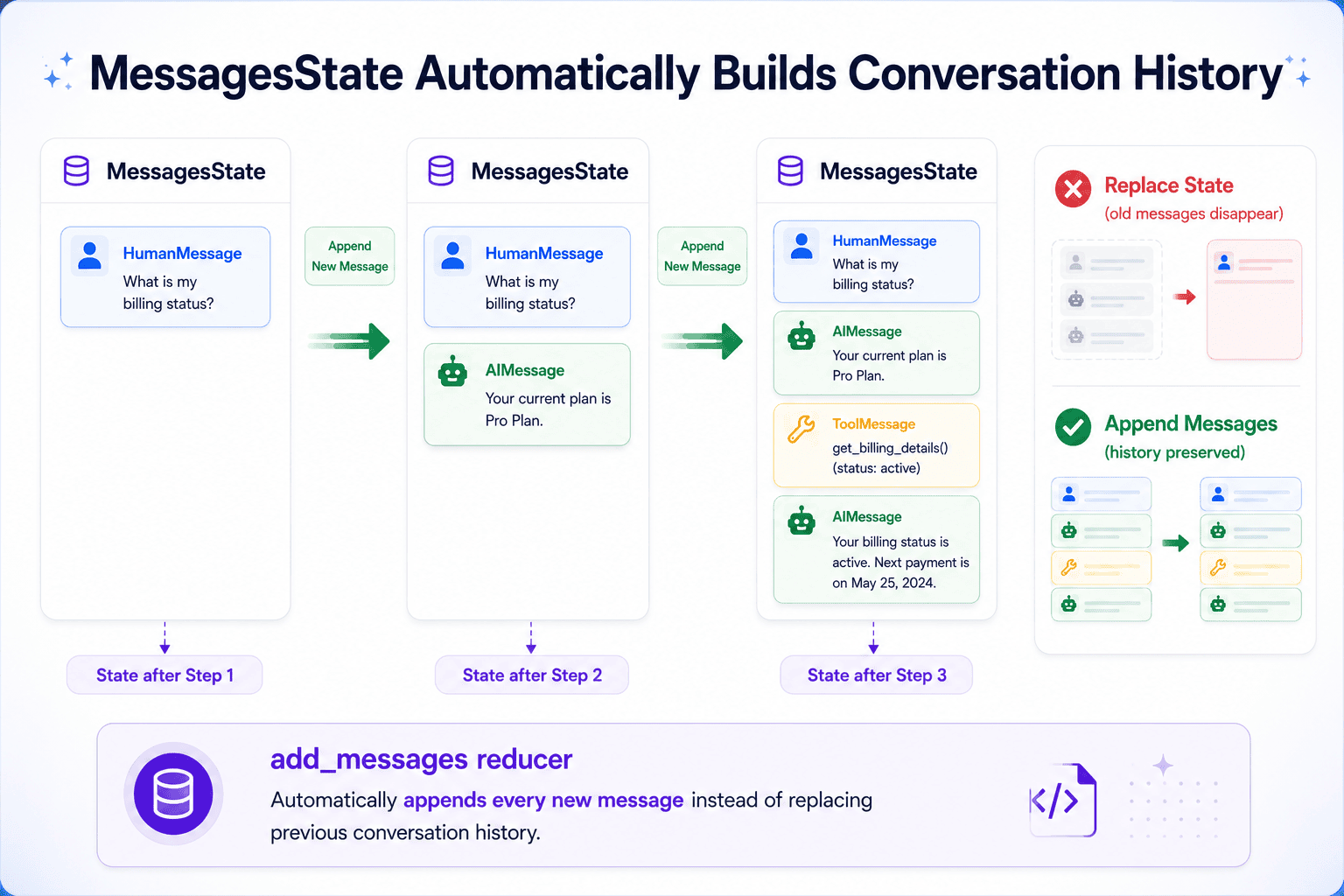
TypedDictthat serves as the universal shared memory across the entire graph. Every node within the graph reads from this state and, crucially, writes back only the updates it wishes to make. This "return only what you want to modify" principle ensures data integrity and simplifies state management, preventing unintended side effects. For fields designed to accumulate over time, such as a conversation log or message history, LangGraph leverages "reducer functions" (e.g.,operator.addfor lists, or a specializedadd_messagesfor message objects) that define how new values merge with existing ones rather than simply overwriting them. This mechanism is foundational for maintaining continuous conversational context. -
Nodes: These are the atomic units of work within the graph, implemented as plain Python functions. A node receives the current global state as its input and returns a dictionary of the state fields it intends to update. The simplicity of nodes as pure functions makes them highly testable, reusable, and easy to integrate. Registering a function with
add_nodeseamlessly incorporates it into the graph without requiring specific decorators or inheritance, promoting a clean and Pythonic development experience.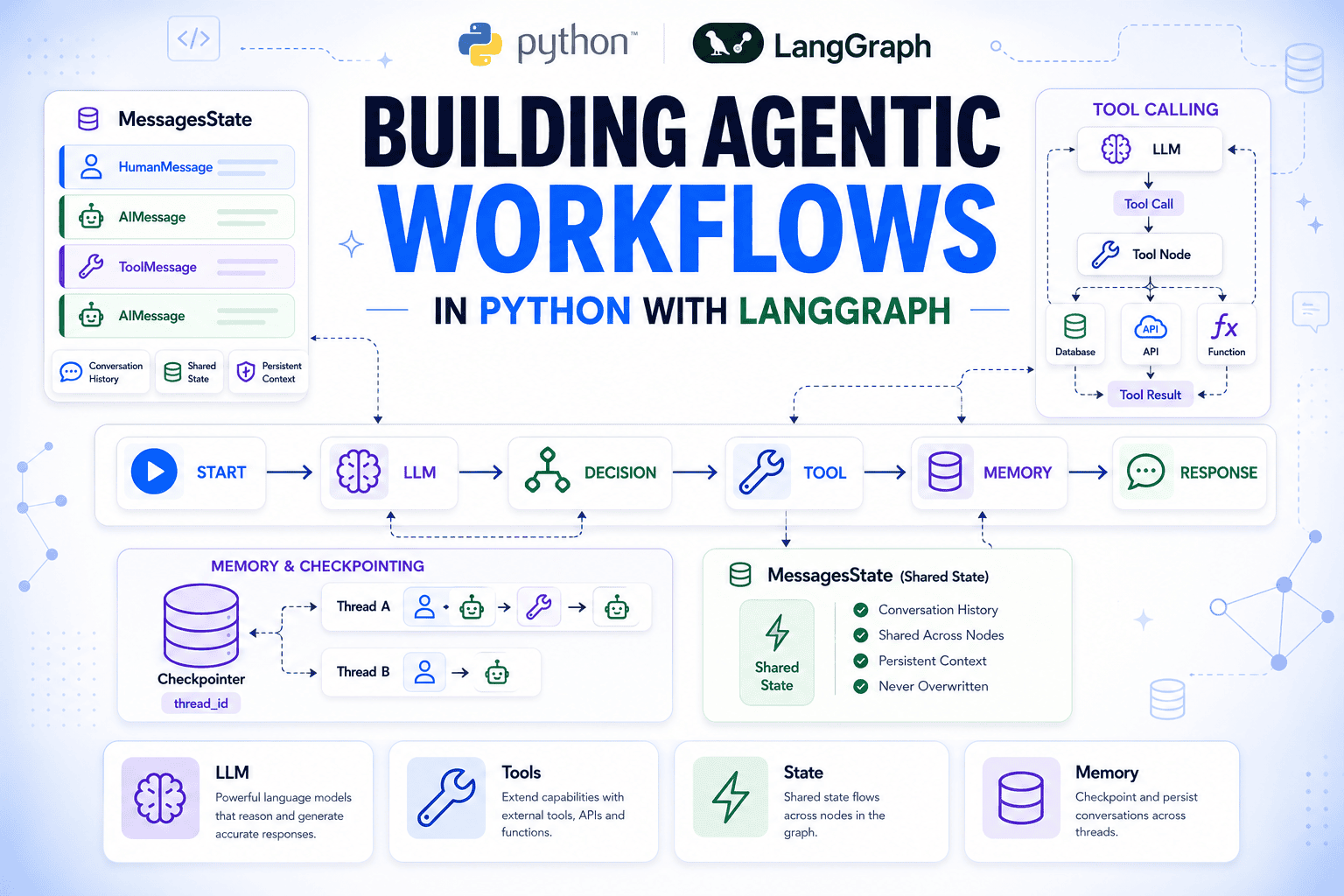
-
Edges: Edges dictate the flow of execution within the graph. A simple
add_edge(A, B)defines a direct sequential path, ensuring that node B executes immediately after node A completes. More sophisticated control is achieved throughadd_conditional_edges, which allows for dynamic routing based on the outcome of a preceding node. In this setup, after node A finishes, a designated routing function is invoked, and its return value determines the next node to execute. Every graph must define aSTARTnode as its entry point and at least one path leading to anENDnode, ensuring a clear beginning and conclusion to any workflow.
This graph-based architecture provides unparalleled visibility into the agent’s decision-making process. Since every reasoning step, tool invocation, and model response becomes an integral part of the graph’s shared state, the entire execution flow is transparent, inspectable, and accessible to any subsequent node. This level of observability is critical for debugging complex agents and understanding their behavior.
Setting Up the Development Environment
Initiating a LangGraph project is straightforward, typically requiring a few key Python packages. Developers begin by installing langgraph itself, langchain-openai for seamless integration with OpenAI’s models (though other langchain integrations are equally viable), and python-dotenv for secure management of API keys.
The installation command pip install langgraph langchain-openai python-dotenv fetches these dependencies. Following this, a .env file is created in the project root, containing the OPENAI_API_KEY="your_key_here". This practice is crucial for security, preventing sensitive credentials from being hardcoded directly into scripts or exposed in version control. The python-dotenv library then facilitates loading these environment variables at the top of any script, ensuring that load_dotenv() is called before any LangChain or LangGraph imports. This setup ensures that the necessary API keys are securely accessible to the application’s components.
Crafting Conversational Intelligence: The MessagesState
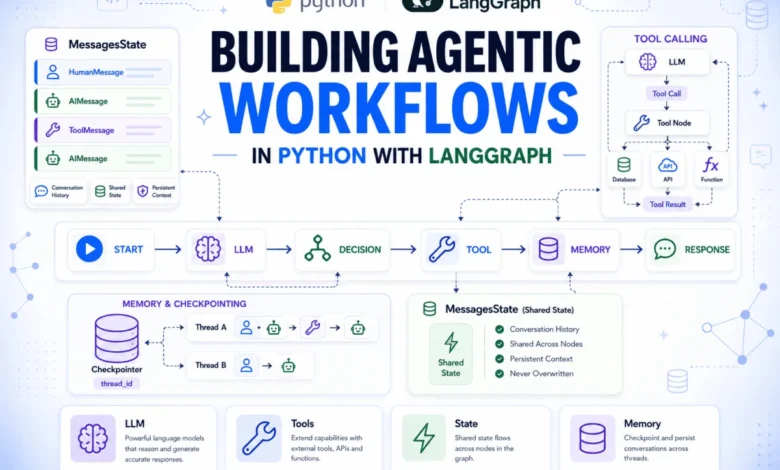
For any conversational agent, the ability to remember prior exchanges is paramount. LangGraph simplifies this by offering MessagesState, a specialized TypedDict designed specifically for managing conversation history. Unlike generic state fields that might be overwritten, MessagesState features a messages field that utilizes an add_messages reducer. This reducer intelligently appends new messages to the existing list, handling aspects like deduplication and proper ordering of message objects.
This built-in state type eliminates the need for developers to manually stitch together conversation history, a common pain point in building multi-turn conversational systems. While MessagesState provides the core conversational memory, it is also highly extensible. Developers can augment it with additional custom fields—such as customer_id, priority_flag, or session_metadata—to store application-specific data that nodes might need to access or modify, all within the coherent framework of the shared state.
Integrating Large Language Models and External Tools
The true power of an agentic system lies in its ability to leverage LLMs for reasoning and to interact with external systems via tools. The core node for an LLM interaction, typically named run_model, takes the MessagesState as input. It constructs a prompt by combining a SystemMessage (defining the model’s persona, e.g., "You are a support agent…") with the accumulated messages from the state. The LLM’s response, an AIMessage, is then returned as an update to the messages field in the state, automatically appended by the add_messages reducer. This modular design means swapping out LLM providers (e.g., from OpenAI to Anthropic or a local Ollama model) only requires changing the ChatOpenAI import and model string, leaving the core run_model logic intact.
However, LLMs, by themselves, are limited to their training data. To perform real-world actions or access proprietary information (like customer subscription tiers or database records), they require "tool calls." LangChain’s @tool decorator simplifies tool definition in Python, allowing developers to create functions that the LLM can invoke. The tool’s docstring becomes critical, serving as the model’s guide to understanding the tool’s purpose and required arguments. Precision in docstrings is key; vague descriptions can lead to missed calls or malformed inputs.
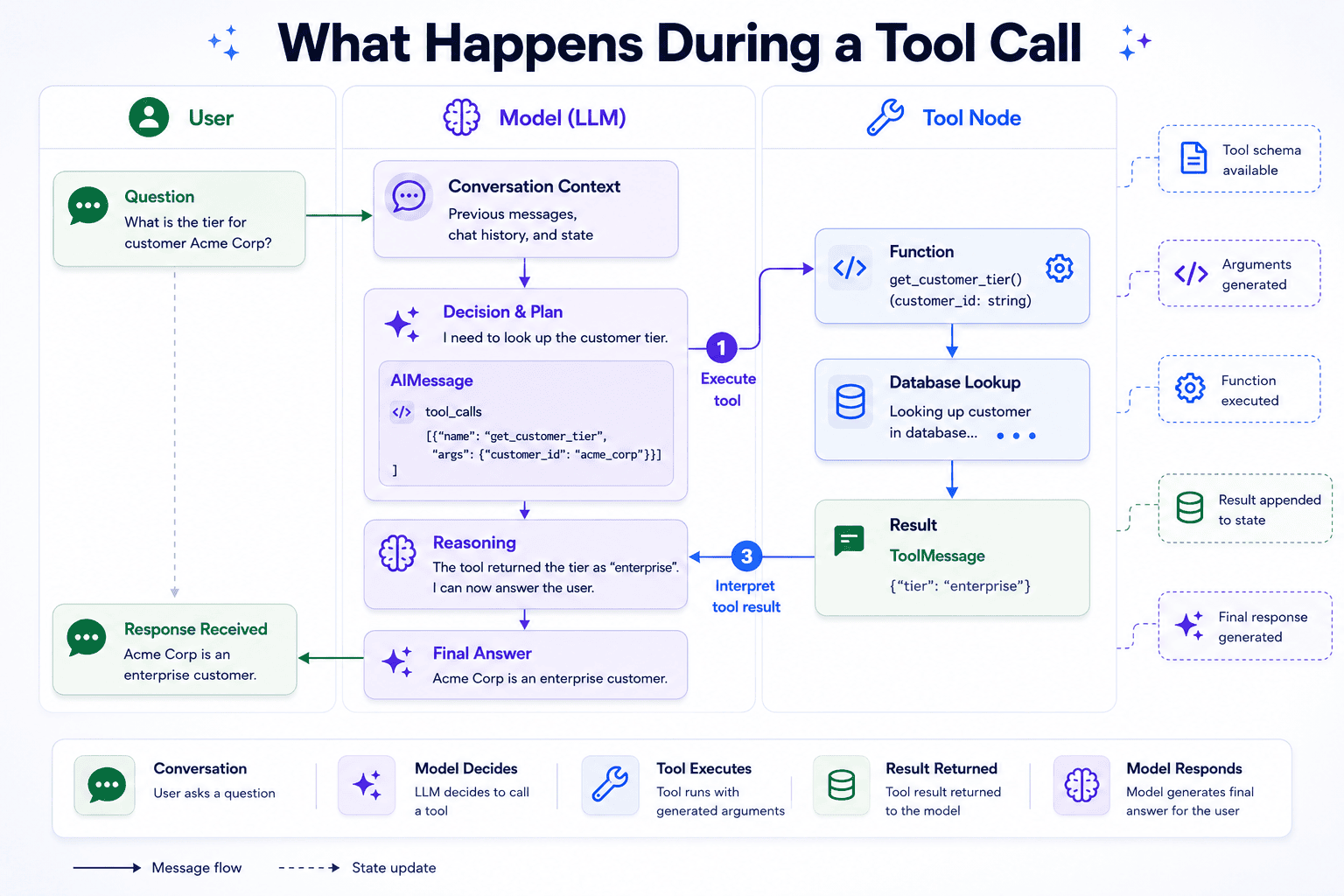
Once defined, tools are "bound" to the LLM using llm.bind_tools(tools). This sends the tool’s schema to the model with every request, enabling the LLM to decide when and how to use it. When the model determines a tool is needed, its AIMessage response will include a tool_calls field, detailing the tool to be executed and its arguments, rather than just plain text.
To execute these tool calls, LangGraph provides the ToolNode. This prebuilt node automatically reads tool_calls from the last AIMessage, executes the corresponding Python function, and appends the result as a ToolMessage to the graph state. The tools_condition function, used with add_conditional_edges, dynamically routes the workflow. If tool_calls are present, it directs execution to the ToolNode; otherwise, it routes to __end__. A critical loop is formed by adding an edge from the ToolNode back to run_model. This ensures that after a tool executes, its ToolMessage result is fed back to the LLM, allowing the model to interpret the output and formulate a final, informed response.
Tracing the Reasoning Loop: The ReAct Pattern in Action
Understanding the internal workings of an agent is paramount for debugging, optimization, and ensuring predictable behavior. LangGraph’s graph structure inherently provides this transparency. When a tool is invoked, the execution flow reveals the "ReAct" (Reasoning and Acting) pattern:
- HumanMessage: The user initiates the interaction.
- AIMessage (with
tool_calls): The LLM receives the prompt, reasons that a tool is needed, and generates anAIMessagecontaining atool_callinstruction (e.g.,get_customer_tier("cust_1001")). Thecontentfield of this message is typically empty, as the model is signaling an action, not providing a direct answer. - ToolMessage: The
ToolNodeintercepts thetool_call, executes theget_customer_tierfunction, and appends the tool’s output (e.g., "enterprise") as aToolMessageto the state. - AIMessage (final answer): The
run_modelnode is invoked again, this time with the original human message, the model’s tool call, and the tool’s result in its context. The LLM processes this complete history, interprets the tool’s output, and generates a finalAIMessagewith the answer (e.g., "Customer cust_1001 is on the enterprise plan.").
This sequence highlights that each tool use effectively costs two model calls: one for the model to decide what to do, and another for it to interpret the result of that action. This insight is crucial for estimating latency and operational costs, especially in complex, multi-tool agentic systems.
Sustaining Dialogue: Persistent Conversation Memory
By default, each graph.invoke() call operates on a fresh graph state, meaning the agent has no memory of previous exchanges. To build truly persistent conversational agents, LangGraph integrates "checkpointers." A checkpointer saves and restores the entire graph state for a given thread_id between invocations.
During development and testing, InMemorySaver is a convenient checkpointer, storing states in process memory. For production environments, however, it’s typically replaced with a durable checkpointer backed by a database (e.g., SQLite, PostgreSQL, Redis), ensuring that conversations persist across application restarts or deployments. The key is to pass the same thread_id with each invocation. If a thread_id corresponds to an existing saved state, the checkpointer restores it before execution and saves the updated state afterward. Using a new thread_id initiates a fresh, empty conversation state.
It’s important to differentiate between checkpointers and "stores." Checkpointers specifically persist the graph state for a particular thread, ensuring conversational continuity. "Stores," on the other hand, provide durable application-level storage for data that is independent of any single conversation, such as user profiles, global configurations, or long-term memories shared across multiple threads. While checkpointers manage the agent’s immediate working memory, stores serve as its long-term knowledge base, complementing each other in building comprehensive AI applications.
Broader Implications and Future Outlook
LangGraph’s structured approach to agentic workflows has profound implications for the future of AI development. It democratizes the creation of sophisticated AI agents, allowing developers to move beyond simple chatbots to build intelligent systems capable of complex reasoning, planning, and external interaction. Businesses can leverage this to deploy advanced AI solutions for customer service, automated workflows, data analysis, and more, leading to significant efficiency gains and enhanced user experiences.
The modularity and inspectability inherent in LangGraph’s design are crucial for managing the growing complexity of AI systems. The ability to swap out components (LLMs, tools, checkpointers) without redesigning the entire graph fosters agility and extensibility. Furthermore, the principles of state, nodes, and edges naturally extend to multi-agent systems, where a coordinator agent can route requests to specialized sub-agents. This foundational architecture provides a scalable pathway for orchestrating even more intricate and collaborative AI ecosystems.
As AI agents become more autonomous, considerations around scalability, performance, security, and ethical design will continue to grow in importance. LangGraph’s emphasis on visibility and control positions it as a valuable framework for addressing these challenges, enabling developers to build not only powerful but also responsible and transparent AI agents for the next generation of intelligent applications.