Motorola Signature 27 Hands-On: A Premium Flagship Revival Evoking the Spirit of the Moto X

Motorola’s strategic evolution within the North American smartphone market has reached a definitive milestone with the introduction of the Motorola Signature 27. Long recognized in recent years as a dominant force in the budget and mid-tier sectors—alongside pioneering efforts in foldable technology through the Razr series—the manufacturer has historically exercised restraint regarding ultra-premium, non-folding flagships. The arrival of the Motorola Signature 27 changes this trajectory entirely, challenging high-end industry heavyweights with a device priced at $1,599 and signaling what industry analysts describe as a spiritual successor to the iconic Moto X lineage.

Design Philosophy and Ergonomics
The physical construction of the Motorola Signature 27 departs from the prevailing industry trend of flat, utilitarian glass slabs. Measuring up against current market competitors in the Ultra and Pro Max tiers, the device achieves a competitive balance of mass while managing to feel distinctively lighter in hand. This tactile advantage stems from a meticulous approach to ergonomics.

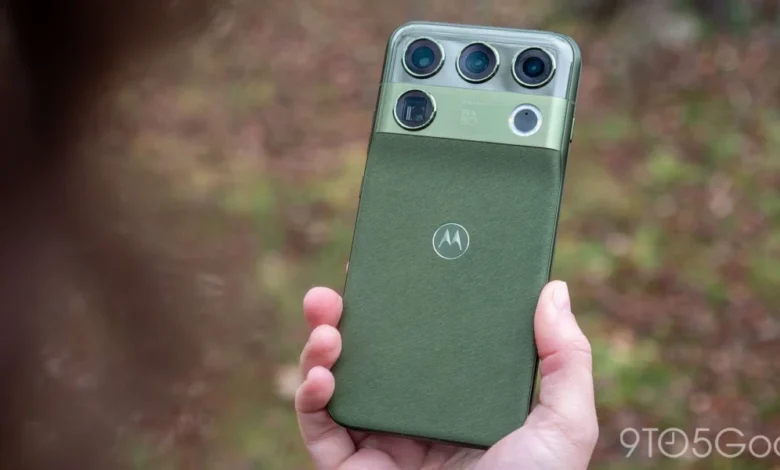
The rear panel features a textured textile finish, specifically showcased in the Capulet Olive colorway, which provides enhanced grip and a warmer feel compared to traditional matte glass or polished metal. This is complemented by a ribbed metal frame and gently curved edges on both the front and back glass, ensuring that the device rests comfortably in the palm. The asymmetric camera module positioned on the rear creates a slight top-heavy weight distribution, yet the overall footprint remains stable on flat surfaces, bearing functional similarities to the stabilization design popularized by Google’s Pixel series.

Display Technology and Visual Performance
At the core of the front-facing experience is a state-of-the-art 120Hz LTPO tandem OLED display. Designed to compete at the highest level of mobile panel technology, the screen delivers exceptional peak luminance levels during outdoor testing in direct sunlight, while maintaining color accuracy and legibility in overcast conditions.

To address visual fatigue, Motorola has integrated a dual-dimming architecture. The panel utilizes DC dimming when operating above 20% brightness and shifts to a high-frequency 2160Hz pulse-width modulation (PWM) dimming method below the 20% threshold. This technical implementation aims to reduce flicker and eye strain for users sensitive to low-frequency PWM dimming commonly found in OLED screens.

Software Ecosystem and Artificial Intelligence Integration
Out of the box, the Motorola Signature 27 runs an advanced build of Android 17, introducing several user interface refinements. While the system retains Motorola’s signature speed and responsiveness—allowing applications to launch instantly and animations to transition fluidly—certain design choices have drawn scrutiny. Notably, the implementation of gentle gradients across quick toggle icons and specific system elements departs from the flatter, more uniform aesthetic established by Google’s Material Design guidelines.

Despite minor UI debates, the software suite incorporates robust artificial intelligence capabilities previously limited to a select few Android devices. Features such as Rambler, Sign to Text, and Create My Widget operate natively and efficiently. Furthermore, Motorola has confirmed that integration with Gemini Intelligence is forthcoming via a future system update, positioning the Signature 27 alongside the industry’s most advanced AI-capable hardware. Traditional user conveniences are preserved as well, retaining Motorola’s proprietary physical gesture controls.

Camera Hardware and Industry Reception
Photography performance represents a central pillar of Motorola’s marketing strategy for the Signature 27. The device has already captured significant attention within the imaging community, highlighted by a prominent evaluation from DXOMark that ranked the Signature 27 as the second-best smartphone camera globally, placing it immediately behind the Huawei Pura 80 Ultra and ahead of Apple’s iPhone 18 Pro.

This independent assessment aligns with Motorola’s aggressive promotional campaign, which positions the hardware as a benchmark in mobile photography—a level of confidence the company has rarely exhibited in previous flagship launches.

Market Implications and Future Outlook
Priced at $1,599, the Motorola Signature 27 enters a fiercely contested ultra-premium segment dominated by established ecosystems from Apple, Samsung, and Google. The device’s success will hinge on its ability to convince consumers accustomed to traditional luxury brands to invest in Motorola’s refreshed high-end vision.

Early evaluations suggest that the hardware, display engineering, and ergonomic execution meet the rigorous demands of this price bracket. As retail availability expands alongside seasonal promotional events, sustained consumer response will determine whether the Motorola Signature 27 succeeds in permanently reshaping the brand’s identity in the global flagship arena.