Pixelated Episode 109 Samsung Galaxy Unpacked Analysis Pixel Fold Legacy and Flip Phone Futures

The global mobile technology landscape reached a critical juncture this week as industry leaders and consumers alike processed the revelations from Samsung’s latest Galaxy Unpacked event. In the most recent deep-dive discussion on Pixelated episode 109, tech analysts Damien, Abner, and Will dissected the implications of Samsung’s hardware trajectory, the enduring legacy of Google’s inaugural Pixel Fold, and the long-term viability of the clamshell "flip" form factor. This analysis comes at a time when the foldable market is experiencing unprecedented competition and a shift toward artificial intelligence (AI) integration as the primary driver of consumer upgrades.
Samsung Galaxy Unpacked: A Strategic Focus on Refinement and Intelligence
The July 2024 Galaxy Unpacked event served as a definitive statement of Samsung’s current philosophy: incremental hardware perfection paired with aggressive software innovation. The unveiling of the Galaxy Z Fold 6 and Galaxy Z Flip 6 demonstrated a move toward more industrial, squared-off designs, moving away from the rounded edges of previous generations.
From a technical standpoint, the Galaxy Z Fold 6 has undergone a significant weight reduction, now weighing 239 grams, which places it in direct competition with traditional flagship "slab" phones like the iPhone 15 Pro Max. This reduction in mass, combined with a slightly wider cover screen and the implementation of the Snapdragon 8 Gen 3 for Galaxy, positions the device as a more practical daily driver rather than a niche productivity tool.
However, the primary focus of the Unpacked event was "Galaxy AI." Samsung has integrated a suite of generative AI tools directly into the foldable experience. Notable features include "Sketch to Image," which allows users to turn rough doodles into polished renders using the S Pen, and "Interpreter Mode," which utilizes the dual-screen form factor to show live translations to two parties simultaneously. These features represent Samsung’s attempt to move the conversation beyond hinge durability and screen creases toward the actual utility of the foldable screen.

The Legacy of the Original Pixel Fold
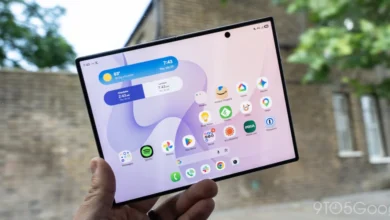
As the industry looks toward Samsung’s sixth generation of foldables, the Pixelated panel reflected on the impact of the original Google Pixel Fold. Launched in mid-2023, the Pixel Fold was Google’s first hardware entry into the foldable space, and its legacy is characterized by its unique "passport" aspect ratio. Unlike the tall, narrow cover screen of the Samsung Galaxy Z Fold series (prior to the Fold 6), the Pixel Fold offered a wider, more traditional smartphone experience when closed.
The Pixel Fold’s contribution to the ecosystem was not merely hardware-based. It served as a "North Star" for Android development, forcing Google to accelerate the optimization of Android for large screens—a project that began in earnest with Android 12L. While the original Pixel Fold faced criticism for its internal bezels and the limitations of the Tensor G2 chip, it successfully established a design language that prioritized one-handed usability on the exterior screen.
Industry analysts note that the Pixel Fold’s legacy is currently being rewritten as rumors and leaks regarding the "Pixel 9 Pro Fold" emerge. The shift in naming conventions suggests that Google is folding its specialized hardware into its main flagship line, signaling that foldables are no longer considered experimental projects but are instead core components of a manufacturer’s premium portfolio.
The Future of the Clamshell: Are Flip Phones More Than a Trend?
A significant portion of the recent discourse centers on the Galaxy Z Flip 6 and the broader future of clamshell-style foldables. While the "Fold" form factor targets power users and productivity enthusiasts, the "Flip" has captured a much larger share of the mainstream market due to its lower price point and aesthetic appeal.
Data from market research firms such as IDC and Counterpoint Research indicates that clamshell foldables consistently outsell book-style foldables by a significant margin, often accounting for 60% to 70% of total foldable shipments. The appeal lies in the "digital detox" potential—the ability to handle notifications on a small cover screen without being sucked into the distractions of a full display.

However, the Pixelated discussion raised questions about the ceiling for this technology. As cover screens on devices like the Z Flip 6 and the Motorola Razr+ grow larger and more capable, the "flip" phone is essentially becoming a standard smartphone that happens to fold in half. The challenge for manufacturers moving forward is to provide a reason for the folding mechanism that goes beyond simple portability.
Market Data and the Competitive Landscape
The foldable market in 2024 is vastly different from the one Samsung entered in 2019. According to a report by Counterpoint Research, global foldable smartphone shipments grew by 49% year-over-year in Q1 2024. This growth was largely driven by Chinese OEMs like Huawei, Honor, and Motorola (owned by Lenovo), which have challenged Samsung’s dominance in international markets.
| Metric | Samsung Galaxy Z Fold 6 | Samsung Galaxy Z Flip 6 |
|---|---|---|
| Weight | 239g | 187g |
| Processor | Snapdragon 8 Gen 3 | Snapdragon 8 Gen 3 |
| Main Display | 7.6-inch Dynamic AMOLED | 6.7-inch Dynamic AMOLED |
| Durability | IP48 Rating | IP48 Rating |
| Primary Camera | 50MP Wide | 50MP Wide |
The introduction of the IP48 rating in Samsung’s new devices marks a milestone in foldable engineering. While not fully dust-proof, the "4" in the rating indicates protection against solid objects larger than 1mm, a first for the category. This technical achievement addresses one of the primary consumer hesitations regarding the long-term reliability of moving parts in a mobile device.
Official Responses and Industry Sentiment
While Google and Samsung rarely comment directly on each other’s hardware during launch cycles, the broader industry reaction suggests a "rising tide lifts all boats" scenario. Developers are more inclined to optimize apps for foldable screens when multiple major players—Samsung, Google, and Motorola—are all committed to the form factor.
Samsung’s executive vice president and head of the Mobile eXperience Business, TM Roh, has stated that the company expects foldable sales to surpass those of the Note series in the near future. This sentiment is echoed by supply chain analysts who observe that the cost of Ultra-Thin Glass (UTG) and complex hinges is slowly decreasing, which may lead to the introduction of "mid-range" foldables within the next 24 months.

Broader Impact and Implications for the Mobile Industry
The discussions in Pixelated episode 109 highlight a broader shift in the smartphone industry. We are moving away from an era of "peak hardware," where year-over-year improvements in camera sensors and processor speeds were the primary selling points. Instead, we have entered an era of "form and intelligence."
The implications of this shift are twofold. First, the hardware is becoming a vessel for AI services. Samsung’s partnership with Google to integrate "Circle to Search" and Gemini into the Fold and Flip series suggests that the software experience is now the primary differentiator. Second, the diversification of form factors is finally breaking the "black glass rectangle" monopoly that has dominated the industry since 2007.
The legacy of the Pixel Fold and the evolution of the Galaxy Z series suggest that the industry is settling into two distinct categories: the "Phone-to-Tablet" hybrid for productivity and the "Compact-to-Phone" hybrid for lifestyle and portability. As battery technology improves—evidenced by the Z Flip 6’s increase to a 4,000mAh cell—the compromises previously associated with foldables are evaporating.
In conclusion, the current state of the foldable market, as analyzed through the lens of Samsung’s latest releases and Google’s foundational efforts, indicates a maturing technology. While the "wow factor" of a folding screen may have diminished, it has been replaced by a more stable, reliable, and intelligent category of devices. The next phase of competition will likely be fought not on the strength of the hinge, but on the sophistication of the AI and the seamlessness of the software ecosystem that supports these unique displays. As the Pixelated panel noted, the future of the mobile experience is no longer flat; it is versatile, intelligent, and increasingly fragmented into specialized form factors that cater to specific user needs.