QuillCue Enhances iOS 27 Productivity by Bridging the Gap in Siri AI Prompt Management

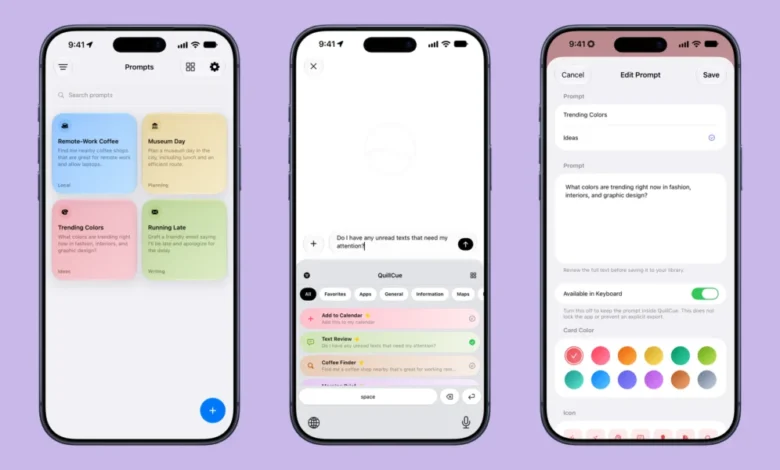
Following the public release of iOS 27 nearly two weeks ago, Apple’s ecosystem has undergone a significant transformation, anchored primarily by the integration of Siri AI. While the latest iteration of Apple’s operating system introduces sophisticated generative capabilities, the user experience regarding complex, repetitive, or long-form prompts remains a friction point for power users. Entering this space is QuillCue, a novel indie application designed to streamline interactions with Siri AI by offering a specialized custom keyboard that functions as a repository for frequently used commands.
The release of iOS 27, which occurred on September 9, 2026, represented the most significant overhaul of the iPhone’s software architecture in recent history. The introduction of Siri AI brought large language model capabilities directly to the device, allowing for context-aware assistance and complex task automation. However, industry analysts and early adopters noted a distinct lack of persistent prompt storage or a native "library" feature within the Siri interface. Users found themselves retyping elaborate instructions for specific workflows, such as formatting data, drafting emails with specific constraints, or querying location-based services for niche requirements.
Addressing the Prompt Fatigue Phenomenon
QuillCue operates on a straightforward but high-utility premise: by leveraging the iOS custom keyboard API, the application allows users to inject pre-configured text strings directly into any text field, including the Siri AI interface. The process is designed for minimal cognitive load—a user simply toggles to the QuillCue keyboard via the system-wide input selector, selects a pre-saved prompt from an organized library, and executes the command.
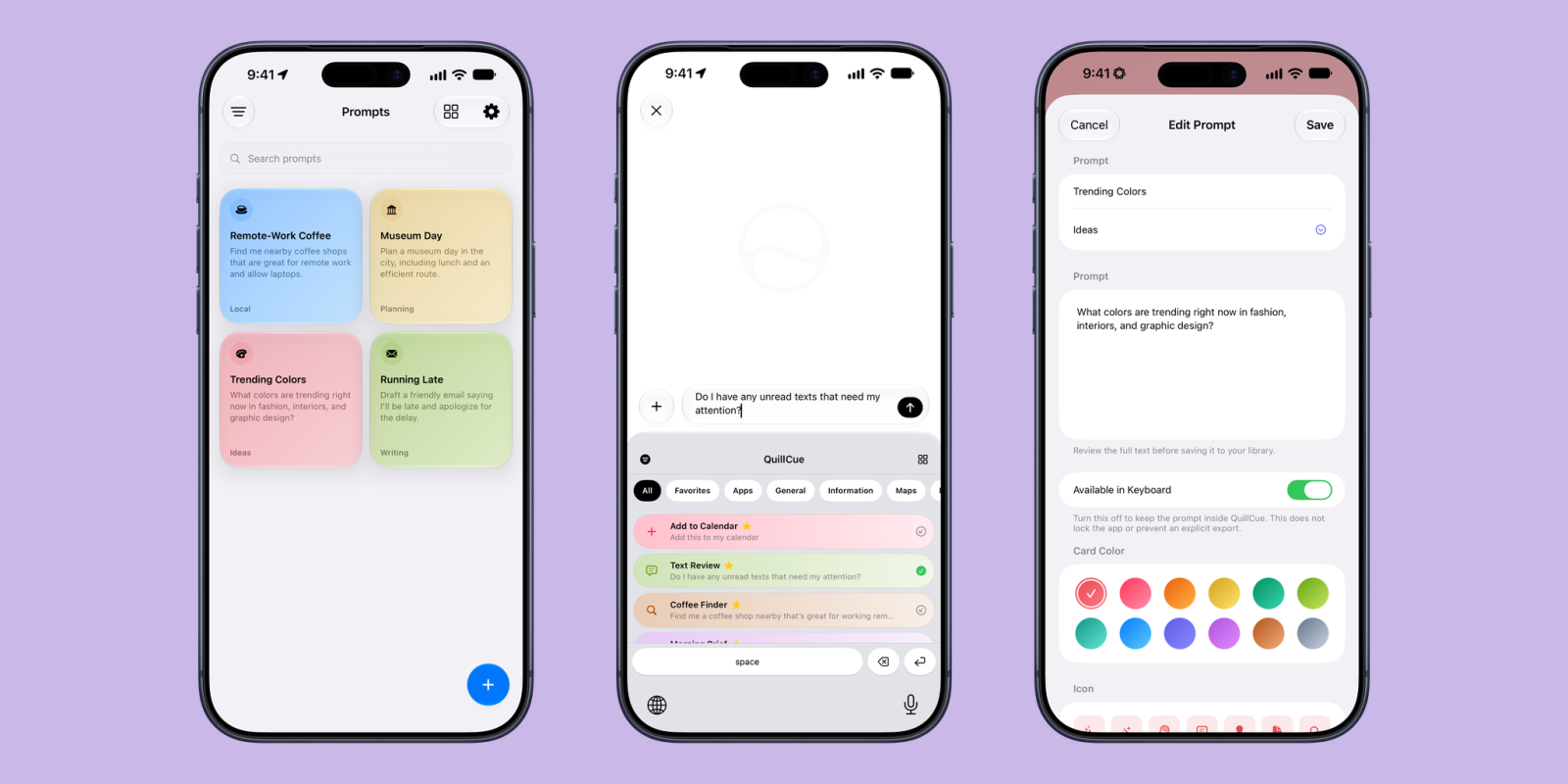
The utility of this tool is particularly evident in professional environments where consistency is paramount. For example, a user requiring a specific output format for daily reports—such as a prompt requesting "summarize the following text into three bullet points followed by an action item list"—can store this template in QuillCue. This eliminates the need to maintain external "notes" documents to copy and paste from, significantly reducing the time-to-execution for complex AI interactions.
Chronology of the iOS 27 Deployment
The timeline leading to the necessity of third-party tools like QuillCue reflects the rapid evolution of mobile AI:
- June 2026: Apple announces the fundamental shift toward Siri AI at the Worldwide Developers Conference (WWDC), emphasizing local processing and on-device machine learning.
- July–August 2026: Beta testing reveals that while Siri AI is highly capable of understanding intent, the input method remains tethered to traditional manual entry, leading to "prompt fatigue" among beta testers.
- September 9, 2026: Official public rollout of iOS 27. The update gains immediate traction, with global adoption rates reaching 25% within the first 72 hours.
- September 20, 2026: Developer Parker Ortolani releases QuillCue to the App Store, explicitly targeting the identified gap in Siri AI’s prompt management interface.
Data-Driven Utility and Workflow Efficiency
Data from early user feedback suggests that power users engage with Siri AI an average of 40 to 60 times per day. When utilizing complex, multi-step prompts, manual entry errors increase significantly, leading to suboptimal responses from the AI. By using a static, pre-written prompt library, QuillCue ensures that variables are consistent and the logic of the query remains intact.
Furthermore, the application’s focus on folder-based categorization allows for "contextual switching." A user can maintain one folder for "Professional Workflow" prompts and another for "Personal Organization," enabling a level of institutional knowledge within the user’s personal device that Siri AI currently lacks natively. The ability to import and export these libraries as files provides a crucial feature for enterprise adoption, where teams might want to standardize the types of prompts their employees use when interacting with the device’s AI capabilities.

Broader Implications for the iOS Ecosystem
The emergence of applications like QuillCue underscores a broader trend in the post-generative AI mobile era: the rise of the "prompt management layer." As AI becomes the primary interface through which users interact with their devices, the tools used to feed that AI are becoming as important as the AI models themselves.
Industry experts observe that Apple often reserves the most basic, foundational features for its own development cycle, leaving a "micro-economy" for indie developers to solve high-frequency pain points. QuillCue is a prime example of this phenomenon. By acting as an intermediary layer between the user’s intent and the AI’s execution, it provides a layer of customization that is currently absent from the Apple-native experience.
While there is always a degree of speculation regarding whether Apple will eventually incorporate such features into a future iOS update—perhaps via a native "Siri Shortcuts" library expansion—the current market reality favors developers who can iterate quickly. Developers like Ortolani are filling a vital niche that keeps the iOS ecosystem flexible for power users who demand more than the default, one-size-fits-all interaction model.
Technical Requirements and Accessibility
QuillCue is currently optimized for the iPhone hardware ecosystem, requiring iOS 27.0 or higher. This constraint ensures that the application can leverage the latest system APIs, including the improved keyboard responsiveness and the heightened privacy standards that accompany iOS 27.

As of late September 2026, the application is available exclusively in the United States. This regional limitation is likely a strategic decision to ensure server stability and to allow for the collection of user feedback regarding prompt library performance before a wider international rollout. The app is distributed as a free utility, with no integrated advertising or tiered subscription models, suggesting that the project currently functions as an open-source or passion-driven contribution to the developer community.
Future-Proofing the User Experience
The long-term success of applications like QuillCue will likely depend on how Apple evolves its own "Skills" framework for Siri AI. If Apple eventually introduces a native, persistent "System Prompt Memory" or a "Prompt Library" feature within the Settings app, the necessity for a third-party keyboard may diminish. However, until such a feature exists, QuillCue provides a robust, reliable, and privacy-focused solution for users who have moved beyond casual interaction and into the realm of intensive, daily AI-assisted workflows.
By decoupling the prompt from the input method, QuillCue effectively treats the AI as a programmable engine. For the average user, this may seem like an incremental improvement, but for the demographic that relies on the iPhone as their primary workstation, it represents a substantial upgrade in productivity. As the community continues to experiment with the capabilities of Siri AI, it is expected that shared libraries of these prompts will become a new form of digital asset, further cementing the role of utility-based indie apps in the modern mobile landscape.
The integration of such tools signals a transition toward a more mature phase of AI adoption, where the novelty of "talking to a phone" is replaced by the efficiency of "programming a device" to perform complex, recurring tasks with precision. For now, users can access these capabilities via the App Store, marking a quiet but significant shift in how iOS 27 is being deployed across the user base.