S&P Global Ratings Weighs Downgrade for Nvidia Amid Governance Concerns and Succession Planning Vulnerabilities

In an unexpected turn of events that underscores the delicate interplay between corporate governance and market valuation at the highest levels of the tech industry, S&P Global Ratings has announced it is considering a downgrade of Nvidia’s credit rating. The potential rating action, revealed in an official statement released on November 25, 2026, stems not from any operational weakness or financial deficit, but rather from mounting anxiety over management stability, executive oversight, and structural governance practices at the world’s leading artificial intelligence hardware titan.
While Nvidia continues to post staggering financial figures driven by an insatiable global demand for advanced computing hardware, the credit rating agency has placed the company’s current AA rating on CreditWatch with negative implications. S&P expects to conclude its comprehensive review within a 90-day window, a process that could potentially lower Nvidia’s rating to AA-, representing the fourth-highest tier on the agency’s long-term credit scale. Although this adjustment would comfortably preserve Nvidia’s status as an investment-grade entity, the secondary effects of such a move could ripple widely across the broader capital markets, casting a shadow over the elaborate financial engineering supporting the modern artificial intelligence boom.
The Catalyst: Leadership Turmoil and Governance Vulnerabilities
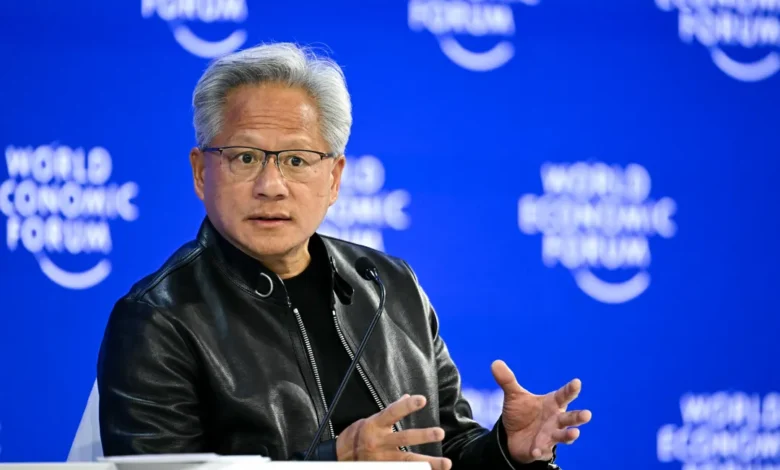
At the heart of S&P’s credit review is the recent, high-stakes executive turbulence involving Nvidia’s visionary co-founder and Chief Executive Officer, Jensen Huang. The sudden ouster and subsequent dramatic reinstatement of Huang sent shockwaves through Wall Street and Silicon Valley alike, exposing vulnerabilities that credit analysts can no longer overlook.
According to S&P’s evaluation, the episode highlighted severe structural shortcomings within Nvidia’s corporate governance framework, specifically pointing to "weak executive oversight and a lack of succession planning." Furthermore, the agency emphasized the profound exposure to "key man risk"—a scenario in which a company’s continued trajectory, investor confidence, and strategic innovation are inextricably bound to a single individual. For decades, Huang has been synonymous with Nvidia, steering the enterprise from a niche graphics card manufacturer for video game enthusiasts into the undisputed backbone of the global artificial intelligence infrastructure. However, the recent leadership crisis demonstrated how precarious that reliance can be, forcing credit rating agencies to re-evaluate the stability of the enterprise from a risk-management perspective.
A Chronology of Rising Pressures
The friction between Nvidia’s aggressive market expansion and conservative credit metrics did not emerge in a vacuum. A review of the timeline leading up to S&P’s announcement reveals a compounding series of financial and administrative challenges:
- August 2026: Nvidia makes headlines by announcing a massive $500 billion financing initiative designed to underwrite and accelerate global AI infrastructure development. To execute this grand vision, the company partners with six major financial institutions, including Wall Street heavyweights Goldman Sachs, Apollo, and Blackstone. Under the initial framework of these agreements, Nvidia agrees to backstop or guarantee roughly 25% of the massive loans extended to various data center operators and emerging cloud providers.
- November 12, 2026: Investigative reporting by Bloomberg reveals that lenders had already grown increasingly nervous about the sheer scale of the risk. Even prior to the boardroom drama surrounding Jensen Huang, financial institutions were actively pressuring Nvidia to increase its guarantees, arguing that the underlying borrowers lacked the balance sheet strength to weather a potential downturn in the artificial intelligence sector.
- Mid-November 2026: The abrupt departure and swift return of CEO Jensen Huang captivates corporate governance watchers, triggering alarms regarding internal board dynamics and the absence of a clear, tested succession pipeline.
- November 25, 2026: S&P Global Ratings formally issues its notice of a potential downgrade, citing the governance concerns and key man risk as the primary catalysts for placing Nvidia’s AA rating under review.
The Financial Architecture of the AI Boom
To fully comprehend why a minor notch down in S&P’s rating scale matters so much, one must examine Nvidia’s unique role as the hidden financial engine of the generative AI revolution. In recent years, the market has witnessed the explosive rise of so-called "neoclouds"—specialized, independent cloud computing providers that purchase thousands of high-performance graphics processing units (GPUs) to rent out processing power to AI developers.
Because many of these infrastructure startups lack the robust, multi-year operating histories or diversified revenue streams required to secure traditional, low-cost debt, Nvidia has frequently stepped in as a financial guarantor. By backstopping these loans, Nvidia ensures that capital continues to flow into the ecosystem, thereby maintaining a steady, high-volume demand for its premier hardware chips.
However, this symbiotic arrangement creates a complex web of contingent liabilities. If S&P Global Ratings ultimately decides to downgrade Nvidia from AA to AA-, the company’s own borrowing costs will tick upward. More critically, because Nvidia serves as the financial backstop for these weaker infrastructure firms, a lower corporate rating could immediately complicate their financial standing. Lenders may interpret Nvidia’s diminished credit score as a signal of reduced systemic backing, prompting them to demand higher interest rates, stricter covenants, or significantly larger collateral deposits from the neoclouds.

Escalating Pressures from Wall Street Lenders
Long before S&P initiated its formal ratings review, the institutional partners financing the $500 billion AI infrastructure initiative were already seeking enhanced risk mitigation. Financial institutions operating in syndicated loan markets are inherently sensitive to counterparty risk. When a guarantor experiences internal governance shocks—such as the unexpected ouster of a foundational CEO—lenders naturally reassess their exposure.
Industry analysts suggest that a credit downgrade would serve as an official validation of these underlying governance anxieties, almost certainly compelling Goldman Sachs, Apollo, Blackstone, and other participating financial institutions to push for heavier guarantees from Nvidia. Rather than easing the capital requirements for the burgeoning AI supply chain, a lower rating could trap Nvidia in a feedback loop where it must commit an even larger share of its own capital reserves to keep the broader ecosystem liquid and solvent.
Implications for the Broader Technology Sector
The ramifications of S&P’s ongoing review extend far beyond Nvidia’s corporate headquarters in Santa Clara, California. As the undisputed bellwether of the artificial intelligence economy, Nvidia’s financial health and governance practices serve as a proxy for the entire sector’s maturity.
For the past several years, the narrative surrounding the AI boom has been dominated by relentless optimism, skyrocketing equity valuations, and record capital expenditures by hyperscale cloud providers. S&P’s intervention introduces a sobering note of traditional financial discipline into a market that has often prioritized growth speed over institutional risk management.
If the rating agency proceeds with the downgrade, it will send a clear message to technology companies across the board: robust revenue growth and technological dominance cannot entirely insulate a firm from the governance expectations of the global credit markets. Investors and corporate boards alike will likely be forced to accelerate their succession planning and tighten their executive oversight mechanisms to satisfy institutional lenders who are increasingly unwilling to overlook key man risk.
Looking Ahead: The 90-Day Countdown
As the clock ticks down on S&P’s 90-day review period, all eyes will remain fixed on Nvidia’s board of directors. The central question is not whether Nvidia will maintain its investment-grade status—financial analysts widely agree that a total loss of investment-grade standing is virtually impossible given the company’s immense cash reserves and profitability—but rather how management will respond to the governance criticisms levied against it.
To satisfy credit agencies and appease jittery Wall Street lenders, Nvidia’s board may need to demonstrate concrete steps toward institutionalizing leadership continuity. This could involve formalizing a transparent succession roadmap, empowering secondary executives with broader strategic oversight, and strengthening independent board supervision.
In the meantime, the unfolding situation serves as a defining test for both Jensen Huang and the corporate governance structures surrounding the world’s most valuable technology firms. As the artificial intelligence industry matures from its explosive startup phase into a foundational pillar of the global economy, the demand for traditional corporate accountability is proving just as powerful as the silicon chips driving the revolution forward.