AI governance solutions vary in features and flexibility. When evaluating your options, pay special attention to these key capabilities.

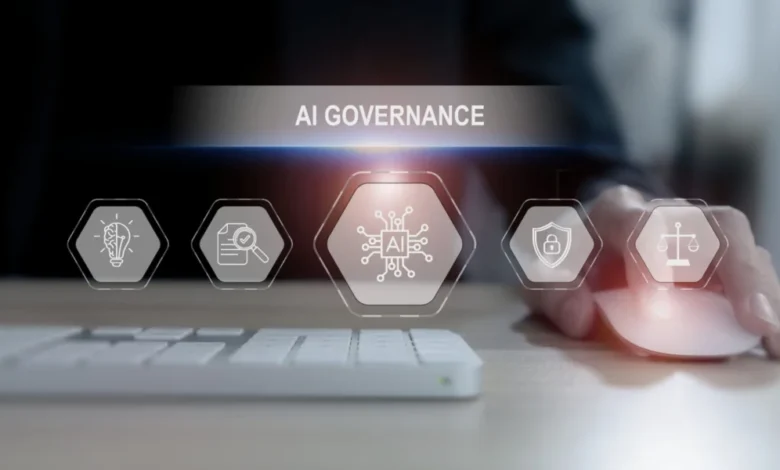
The rapid proliferation of artificial intelligence within the enterprise has shifted the primary concern of CIOs and CTOs from experimental deployment to rigorous oversight. As organizations transition from isolated AI pilots to systemic integration, the governance of these models has become the defining challenge for IT leadership. Recent data from the 2026 IBM Cost of a Data Breach Report highlights the urgency of this transition, noting that 68% of organizations affected by security breaches this year lacked any formal AI governance framework or the necessary tools to identify "shadow AI"—the unsanctioned use of AI tools by employees.
This governance vacuum is not merely a technical oversight; it is a significant business risk. As AI agents move from simple chatbots to autonomous digital workers capable of invoking APIs, accessing sensitive databases, and executing workflows, the lack of centralized control leads to intellectual property leakage, spiraling "AI debt," and uncontrolled operational costs.
The Evolution of AI Governance Standards
The framework for managing these risks has matured rapidly over the past 24 months. The National Institute of Standards and Technology (NIST) AI 100-1, or the Artificial Intelligence Risk Management Framework, has emerged as the global benchmark. It provides a structured "Govern" category that mandates legal and regulatory compliance, risk-based procedural integrity, and comprehensive life-cycle management.
Historically, companies approached AI as an extension of standard IT software development. However, the non-deterministic nature of large language models (LLMs) requires a distinct approach. By early 2026, industry bodies such as the Cloud Security Alliance (CSA) and the ISO/IEC have formalized AI-specific control matrices to address the unique vulnerabilities inherent in neural networks, such as prompt injection, model inversion, and data poisoning. Despite these standards, a gap persists between the policy-writing phase and the actual implementation of controls in production environments.
Seven Pillars of Robust AI Governance
For organizations scaling their AI footprint, selecting a governance platform requires more than just checking regulatory compliance boxes. Based on expert analysis and emerging enterprise requirements, there are seven critical capabilities that must be evaluated before procurement.
1. Centralized Policy Enforcement
Policy must be dynamic. When an organization permits employees to build agents using platforms like Claude, Gemini, or proprietary code-generating tools, the governance layer must exist as a centralized repository. It is insufficient to merely publish an "AI use policy" on a corporate intranet. Modern governance platforms must embed these rules into the development lifecycle, ensuring that policies are enforced at the point of deployment, whether the agent is a no-code application or a complex, enterprise-grade model. Anthony Habayeb, CEO of Monitaur, emphasizes that governance is about defining the rules, but assurance—the active verification that these rules are reducing risk—is the true value proposition.
2. Identity and Access Management (IAM) for Agents
The traditional perimeter-based security model is inadequate for agentic AI. Because agents operate as "non-deterministic actors," they cannot be treated as static service accounts. Security leaders are increasingly adopting zero-trust principles for AI, where every agent is assigned a unique, verifiable identity. As noted by Ev Kontsevoy, CEO of Teleport, governance must make non-compliance architecturally impossible by controlling the environment and the runtime in which the agent executes. This ensures that an agent’s actions are auditable and that its autonomy is restricted by granular, policy-driven boundaries.
3. Full-Lifecycle Cataloging
A common blind spot in modern enterprises is the inability of leadership to answer fundamental questions about their AI footprint: How many agents are running? What is their current accuracy? Who owns them? A comprehensive catalog is required to track an agent from its prototype phase through its retirement. Databricks VP of AI, Craig Wiley, notes that effective governance must unify data and AI oversight. If an agent consumes data, invokes an API, and creates new data, the governance platform must provide a unified audit trail that connects the data lineage to the agent’s specific output.
4. Evaluating Operational Drift and Human Interaction
Agents are subject to "operational drift," where their performance degrades or their behavior changes as the underlying models or context layers evolve. Governance must track the "human-in-the-middle" threshold—the frequency at which human intervention is required to correct or approve an agent’s decision. Shannon Weyrick of NetBox Labs suggests that organizations must verify the state of their environment after an agent acts, ensuring that autonomous changes have not pushed the infrastructure beyond its intended design parameters.
5. Observability and Monitoring
The rise of "AgenticOps" has necessitated a new standard for AI observability. Much like site reliability engineering (SRE) for traditional software, AI monitoring must provide real-time visibility into agentic decisions. Kash Mehdi of Reltio compares AI agents to living entities, arguing that when they misbehave, the failure is usually traceable to the training data or the context provided at the start. Decision-level lineage—the ability to trace an output back through its specific input sources—is now considered a mandatory capability for any serious governance solution.
6. Metrics for Trust and Quality
Transparency is the primary currency of trust in the AI era. Organizations need to publish internal "trust scores" for their agents, calculated based on accuracy, reliability, and policy adherence. This allows both business units and regulators to understand why a specific decision was made. According to Brett Levenson of Moonbounce, the goal is to create a transparent feedback loop where errors can be identified and corrected before they result in significant business harm or compliance violations.
7. Runtime Policy Enforcement
The final and perhaps most critical capability is the ability to enforce policy at the point of inference. A platform that only generates reports after an incident occurs is reactive; a true governance platform acts as a gatekeeper. Rajeev Jaswal of Argo Intelligence argues that the primary question for any vendor is whether their platform can actively block a "bad action" in real-time. This includes financial controls—ensuring that agents stay within budget by selecting the most cost-efficient model for the specific task at hand—and security controls that prevent unauthorized API calls.
The Broader Business Implications
The shift toward structured AI governance reflects a maturing market. As organizations move toward the deployment of thousands of AI agents, the "hallucination tax"—the cost of verifying and correcting AI errors—is becoming a drag on productivity. Research from Collibra and The Harris Poll indicates that 87% of decision-makers spend excessive time re-verifying the context and accuracy of their agents.
The implementation of these governance solutions is expected to trigger a significant shift in IT spending through 2027. Organizations that invest early in automated, runtime-enforced governance will likely see a faster path to enterprise-wide AI production, while those that rely on manual oversight or fragmented policies will face increasing pressure from both security audits and the inherent unpredictability of unmanaged AI systems.
For the CIO, the message is clear: the keys to the kingdom are no longer just about data access; they are about maintaining the integrity of the autonomous workflows that are increasingly driving the business. By focusing on these seven key capabilities—policy enforcement, identity management, lifecycle cataloging, drift evaluation, observability, metrics-driven trust, and runtime control—leaders can transform AI governance from a defensive requirement into a strategic advantage.