Mondo Robotics Beni Review: A Lively, Camera-Toting Companion with Ground-Level Limitations

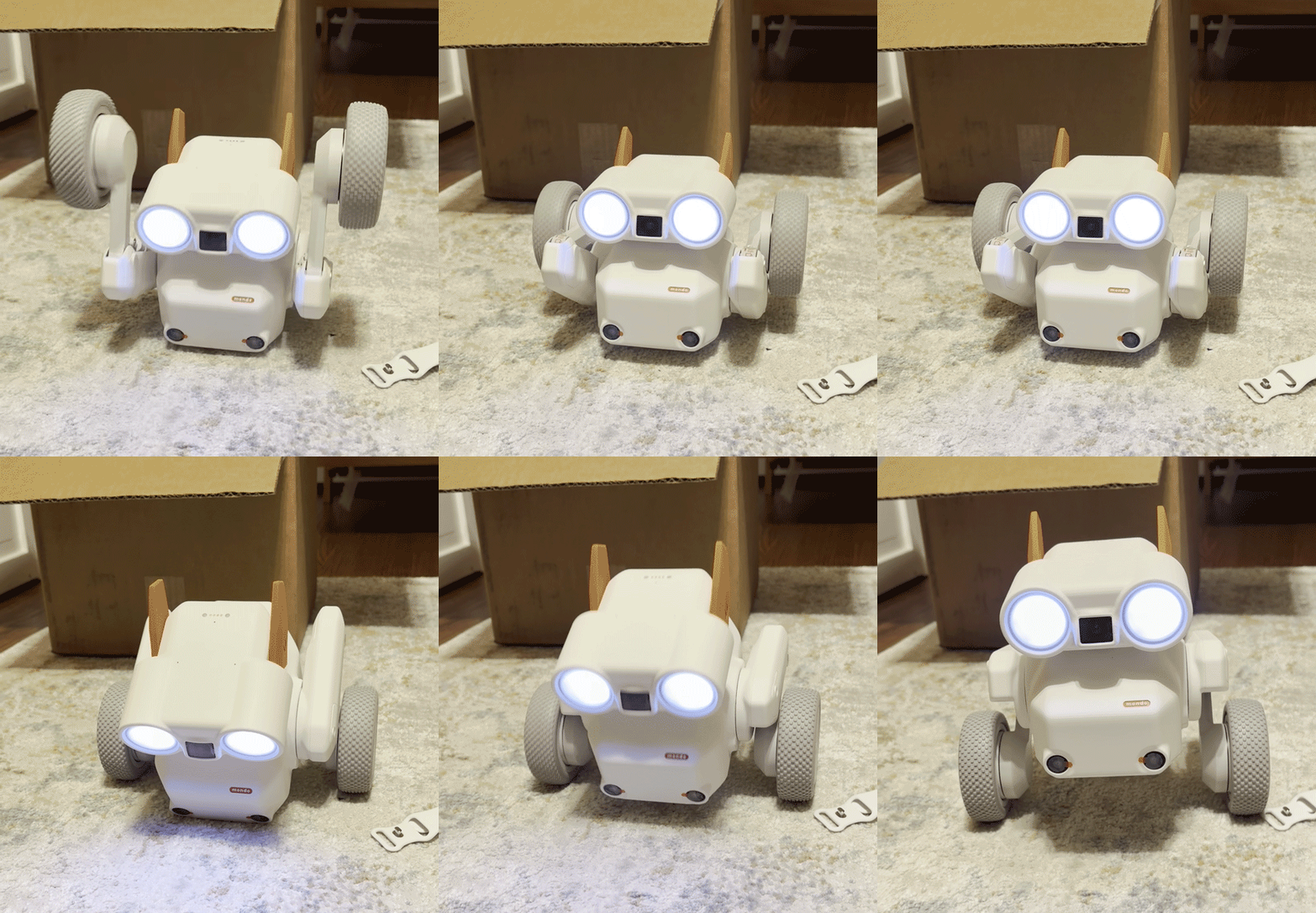
The consumer robotics market has long oscillated between practical utility and high-end novelty, introducing devices designed to clean floors, entertain children, or monitor homes while owners are away. Into this evolving ecosystem steps the Mondo Robotics Beni, a two-wheeled, semi-autonomous camera robot announced in September and priced at $799 for the Standard Combo bundle. Weighing roughly four pounds and standing approximately nine inches tall when active, Beni functions primarily as a mobile camera assistant engineered to track, record, and interact with its users in a manner reminiscent of an energetic pet. While it introduces advanced features—such as athletic tumbling, multi-directional tracking modes, and robust physical resilience—its ground-level perspective and mixed autonomous navigation present distinct constraints for content creators and casual tech enthusiasts alike.
Design, Setup, and Customization
The out-of-the-box experience for the Mondo Robotics Beni is engineered for straightforward deployment. Arriving fully assembled in a compact, folded configuration, the device requires users to install a dedicated companion app—tested here on an iPhone 18 Pro Max—connect to the robot’s localized Wi-Fi network, and execute a standard power-up sequence. Users slide a heavy, brick-like battery pack into the rear housing, where a brief press followed by a prolonged hold initiates the system. Upon activation, the robot automatically extends its frame, resting its gray rubber wheels firmly on the floor and lifting its upper chassis.
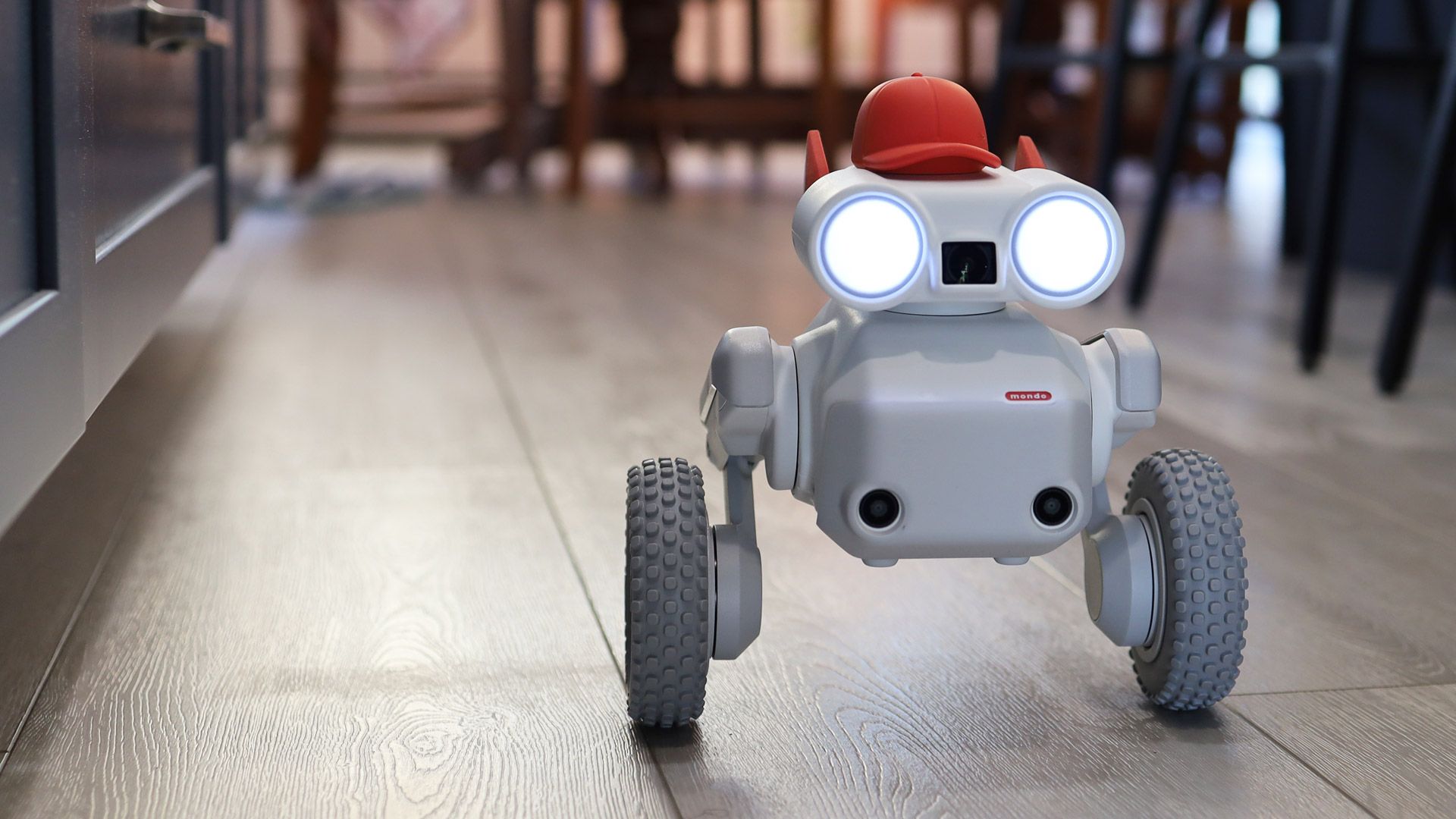
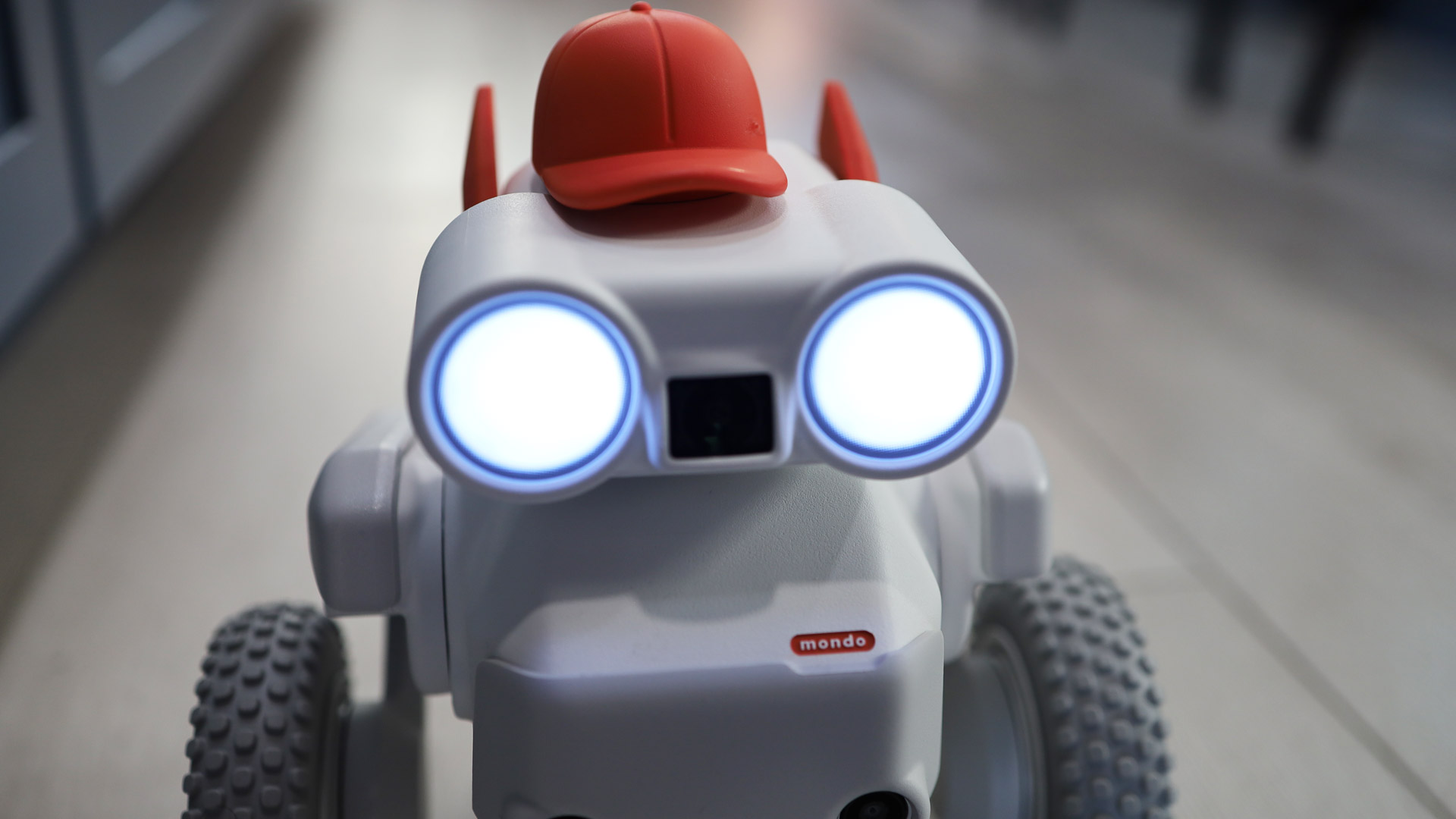
Beni’s exterior is constructed from durable white plastics accented with vibrant orange details. The chassis incorporates multiple optical sensors: dual front-facing cameras dedicated to obstacle detection and spatial navigation, alongside a primary video camera positioned between two large LED "eyes" capable of filming in 4K resolution at up to 60 frames per second. Despite their expressive appearance, the blinking LED eyes serve an aesthetic and communicative function rather than acting as optical sensors.
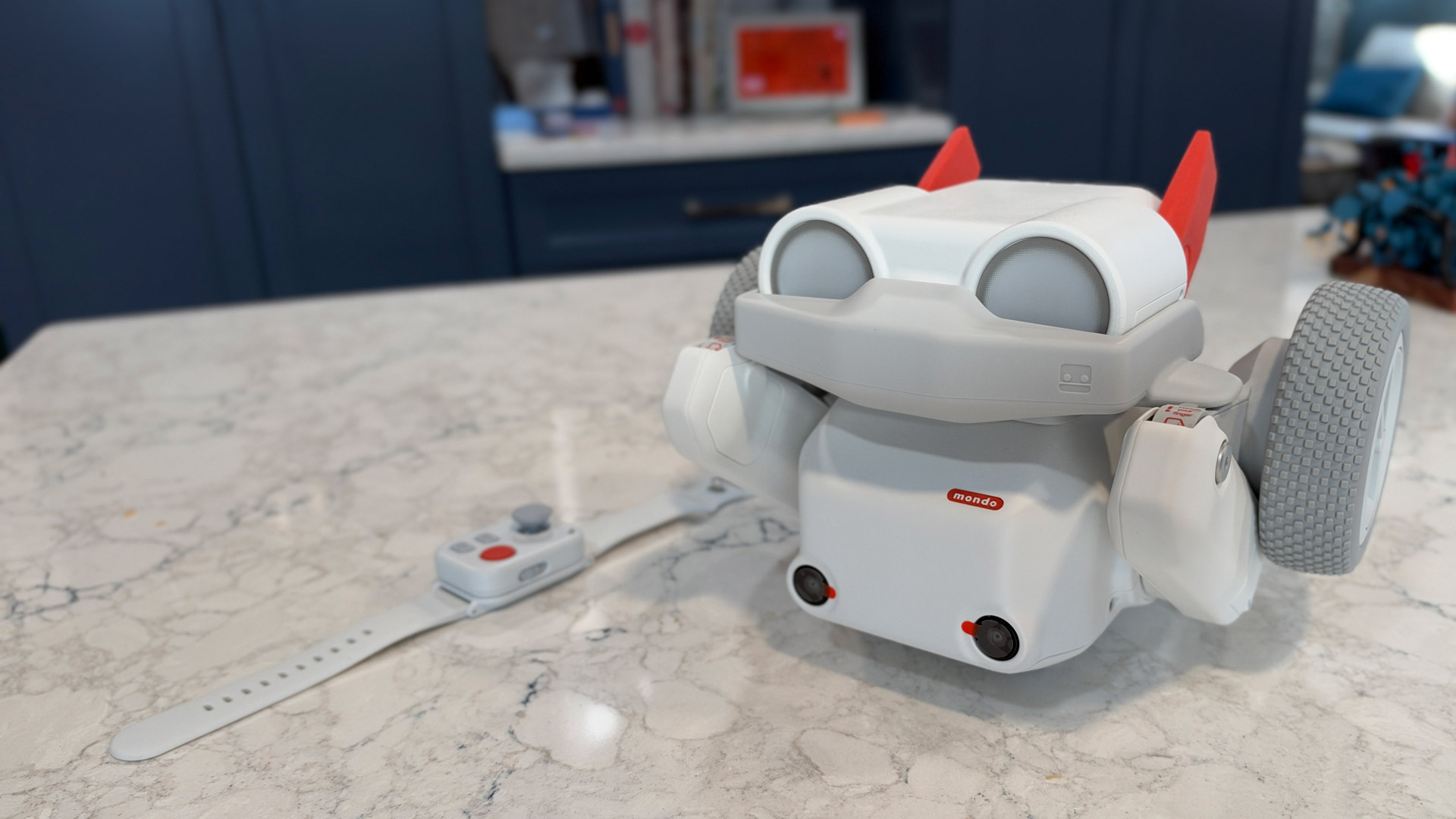
Mondo Robotics offers varying packages for the hardware. The Standard Combo, retailing at $799 / £699, includes the robot, a single battery pack, a wearable motion controller, a decorative plastic baseball hat, a chest protection plate, and standard wheels. For an additional $100 / £100, the Explore Combo variant equips users with off-road tires, a second battery, a centralized charging hub with dedicated slots for battery management, and supplemental protective coverings. The modular wheel system utilizes a pinch-to-release mechanism at each hub, allowing for rapid swaps between standard indoor configurations and rugged outdoor setups.
Performance and Tracking Capabilities
Operating on a two-wheeled balancing architecture, Beni combines autonomous behavioral routines with remote-control capabilities. The robot is designed to withstand physical displacement; reviewers note its ability to absorb impacts, right itself after being knocked over, and recover from minor tumbles thanks to a resilient mechanical build and optional protective plates.
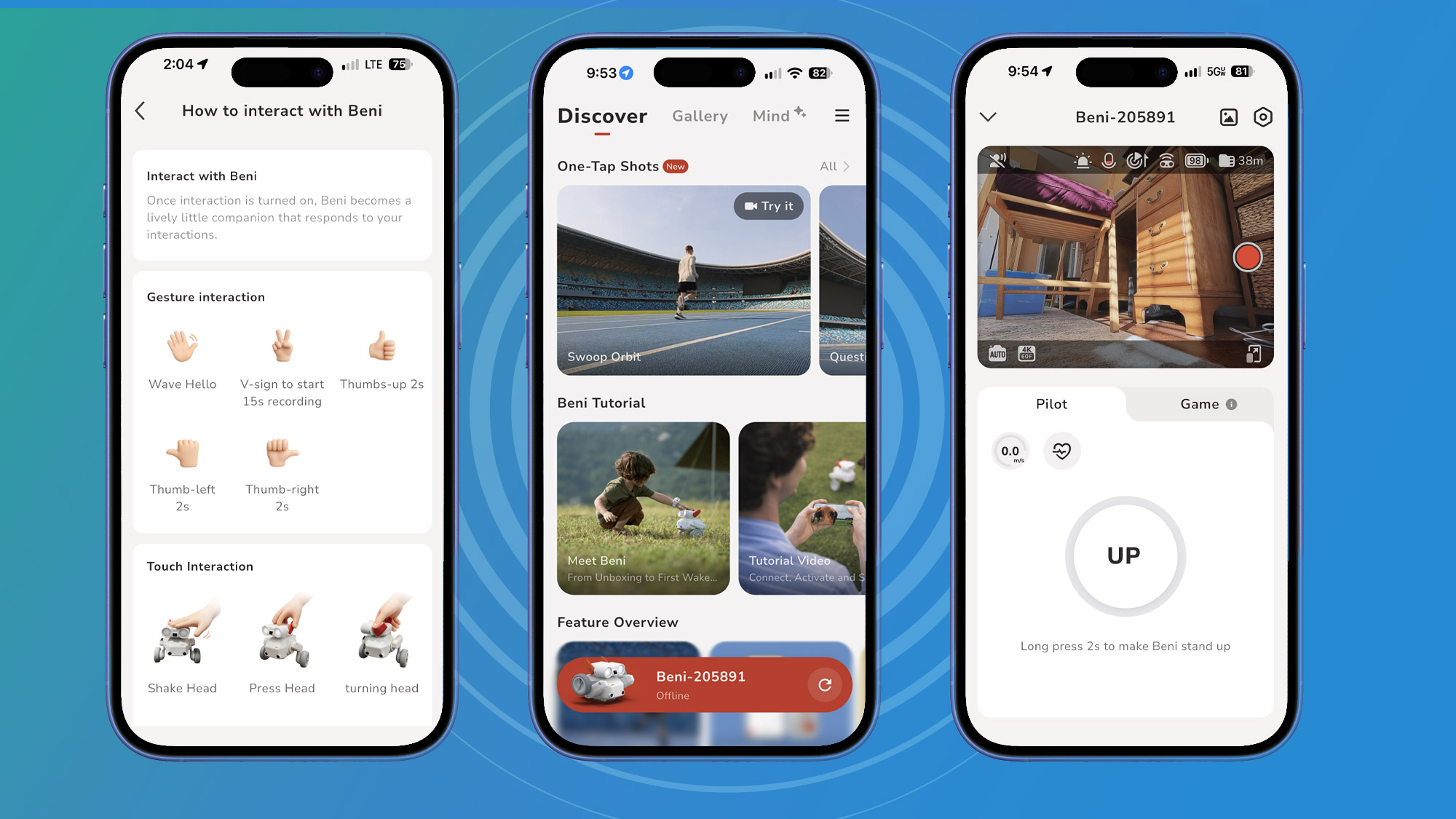
When deployed in tracking scenarios, Beni demonstrates notable agility. Utilizing a maximum speed of nearly 18 miles per hour, the robot can maintain pace with a running user across varied terrain. Its tracking repertoire includes "Trail Tracking," which keeps the device at a consistent distance behind a subject; "Spotlight" mode, which maintains framing while the user is in motion; and a series of automated cinematic presets known as "One Tap Shots," featuring maneuvers such as Comet Orbit, Dolly Overtake, and Swoop Orbit.
However, navigation and spatial awareness yield mixed results during real-world testing. While the onboard sensors successfully manage flat surfaces and minor floor transitions—such as small room dividers—complex architectural elements introduce hazards. Automated staircase detection, requiring a specific operational mode, frequently struggles to interpret multi-step flights accurately, leading to missed steps or unintended falls. Similarly, close-proximity tracking modes, such as "Parallel" tracking, occasionally result in the device colliding with the user’s ankles.
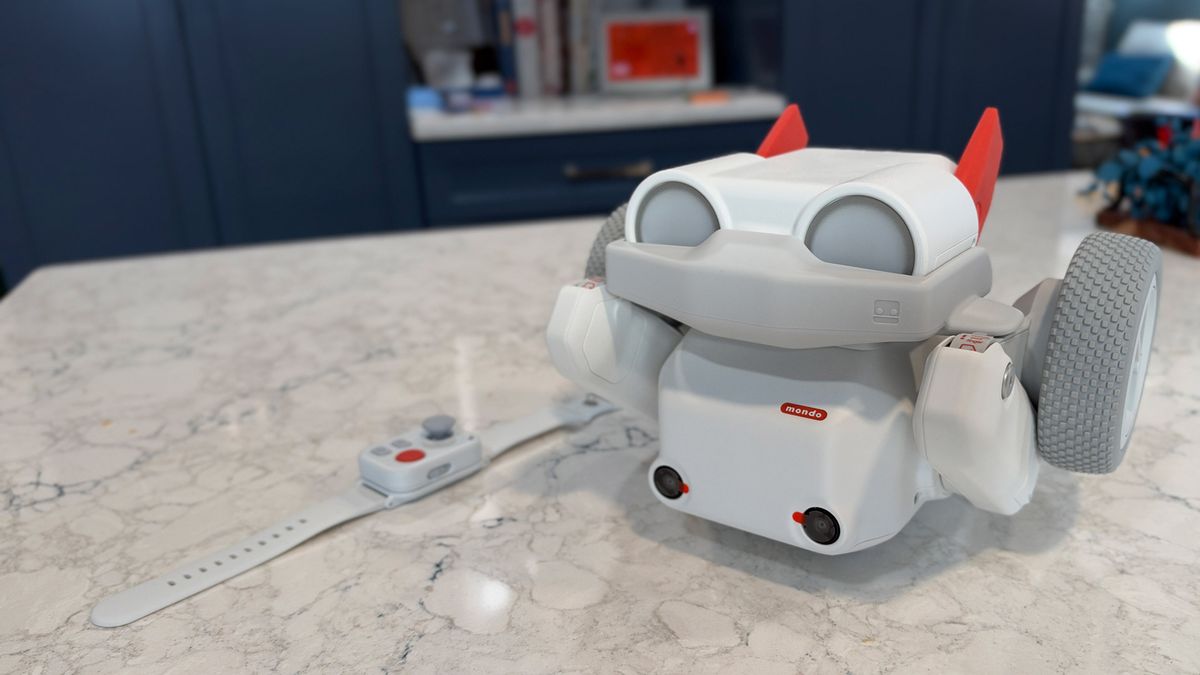
Control interfaces offer considerable flexibility. Users can pilot Beni via the smartphone companion app, utilize tilt-to-steer motion controls that map movement directly to phone orientation, or operate the physical wearable controller. The wearable unit features a thumb-activated joystick—used for executing jumps, forward flips, and directional rolls—and is magnetically secured to a wristband for effortless detachment during handheld operation.
Battery Life and Audio-Visual Performance
Power management is anchored by the swappable battery packs, which deliver an average operating window of approximately one hour under active use conditions. When battery reserves deplete to a critical threshold—indicated by a single remaining charge bar—advanced acrobatic functions such as jumping and flipping are automatically disabled to conserve power for basic stabilization and mobility. Full in-body charging requires roughly 90 minutes, though the Explore Combo’s multi-bay charging hub accelerates turnaround times for multi-battery workflows.
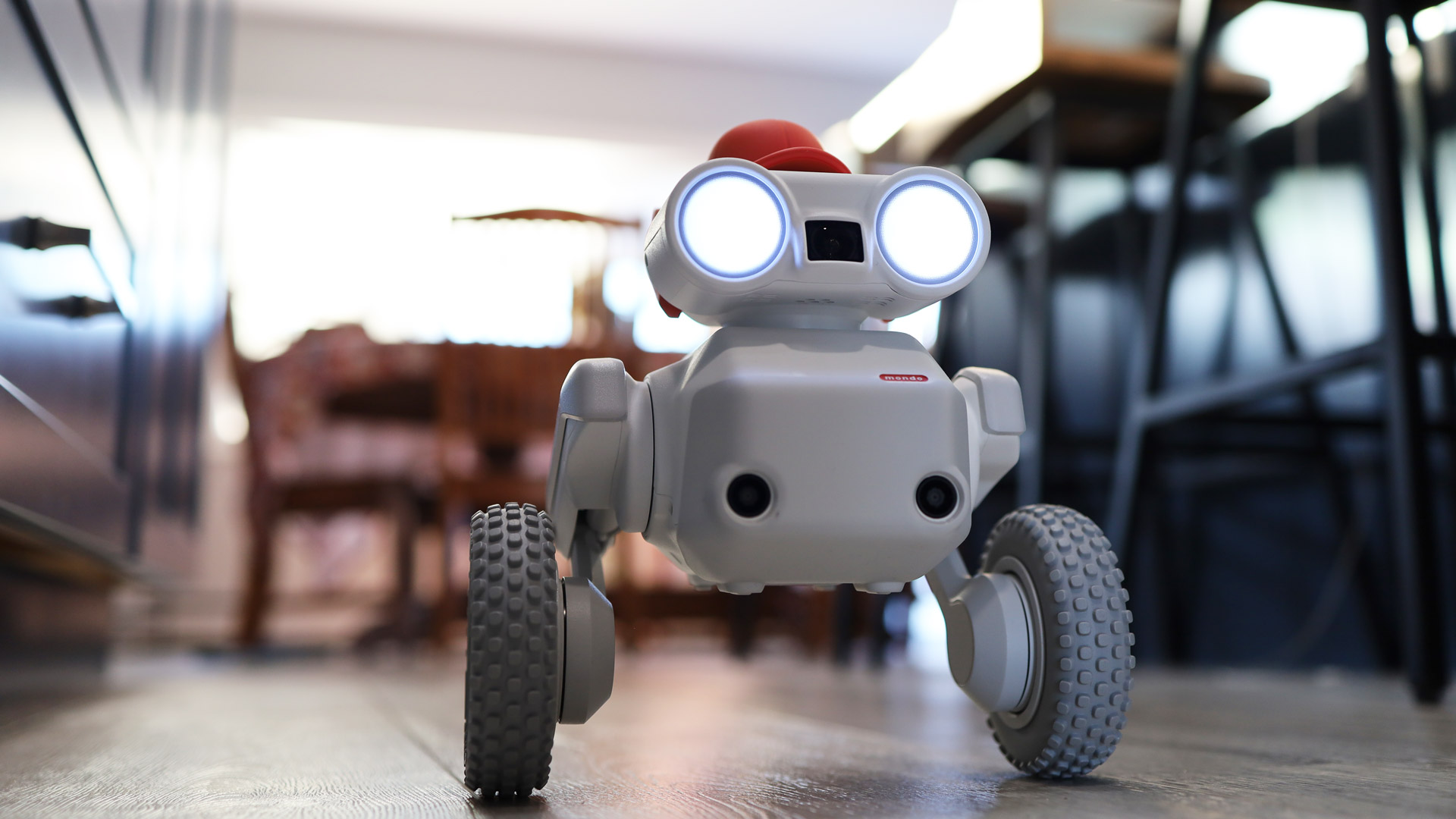
Video footage captured by the central 4K camera is wide-angle and visually sharp, though audio recording is susceptible to mechanical interference. The close proximity of the ground-level chassis means internal cooling fan whirring and wheel-surface friction—particularly on abrasive outdoor pavements—can occasionally bleed into the primary audio track.
Market Implications and Industry Positioning
Priced at $799, Beni occupies a unique intersection between consumer robotics, action videography equipment, and interactive entertainment. Its ability to execute complex physical maneuvers, respond to basic voice prompts (preceded by the wake phrase "Beni Beni"), and interpret hand gestures for recording commands underscores a high level of engineering sophistication.
Yet, fundamental limitations restrict its appeal for professional media production. By operating exclusively at a height of approximately nine inches, Beni’s footage is permanently bound to a ground-level perspective. Unlike aerial drones that capture sweeping overhead shots or traditional follow-cam gimbals operating at eye level, Beni offers a distinct, low-angle viewpoint that may not suit standard vlogging or cinematic requirements.
Furthermore, while its pet-like personality, expressive beeps, and interactive game modes (such as "Coin Hunter") provide substantial entertainment value, the substantial financial investment required places it firmly in the category of enthusiast novelties. As firmware updates potentially refine obstacle avoidance and autonomous stair navigation, consumer robotics developers will likely continue to evaluate whether ground-based robotic videographers can carve out a sustainable market niche alongside established aerial and handheld imaging tools.
Related posts: