Navigating the Daily Challenge: Insights into The New York Times Mini Crossword for July 20, 2026

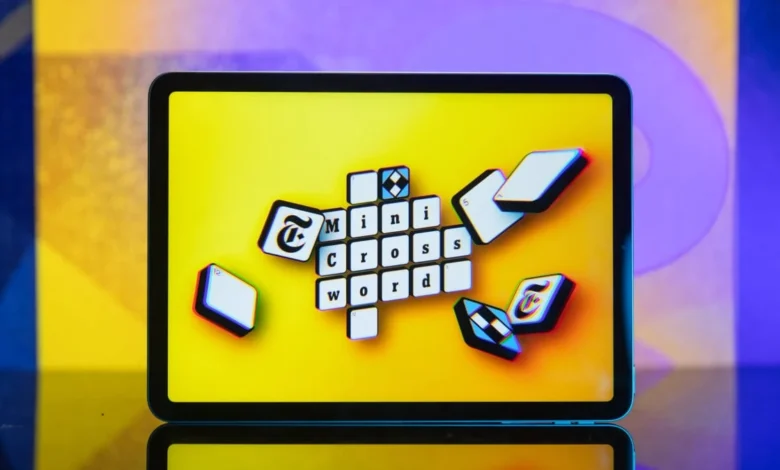
The New York Times Mini Crossword, a compact yet intellectually stimulating daily puzzle, continues to captivate millions globally, offering a brisk mental workout that has become a staple for enthusiasts and casual solvers alike. On Monday, July 20, 2026, the latest iteration of this popular game presented its customary blend of contemporary references, general knowledge, and clever wordplay, solidifying its role as a quick mental agility test in the digital age. Unlike its lengthier, more demanding counterpart, the full-sized New York Times daily crossword, The Mini is specifically designed for brevity and speed, making it an ideal diversion for a coffee break or a brief respite from daily tasks. Its allure lies in its accessibility and the immediate gratification it offers upon completion, often within minutes for experienced solvers.
The Evolution of a Cultural Phenomenon: The New York Times Crossword Legacy
The New York Times has a long and storied history with crosswords, dating back to 1942 when the first NYT crossword puzzle was published on February 15. Introduced amidst the rationing and anxieties of World War II, the puzzle was initially conceived as a morale booster, offering a welcome distraction. Over the decades, it evolved into an intellectual institution, renowned for its challenging clues and sophisticated themes. Eugene T. Maleska, who became the crossword editor in 1977, was instrumental in elevating the puzzle’s intellectual rigor and maintaining its high standards. Following him, Will Shortz, who took the helm in 1993, ushered in an era of increased popularity, introducing more modern themes and a playful wit that expanded its appeal to a broader demographic.
The digital transformation of the New York Times puzzle suite began in earnest in the early 2000s, with online versions becoming increasingly prevalent. The introduction of The Mini Crossword in 22014 marked a pivotal moment. Recognizing a growing demand for shorter, more accessible puzzles, particularly among younger, digitally native audiences, the Times launched The Mini as a complementary product. Its bite-sized format, typically a 5×5 grid on weekdays and a 7×7 grid on weekends, quickly distinguished itself. This strategic move tapped into the burgeoning market for "casual gaming" and mobile-first content, transforming the traditional crossword experience into a quick, daily ritual for millions.
The success of The Mini paved the way for other digital-first puzzles, notably Wordle and Connections, both of which were later acquired by the New York Times Company. Wordle, a simple yet addictive word-guessing game, exploded in popularity in late 2021, and its acquisition by the Times in early 2022 further cemented the publication’s position as a leader in digital casual gaming. Connections, introduced in mid-2023, offered a different type of word puzzle, challenging players to find groups of four related items. These additions have created a vibrant ecosystem of daily brain-teasers under the NYT Games umbrella, each offering a distinct cognitive challenge but sharing the common thread of daily engagement and social shareability.
Deconstructing the July 20, 2026 Mini Crossword: A Daily Diagnostic
The Mini Crossword for Monday, July 20, 2026, presented its own set of unique challenges and delights. For many, the daily puzzle is less about deep intellectual struggle and more about a speed test, a quick measure of one’s ability to retrieve information and make logical connections under a mild time pressure. However, even in this compact format, a cleverly crafted clue can disrupt the flow, transforming a routine solve into a momentarily frustrating brain-teaser.
Let’s examine the clues from July 20, 2026, and the thought processes they might evoke, demonstrating the blend of general knowledge, current events, and wordplay that defines The Mini:
Across Clues and Inferred Solutions:
- Sound of an online message: This clue immediately points to a common auditory notification associated with digital communication. The most prevalent and succinct answer in a crossword context is PING. This clue tests modern cultural literacy and a familiarity with digital interfaces.
- Underwater detection device: A classic piece of general knowledge, this clue directly refers to a technology widely known. The answer, SONAR, short for SOund NAvigation And Ranging, is a staple in naval and scientific contexts, making it a common crossword entry.
- Chicago’s ___ Presidential Center: This clue requires specific knowledge of recent American history and geography. The only former U.S. President associated with a major presidential center in Chicago is Barack Obama, making the answer OBAMA. This tests current events and political knowledge.
- Appropriate anagram of VENMO, if you change the "V" to a "Y": This is a prime example of a wordplay clue, demanding a two-step process: first, altering the given word, and then unscrambling the result. Changing "V" to "Y" in VENMO yields YENMO. Anagramming YENMO, especially considering VENMO is a payment app, leads directly to MONEY. This clue rewards lateral thinking and an understanding of anagrams.
- Potentially awkward wedding guests: This clue taps into common social scenarios and human relationships. While many types of guests could be awkward, the most common and universally recognized answer in this context, especially in a compact crossword, would be EXES. This clue tests social understanding and a bit of humor.
Down Clues and Inferred Solutions:
- Destination for mail that doesn’t go to your home address, perhaps: This clue refers to an alternative mailing address, often used for privacy, business, or temporary residences. The widely recognized abbreviation for this is P.O. BOX (or POB for shorter grids). This tests practical knowledge of postal services.
- Ridiculous: A straightforward synonym clue. Many words could fit, but in the context of a short puzzle, a common and succinct option is ABSURD. This clue tests vocabulary.
- Things debated by expectant parents: This clue touches upon a common life event. One of the most significant decisions expectant parents make is what to call their child, making NAMES the logical and succinct answer. This tests general life experience and social awareness.
- Color of an overcast sky: Another direct descriptive clue, calling for a common color. An overcast sky is typically depicted as GRAY (or GREY, depending on regional spelling, though US crosswords favor GRAY). This tests basic descriptive vocabulary.
- ___ assembly required: This is a classic phrase, often found on product packaging. The missing word that completes this common idiom is SOME. This clue tests familiarity with common phrases and idioms.
The juxtaposition of these clue types within a single Mini Crossword highlights the editor’s skill in creating a diverse and engaging daily experience. From contemporary technology ("PING") and political figures ("OBAMA") to wordplay ("MONEY") and common idioms ("SOME assembly required"), the puzzle touches upon various domains of knowledge, ensuring that while some clues might be instantly solvable, others require a moment of reflection, providing that satisfying "aha!" moment when the answer clicks.
The Psychology of Puzzle Solving: Speed, Frustration, and Satisfaction
The Mini Crossword’s design specifically caters to the human desire for quick wins and cognitive stimulation. Its limited grid size means fewer clues and a faster completion time compared to a full-sized crossword. For many, this translates into a "speed-running" mentality, where the goal is not just to solve the puzzle, but to do so as quickly as possible, often tracking personal bests. Online leaderboards and social sharing features further fuel this competitive spirit, transforming a solitary activity into a communal one.
However, this emphasis on speed also amplifies the frustration when a seemingly simple clue proves elusive. A single tricky entry can halt progress, breaking the flow and forcing solvers to re-evaluate their assumptions. This momentary struggle, often likened to the experience with other popular NYT puzzles like Wordle when the daily word is particularly obscure, is part of the game’s appeal. The subsequent relief and satisfaction upon finally cracking the difficult clue are immensely rewarding, reinforcing the daily habit.
Psychologically, engaging with puzzles like The Mini offers several benefits. It serves as a form of cognitive exercise, enhancing vocabulary, improving memory recall, and sharpening problem-solving skills. The act of deciphering clues and filling in grids stimulates various parts of the brain, potentially contributing to cognitive agility and resilience over time. Furthermore, the daily ritual provides a sense of accomplishment and routine, which can be particularly grounding in an often unpredictable world.
The Business and Cultural Impact of Digital Puzzles
The success of The Mini and the broader NYT Games suite represents a significant strategic achievement for The New York Times Company. In an era where traditional media outlets grapple with declining print subscriptions and the challenges of digital monetization, diversified offerings like premium puzzle content have proven to be a robust revenue stream. The games platform not only attracts new subscribers who might not initially be interested in news journalism but also enhances the value proposition for existing subscribers, fostering loyalty and engagement. Data from the New York Times has consistently shown that users who engage with their games products tend to have higher retention rates and spend more time on their platforms.
Beyond direct revenue, the games serve as a powerful brand extension, positioning the New York Times not just as a purveyor of serious journalism but also as a source of high-quality, intelligent entertainment. This dual identity appeals to a wider demographic, from seasoned news junkies to casual gamers looking for a daily mental challenge. The social sharing features, particularly prevalent with Wordle but also common for The Mini and Connections, act as organic marketing, spreading awareness and encouraging new users to try the puzzles.
The cultural impact is equally profound. Puzzles like The Mini have woven themselves into the fabric of daily life for millions. Discussions about the day’s "tough clue" or "record time" are common in offices, homes, and online forums. This shared experience fosters a sense of community, allowing people to connect over a common intellectual pursuit. Online resources, such as those provided by Mashable, which offer hints and answers, further support this community by providing a safety net for frustrated solvers and a platform for discussion. Mashable’s dedicated games hub, featuring a variety of puzzles including Mahjong, Sudoku, and free crosswords, exemplifies the broader media trend of integrating casual gaming content to engage audiences and diversify content offerings.
Looking Ahead: The Future of Digital Puzzles and Cognitive Engagement
As technology continues to evolve, so too will the landscape of digital puzzles. Artificial intelligence and machine learning are already being utilized in puzzle generation and personalization, potentially leading to puzzles that adapt to a solver’s skill level or preferred themes. Virtual and augmented reality could offer immersive puzzle-solving experiences, transforming the traditional grid into a dynamic, interactive environment.
However, the core appeal of puzzles like The Mini is likely to remain rooted in their simplicity and human-centric design. The joy of solving, the "aha!" moment, and the satisfaction of mastering a challenge are timeless. The New York Times Mini Crossword, as demonstrated by its July 20, 2026 edition, embodies this enduring appeal, continuing to provide a daily dose of intellectual stimulation that is both accessible and deeply engaging. It stands as a testament to the power of well-crafted puzzles to entertain, educate, and connect people across the digital divide, securing its place as a beloved fixture in the daily routines of millions worldwide. As the world becomes increasingly complex, the simple, focused challenge of a daily crossword offers a valuable opportunity for mental clarity and a brief, yet significant, moment of accomplishment.
Related posts: