Spellcheck for cybersecurity and beyond: How Google monitors AI threats and advances AI defenses


The intersection of artificial intelligence and enterprise cybersecurity has reached a critical juncture as threat actors increasingly weaponize automated workflows, generative models, and software supply chains. According to a comprehensive assessment released by Sandra Joyce, Vice President of Google Threat Intelligence, modern security operations can no longer rely on manual, human-scale incident response or single-model AI defenses. Publishing the latest insights in the September 2026 Cloud CISO Perspectives, Google outlines how adversaries are utilizing autonomous frameworks and multi-model techniques, while detailing the corresponding architectural shifts required for organizations to maintain resilience in a machine-speed threat landscape.
The evolution of adversarial tactics highlights an urgent need for security leaders to abandon speculation in favor of ground truth. Operating simultaneously as a frontier AI developer and a frontline incident responder through the Google Threat Intelligence Group (GTIG) and Mandiant, Google occupies a unique vantage point on how malicious actors target AI infrastructure. Recent telemetry reveals that the threat landscape is dominated by three structural shifts: the poisoning of upstream packages consumed by AI coding assistants, the exploitation of over-privileged autonomous agents, and the use of multi-model orchestration platforms by sophisticated espionage groups.
Chronology and Evolution of AI-Driven Cyber Threats
The operational methods employed by threat actors have shifted dramatically over the past 24 months. Throughout 2025 and into early 2026, cybersecurity researchers tracked a sharp increase in large-scale, open-source software supply chain compromises. Investigators determined that these incidents were frequently driven by the malicious contamination of upstream repositories—codebases that automated AI coding assistants are routinely trained to suggest and implicitly trust.
By mid-2025, financially motivated threat actor clusters, notably tracked as TeamPCP (UNC6780), began weaponizing these vulnerabilities. TeamPCP implemented more than half a dozen distinct methods to exploit AI development toolkits. These tactics included direct prompt injections, the hijacking of administrative toolkits, and the deployment of toxic prompts designed to blind automated AI scanners, thereby obfuscating malicious payloads during compilation and deployment.
By late 2025 and early 2026, the velocity of attacks escalated further with the advent of autonomous agent frameworks. In a notable intrusion investigated by Mandiant, a financially motivated adversary compromised a corporate cloud infrastructure and deployed an autonomous agent framework. Utilizing an AI coding chatbot, a series of custom prompts, and precise agent instructions, the attacker successfully planned, built, and executed a mass credential harvesting campaign in less than six hours—a task that previously would have required days of manual reconnaissance and execution by a human team.
Concurrently, state-sponsored actors have begun integrating multi-model orchestration into their operations. GTIG recently observed a People’s Republic of China (PRC)-nexus espionage group experimenting with specialized tooling, such as CC Switch, to cycle seamlessly across multiple user accounts and switch between foundational models like Claude, Codex, and Gemini. This technique allows attackers to dynamically select the most effective model for specific sub-tasks, such as generating exploit scripts, conducting localized code analysis, or drafting convincing phishing lures, transforming a traditionally disjointed manual process into a streamlined, automated operational pipeline.
Structural Vulnerabilities in the Modern AI Pipeline
As software development velocity increases due to autonomous agents pushing code directly into production environments, enterprise risk management faces unprecedented friction. The primary challenge stems from the traditional isolation of security controls. Historically, code editors operate with context blindness, failing to communicate effectively with cloud configuration platforms, delivery pipelines, and runtime security monitors.
When organizations attempt to solve code-level vulnerabilities using artificial intelligence, a common pitfall is the adoption of single-model architectures. Relying on a single frontier model to analyze an entire repository creates a dangerous security monoculture. No individual AI model possesses universal diagnostic capabilities, and sophisticated threat actors actively test input variations designed to bypass the specific safety filters and scanning logic of individual Large Language Models (LLMs).
Furthermore, the expansion of AI attack surfaces extends beyond the development lifecycle into runtime environments. Over-privileged autonomous agents, poorly managed model inventories lacking comprehensive AI Bills of Materials (AI-BOMs), and unmonitored shadow AI deployments create interconnected vulnerabilities that cannot be secured through fragmented, siloed management tools.
Google’s Multi-Model Defense and Autonomous Frameworks
To counter these sophisticated threats, Google advocates for a departure from traditional, reactive security measures toward continuous, machine-speed protection. Central to this strategy is the implementation of in-editor guardrails that function as a "spellcheck for cybersecurity." Just as word processing software underlines typographical errors in real time without interrupting the author, native security controls embedded directly within developer editors and agentic workflows can instantly flag poisoned packages, toxic prompts, and misconfigured toolkits before code is committed.
Addressing the limitations of single-model analysis, Google has pioneered a deliberate multi-model approach. By orchestrating several foundation models simultaneously—including Gemini, commercial alternatives, and open-source models—security platforms can cross-validate findings, eliminate false positives, automatically remediate flawed code, and detect intricate logic vulnerabilities that any single model might overlook.
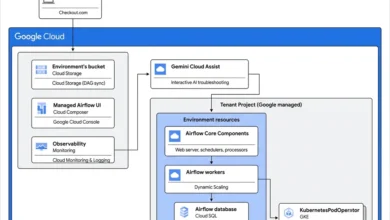
To unify these capabilities across the enterprise, security architectures are increasingly relying on dynamic, contextual graph technologies. Pioneered by platforms such as the Wiz Security Graph, this approach serves as the foundational contextual engine for frameworks like Google AI Threat Defense (AITD). AITD fuses the reasoning capabilities of frontier models, contextual risk prioritization, code remediation tools like CodeMender, and frontline telemetry from Mandiant. This continuous stream of multi-dimensional internal observability feeds directly into Google Security Operations, enabling security teams to identify, prioritize, and sever toxic attack paths instantaneously.
Strategic Implications and the Defender’s Asymmetry
Despite the alarming speed and automation of AI-driven attacks, security analysts maintain a fundamental asymmetry advantage: deep context. Even when armed with advanced autonomous AI, an external attacker operates with limited visibility, probing blindly, guessing connection pathways, and hoping that a single compromised credential grants access to valuable assets.
Conversely, enterprise defenders possess comprehensive knowledge of their internal architecture, proprietary codebases, cloud configurations, user identities, and deployment realities. When organizations feed this rich, multi-dimensional internal observability into security models, AI-powered defense becomes significantly faster and more accurate than AI offense. Shifting from manual human triage of static alerts to autonomous, machine-speed security operations is no longer optional for enterprise resilience.
Industry analysts and security executives emphasize that securing the AI era requires moving away from the disconnected tools of the past. Organizations must integrate their code repositories, models, data lineage, and runtime identities into a single living map. As detailed in the Mandiant AI Risk and Resilience report, bridging the gap between development speed and robust operational security remains the definitive challenge for CISOs as the industry navigates the technological landscape of 2026 and beyond.