Transforming Tribal Knowledge into Operational Code: How AI App Builders Are Revolutionizing Enterprise CRM Analytics


In the modern enterprise, a significant portion of institutional knowledge remains trapped outside formal software architectures. While corporate databases and customer relationship management (CRM) platforms capture structured transactional histories, the nuanced evaluation models—such as bespoke lead-scoring systems, proprietary risk-assessment metrics, and qualitative account-prioritization frameworks—frequently reside in decentralized spreadsheets, internal memos, or the collective experience of long-standing employees. Historically, leveraging these internal methodologies required cumbersome, custom software engineering initiatives that demanded significant capital, specialized developer resources, and extended deployment timelines.
However, the emergence of advanced vibe coding platforms and AI-driven application builders is radically shifting this paradigm. By bridging the gap between natural language prompts and functional code generation, these tools allow organizations to transform institutional workflows into automated, live-data applications within minutes rather than months.
The Evolution of Enterprise Customization and the Rise of Vibe Coding
For decades, custom software development within enterprise environments was bottlenecked by technical friction. Business analysts, sales managers, and operational leads could conceptualize sophisticated analytical models, but translating those ideas into deployed applications required bridging the divide with professional software developers. This translation phase often introduced miscommunications, delayed deployments, and created rigid tools that were difficult to modify as business conditions shifted.
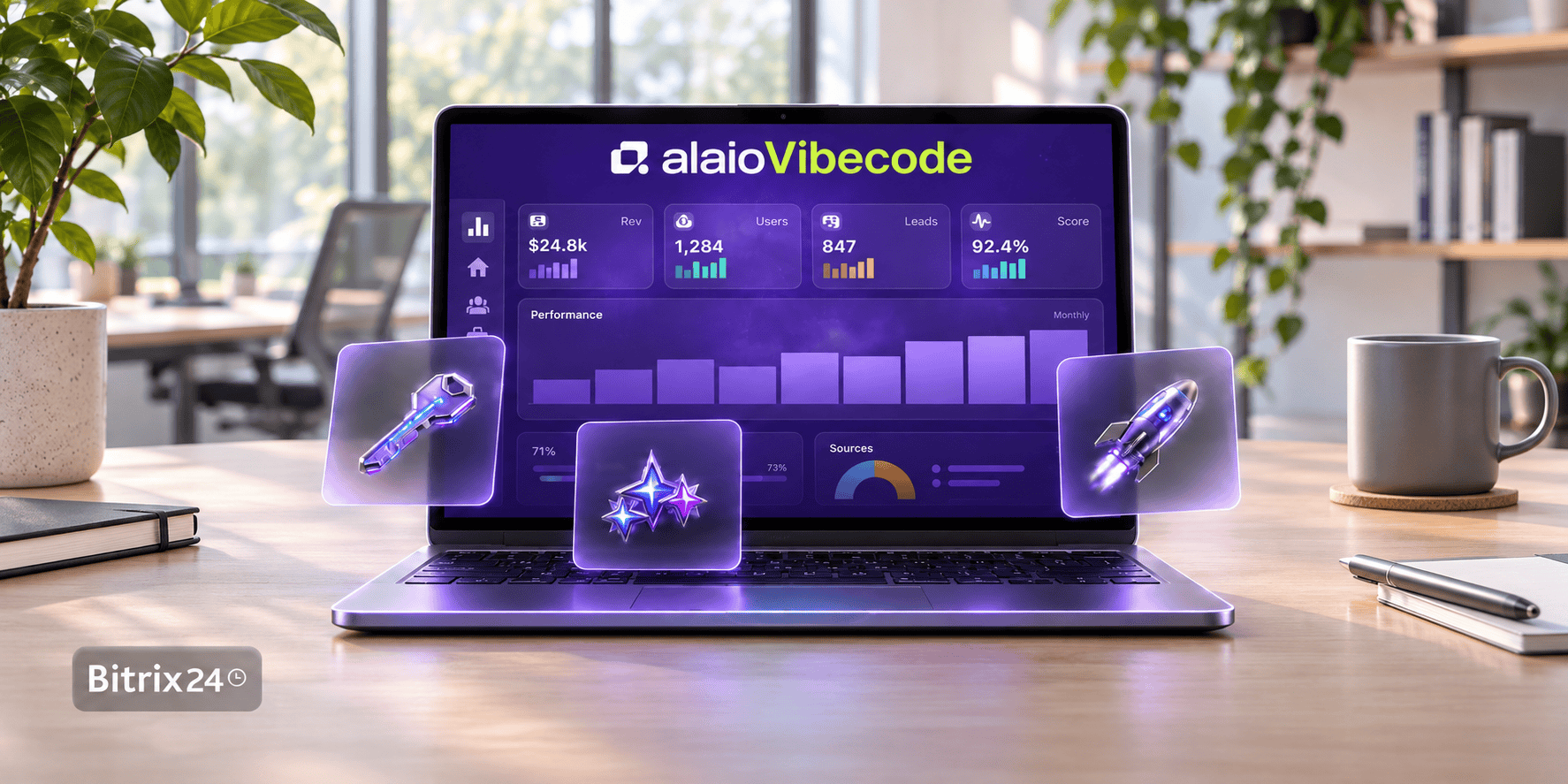
The paradigm known as "vibe coding"—wherein developers and non-technical stakeholders alike direct AI coding agents through high-level natural language instructions rather than writing line-by-line syntax—has dismantled these traditional barriers. Platforms designed specifically for enterprise ecosystems, such as Alaio Vibecode for Bitrix24, harness this capability to allow teams to build specialized CRM analytics dashboards, dynamic reporting tools, and autonomous AI agents directly integrated with their existing operational data.
Bitrix24, a comprehensive workspace environment that consolidates CRM, project management, communications, and task automation, serves as a primary foundation for such innovation. By enabling organizations to construct tailored applications around their distinct calculation formulas and workflow paths without initiating conventional software projects, platforms like Alaio Vibecode democratize enterprise app development. Users can interface with leading AI coding engines—including Claude Code, Cursor, and OpenAI Codex—to construct applications tailored precisely to their organizational DNA.
Architecting Context-Aware CRM Analytics and Lead Scoring
At the heart of modern sales operations is the challenge of pipeline prioritization. Traditional CRM systems often apply generic scoring metrics that fail to reflect the unique market dynamics or qualification criteria of a specific enterprise. A specialized B2B sales team, for instance, might evaluate open opportunities using a weighted formula accounting for account type, days since last engagement, contract volume, and historical interaction patterns.
Using AI app-building frameworks, teams can operationalize these bespoke models directly within their workspace. The construction process begins with a precise natural language prompt. Rather than submitting a vague request to an AI agent, administrators define the exact parameters, data sources, and desired outputs. For example, an instruction might dictate the creation of a CRM analytics dashboard that retrieves open opportunities, applies a specific multi-factor scoring matrix—such as 40 percent weight to engagement history, 30 percent to account fit, and 30 percent to deal potential—and presents the results in a ranked table with direct links to underlying records.
Industry analysts note that the integration of deterministic code with generative AI represents a critical architectural best practice. In effective analytics applications, deterministic code handles rigorous numerical calculations, tallying inactive days or calculating financial values from actual database records, while generative AI is deployed to synthesize those findings, explain underlying scoring rationales, and generate actionable narrative briefings for human operators.
Testing, Validation, and Decision Replay Protocols
Deploying AI-generated analytical tools into production environments necessitates rigorous validation protocols to ensure operational reliability. Because these applications directly influence commercial decision-making, resource allocation, and customer outreach, organizations are adopting structured testing methodologies, such as historical decision replay tests.
Before releasing a custom lead-scoring application to a broader sales force, operations teams typically execute a historical simulation. By running the newly minted application against a representative dataset of past CRM opportunities, analysts can evaluate whether the tool’s output aligns with historical successes and failures. This phase is crucial for identifying questionable assumptions within the scoring logic—such as over-indexing on recent activity while ignoring fundamental account fit—before the model impacts active pipeline management.
Furthermore, post-deployment iteration allows managers to continuously refine weight distributions, adjust activity thresholds, and modify interface parameters based on end-user feedback. This iterative agility stands in stark contrast to legacy enterprise software cycles, where modifying a reporting dashboard might require a formal change request submitted to an external vendor or internal IT department.
Beyond Dashboards: Actionable Intelligence and External Context Integration
While traditional business intelligence tools rely heavily on static visualizations, contemporary workplace applications emphasize proactive operational guidance. Managers frequently find that a ranked list of prioritized action items yields greater productivity than a sprawling dashboard filled with dozens of charts and metrics.
For example, specialized applications built through vibe coding environments can address targeted operational bottlenecks. A "Stale Task Monitor" within a project management ecosystem can evaluate overdue assignments, elapsed time since planned commencement, and priority levels to calculate a composite risk score. Instead of reviewing every active project, a department head receives a curated list of high-risk tasks accompanied by AI-generated remediation suggestions.
Similarly, advanced tools are breaking the boundaries of internal CRM silos by incorporating external market intelligence. Solutions like the preconfigured "Deal Radar" architecture combine internal customer records with external web research. By parsing recent product announcements, organizational expansions, or funding rounds associated with a target account, the application generates a comprehensive briefing that explains why a specific opportunity warrants immediate attention.
Security, Governance, and Deployment Flexibility
As enterprises increasingly adopt AI-driven development platforms, data security and access governance remain paramount concerns. Enterprise-grade vibe coding environments address these vulnerabilities by maintaining strict data locality and authorization controls. Rather than forcing organizations to export sensitive customer records into disparate third-party databases, platforms like Alaio Vibecode enable applications to query data directly from the host CRM through secure, permission-controlled APIs.
Administrators can enforce granular access permissions, ensuring that custom applications and conversational agents—such as specialized AI assistants configured for specific departmental roles—only retrieve data and execute actions authorized for the signed-in employee. Additionally, high-security deployments can utilize isolated server architectures that remain entirely inaccessible from the public internet, protecting proprietary corporate intelligence while unlocking the speed and flexibility of AI-assisted development.
Implications for the Future of Enterprise Software
The transition toward natural-language application building signifies a fundamental shift in how organizations interact with their software infrastructure. By empowering domain experts—sales directors, marketing managers, and operations leads—to build and modify their own analytical tools, enterprises are effectively closing the gap between operational strategy and software execution.
As these platforms mature, the traditional distinction between software consumers and software creators will continue to blur. Organizations that successfully harness AI app builders to codify their tribal knowledge, automate routine analytical reviews, and deploy context-aware decision support tools will likely secure a distinct operational advantage in an increasingly fast-paced digital economy.