Understanding the Gossip Protocol: A Decentralized Approach to Distributed Systems

The gossip protocol, also known as the epidemic protocol, offers a robust and scalable solution for communication and state management in large distributed systems. Its decentralized nature, inspired by the way information spreads through social networks or epidemics, allows for high availability and resilience, making it a cornerstone in modern software architecture and a critical topic for system design interviews. The original article, exploring the intricacies of this protocol, was published on the systemdesign.one website. For those seeking to deepen their understanding of system design principles and excel in technical interviews, subscribing to the system design newsletter is highly recommended.
The Challenge of Distributed Systems
Distributed systems, by their very nature, face inherent challenges in maintaining consistency, achieving fault tolerance, and ensuring scalability. Traditional approaches to managing state across multiple interconnected nodes often rely on centralized services. While solutions like Apache Zookeeper can provide strong consistency guarantees and serve as effective service discovery mechanisms, they introduce significant drawbacks. The centralized service itself becomes a single point of failure, and its ability to scale with the growing demands of a large distributed system is often limited. This vulnerability can lead to system-wide outages if the central authority falters, and performance bottlenecks can emerge as the system expands.
The Rise of Peer-to-Peer Solutions
In contrast, peer-to-peer (P2P) state management services prioritize high availability and eventual consistency. This paradigm shift allows systems to remain operational even when individual nodes experience failures. The gossip protocol emerges as a powerful algorithmic framework to implement these P2P state management services, offering enhanced scalability and resilience. Its mechanism, akin to how rumors spread through an office or how news disseminates on social media, ensures that information eventually reaches all participating nodes with a high probability.
Broadcast Protocols: A Foundation for Communication
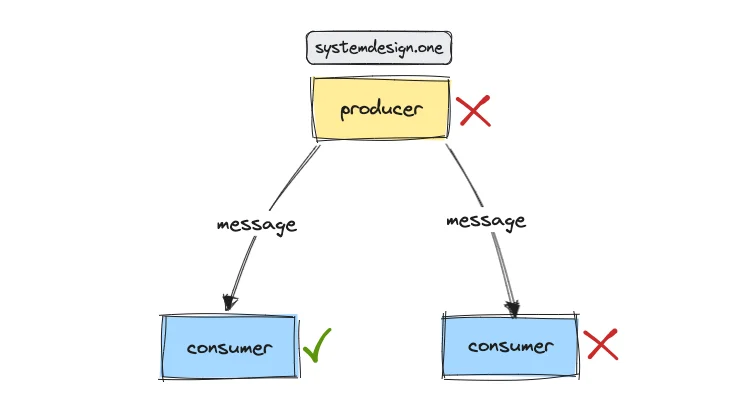
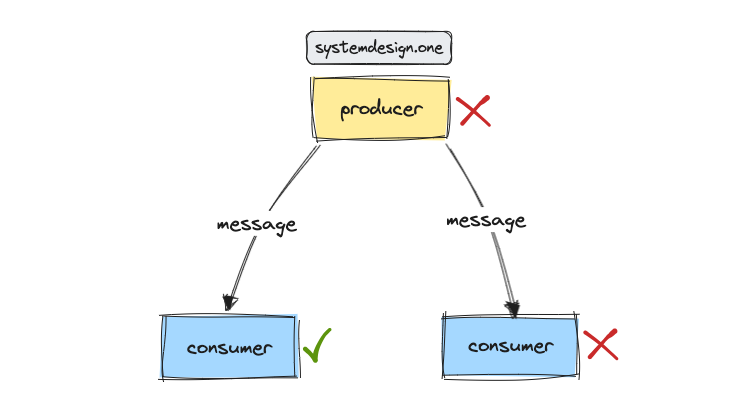
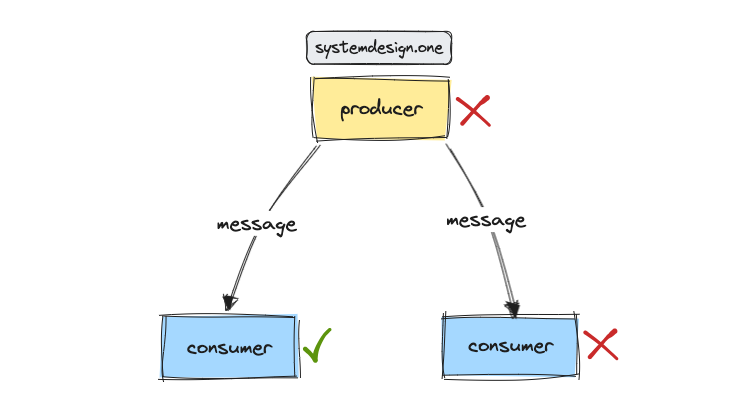
Before delving deeper into the gossip protocol, it’s beneficial to understand foundational broadcast protocols in distributed systems. One common approach is point-to-point broadcast, where a producer directly sends a message to each consumer. Reliability in this model is achieved through retry mechanisms on the producer’s side and deduplication on the consumer’s side. However, this method remains vulnerable to simultaneous failures of both the producer and a consumer, potentially leading to message loss.
A more resilient approach is eager reliable broadcast. Here, every node re-broadcasts messages to all other nodes using reliable network links. This design significantly improves fault tolerance, as the failure of one node doesn’t prevent message delivery, with remaining nodes taking over the retransmission. However, this method can be bandwidth-intensive and complex to manage, especially in large-scale environments.
The Mechanics of Gossip Protocol
The gossip protocol, at its core, is a decentralized communication technique designed for large distributed systems. Its fundamental principle involves each node periodically sending messages to a randomly selected subset of other nodes. This localized interaction, repeated across the network, eventually leads to the dissemination of information to the entire system with a high degree of probability. In essence, nodes collaboratively build a global understanding of the system’s state through these limited, local exchanges.
This protocol is built upon a foundation of scalability, robustness, and eventual consistency. It is frequently employed for critical tasks such as maintaining node membership lists, facilitating consensus among nodes, and implementing fault detection mechanisms. Beyond its core functions, the gossip protocol can also be used to piggyback application-level data, allowing for efficient exchange of additional information alongside system-level updates.
The inherent reliability of the gossip protocol stems from its ability to overcome node failures through message retransmission. If a node fails, other nodes that have received the message can continue to propagate it. Furthermore, the gossip protocol can be used to implement various broadcast guarantees, including First-In-First-Out (FIFO), causal broadcast, and total order broadcast.
The effectiveness of the gossip protocol can be fine-tuned by adjusting key parameters like cycle (the number of rounds required for a message to spread) and fanout (the number of random nodes a node communicates with in each round). Tools exist that offer advanced simulation and visualization capabilities to better understand and optimize these parameters.
The characteristics that make the gossip protocol an attractive choice for large-scale distributed systems include its inherent scalability, fault tolerance, and decentralized nature. It is particularly well-suited for scenarios where operations are commutative and strict serializability is not a requirement. In such cases, the protocol can effectively keep nodes consistent. For data deletion, a mechanism known as a tombstone is employed, which marks data entries for invalidation without immediate physical removal, ensuring eventual consistency.
Types of Gossip Protocols
The selection of a specific gossip protocol type often hinges on the trade-offs between message propagation time and the generated network traffic. Broadly, gossip protocols can be categorized into several types:
Anti-Entropy Gossip Protocol
The anti-entropy protocol aims to reduce "entropy," or inconsistency, between replicas of data in a stateful service. In each gossip round, nodes with the newest information share it with others. While effective, the basic anti-entropy model can be bandwidth-intensive, as it might involve transferring entire datasets. Techniques like checksums, recent update lists, and Merkle trees are employed to identify differences between nodes more efficiently, thereby reducing redundant data transfers and conserving bandwidth. A potential drawback of pure anti-entropy is that it can lead to an unbounded number of messages without a clear termination point.
Rumor-Mongering Gossip Protocol
Also known as the dissemination protocol, rumor-mongering involves more frequent cycles than anti-entropy. This approach is designed to flood the network with information, albeit with a potentially higher peak load. Its advantage lies in its efficient use of network bandwidth, as it typically only transfers the latest updates. To manage the message volume, messages are often marked for removal after a certain number of communication rounds, ensuring that the network doesn’t become overwhelmed. This strategy generally ensures a high probability of a message reaching all nodes.
Aggregation Gossip Protocol
This type of gossip protocol is used to compute system-wide aggregates. It achieves this by sampling information from various nodes and combining these sampled values to derive a single, aggregated system-wide result.
Strategies for Message Dissemination
The effectiveness of spreading messages within a gossip protocol framework is crucial for building highly available services. The choice of strategy depends on specific service requirements and network conditions, with inherent trade-offs in bandwidth, latency, and reliability. These strategies are applicable to both anti-entropy and rumor-mongering models:
- Push Model: In this model, a node with the latest message proactively sends it to a random subset of other nodes. This is efficient when the number of update messages is small, as it minimizes traffic overhead.
- Pull Model: Here, each node actively polls a random subset of other nodes to check for any new update messages. This approach is more effective when there are numerous update messages, as it increases the likelihood of quickly finding a node with the most recent information.
- Push-Pull Model: This hybrid approach combines the strengths of both push and pull. A node can push new updates and also poll for updates from others. The push component is beneficial during the initial phase when few nodes have new information, while the pull component excels in the later stages when many nodes possess various updates. This model is often optimal for disseminating updates quickly and reliably.
Gossip Protocol Performance Metrics
The performance of a gossip protocol implementation is often characterized by two key parameters:
- Fanout: The number of nodes a particular node communicates with in each gossip round.
- Cycle: The number of gossip rounds required for a message to propagate across the entire cluster.
The relationship between these parameters and the total number of nodes ($n$) is roughly logarithmic: the number of cycles required is approximately $O(log_fanout n)$. For instance, in a system of 25,000 nodes, it might take around 15 gossip rounds for a message to spread. With a gossip interval as low as 10 milliseconds, a message could propagate across a large data center in approximately 3 seconds. To manage network load, messages are typically designed to "age out" over time.
Performance can be measured using various metrics, including message latency, network bandwidth consumption, and CPU utilization. Case studies have demonstrated that gossip protocols can operate with remarkably low resource utilization, with one example showing a system of 128 nodes consuming less than 2% of CPU and less than 60 KBps of bandwidth.
Gossip Protocol Properties and Algorithms
While there’s no single formal definition, gossip protocols are generally expected to exhibit certain properties, including scalability, fault tolerance, and robustness.
The core gossip algorithm typically involves nodes periodically exchanging information. A crucial aspect of this is heartbeat monitoring. A node’s heartbeat counter is incremented during gossip exchanges. A continuously incrementing counter indicates a healthy node. If the counter remains unchanged for an extended period, it signals a potential issue, such as a network partition or node failure. Various criteria exist for selecting peer nodes in gossip exchanges, often involving random selection from a membership list.
Implementation Details
Gossip protocols commonly transport messages over User Datagram Protocol (UDP) or Transmission Control Protocol (TCP), with configurable fanout and intervals. A peer sampling service plays a vital role in identifying peer nodes for gossip exchanges, typically using randomized algorithms. The API of such a service would usually provide endpoints for adding and retrieving peer nodes.
The workflow often involves each node maintaining a small, local membership table representing a partial view of the system. This table is periodically refreshed through gossip messages. Probabilistic distribution is leveraged to select peer nodes, minimizing redundant transmissions to the same node.
Application state can be transferred as key-value pairs. The protocol ensures that the most recent value for a given key is propagated. APIs are provided to manage this application state exchange. Seed nodes, pre-configured and static nodes, are essential for bootstrapping the system and preventing logical divisions.
When a node starts up or receives gossip messages containing metadata of a peer node, it updates its internal state. This metadata exchange can be optimized by maintaining an in-memory version number to send only incremental updates. A generation clock, a monotonically increasing number incremented on node restarts, along with version numbers, helps in correctly detecting node metadata changes and ensuring the ordering and versioning of application state.
The gossiper timer ensures that all nodes eventually receive critical metadata about their peers, even those behind network partitions. Each node has a heartbeat associated with it, comprising generation and version numbers. Application state is also represented by key-value pairs with associated version numbers.
A node initiating a gossip exchange sends a gossip digest synchronization message containing a list of gossip digests. Each digest includes an endpoint address, generation number, and version number. An acknowledgment message follows, containing a list of gossip digests and endpoint states.
Use Cases and Applications
The gossip protocol finds widespread application in scenarios where eventual consistency is acceptable. Popular uses include:
- Failure Detection: With high probability, gossip protocols can detect node failures, saving system resources. It’s crucial to understand that a single client’s inability to connect to a node doesn’t definitively indicate failure; network partitions can be a factor. Certainty of failure is achieved when multiple nodes confirm a node’s liveness through gossip.
- Data Exchange and Command and Control: Gossip protocols are often more reliable for data exchange and control messages than TCP connections. They abstract communication logic related to node and subsystem properties away from the application.
- Node Statistics and Subsystem Information: Node statistics like average load and free memory can be transmitted via gossip messages, aiding local decision-making regarding fanout. Subsystem information, key metadata (like configuration changes), and even request-response data can be exchanged.
- Optimized Routing: By identifying node liveness, messages can be routed efficiently across the cluster.
- Decentralized Decision-Making: The ability for local nodes to make decisions without relying on a centralized service is key to gossip’s scalability.
- Versioning: Messages can be versioned using vector clocks to ensure that older versions are ignored.
Real-world applications of the gossip protocol are numerous, including systems like Amazon Dynamo, distributed counters, and various distributed databases and messaging systems.
Advantages of Gossip Protocol
The gossip protocol offers several compelling advantages:
Scalability
The logarithmic time complexity for convergence and the fact that each node interacts with a fixed number of other nodes, irrespective of the total system size, make gossip highly scalable. The lack of acknowledgment waiting further improves latency.
Fault Tolerance
Its inherent tolerance for unreliable networks, coupled with redundancy, parallelism, and randomness, makes gossip protocols highly fault-tolerant. The decentralized and symmetric nature of nodes strengthens this resilience. Messages are often transmitted multiple times across various routes, ensuring that node failures are overcome by alternative pathways.
Robustness
The symmetric nature of participating nodes contributes to system robustness. Node failures typically do not disrupt overall system quality. Gossip is also robust against transient network partitions. However, it’s less robust against malicious nodes or corrupted messages unless data is self-verified. Security mechanisms like encryption and authentication are crucial for protecting privacy and integrity.
Convergent Consistency
Gossip protocols converge to a consistent state in logarithmic time through the exponential spread of data, achieving eventual consistency.
Decentralization
It provides a highly decentralized model for information discovery via peer-to-peer communication.
Simplicity
Many gossip protocol variants are relatively simple to implement, requiring minimal code and complexity.
Integration and Interoperability
Gossip can be integrated with various distributed system components like databases, caches, and queues, provided common interfaces and data formats are defined.
Bounded Load
Unlike some traditional protocols that can cause surge loads, gossip protocols generate a strictly bounded worst-case load on individual components, preventing service quality disruption. The load is often negligible compared to available bandwidth.
Disadvantages of Gossip Protocol
Despite its strengths, the gossip protocol also has certain disadvantages:
Eventually Consistent
The inherent nature of gossip is eventual consistency. This means there’s a delay before all nodes recognize new nodes or node failures, which can be slower than multicast. The behavior can also depend on network topology and node heterogeneity.
Network Partition Unawareness
When a network partition occurs, nodes within sub-partitions continue to gossip amongst themselves. This unawareness can significantly delay message propagation across the entire system.
Bandwidth Consumption
While bounded, bandwidth usage can be a concern. The same message might be retransmitted to the same node multiple times. While message size and periodic exchanges limit this, effective fanout can degrade if the amount of information to be gossiped exceeds the bounded message size. Saturation points depend on factors like message generation rate, size, fanout, and protocol type.
Latency
Latency is increased because nodes must wait for the next scheduled gossip cycle to transmit messages. The gossip interval timer, rather than the message itself, triggers the exchange.
Debugging and Testing Challenges
The inherent non-determinism and distributed nature of gossip protocols make debugging and reproducing failures challenging. Tools like simulation, emulation, logging, tracing, and visualization are essential for effective testing and debugging.
Scalability Limitations (Membership Protocol)
Some gossip protocol variants rely on non-scalable membership protocols, which can limit overall scalability.
Computational Error Potential
Gossip protocols are susceptible to computational errors introduced by malicious nodes. Self-correcting mechanisms are necessary, as robustness is limited to certain failure classes. However, the protocol is generally extremely reliable, with outcomes occurring with a probability of one.
Summary and Future Outlook
The gossip protocol represents a powerful and versatile tool in the arsenal of distributed systems design. Its ability to provide high availability, fault tolerance, and scalability through a decentralized, peer-to-peer approach makes it indispensable for modern, large-scale applications. While challenges related to eventual consistency, potential bandwidth consumption, and debugging exist, the benefits often outweigh the drawbacks, especially in scenarios where rapid information dissemination and resilience are paramount. As distributed systems continue to grow in complexity and scale, the principles and applications of the gossip protocol will remain a critical area of study and implementation for software architects and engineers. For those looking to master these concepts, continued engagement with resources like the system design newsletter is a valuable endeavor.