A Gentle Introduction to Model Distillation and the Escalating Industry War Over AI Intellectual Property

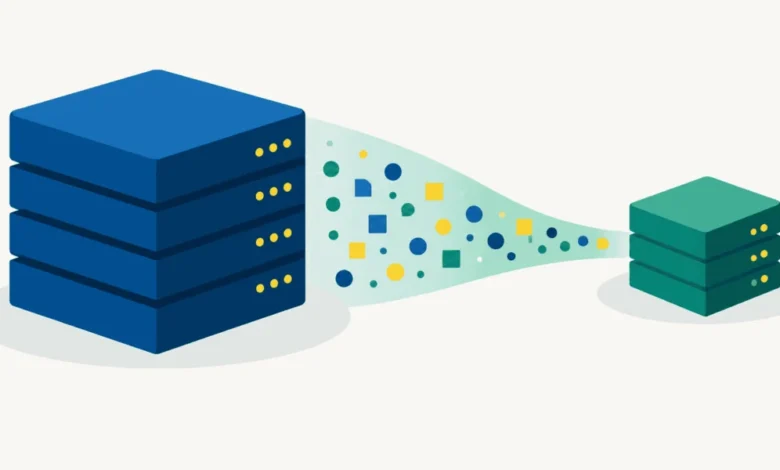
The landscape of artificial intelligence is currently defined by a fundamental paradox: the most sophisticated models are too cumbersome for widespread, efficient deployment. Industry titans like OpenAI, Anthropic, and Google invest billions into training massive foundation models—systems characterized by hundreds of billions of parameters that require vast data center clusters to function. To bridge the gap between these resource-heavy giants and the practical needs of smartphones, edge devices, and latency-sensitive applications, engineers rely on model distillation. While this technique has long been a standard practice for optimizing neural networks, it has recently morphed into one of the most contentious issues in the technology sector, sparking accusations of large-scale corporate espionage and the unauthorized "harvesting" of intellectual property.
The Mechanism of Knowledge Transfer
At its core, model distillation is a training paradigm where a compact "student" model is taught to mirror the outputs and decision-making logic of a superior "teacher" model. Historically, machine learning models were trained on "hard labels"—binary, ground-truth data points such as identifying a photo as either a "dog" or a "cat." This method, however, often ignores the nuanced relational data—or "dark knowledge"—that exists within a neural network.
As pioneered by Geoffrey Hinton in 2015, distillation shifts this focus. Instead of training a student on binary outcomes, the student is trained on the probability distributions produced by the teacher. When a teacher model evaluates an image, it might assign 85% probability to "dog," 13% to "cat," and 2% to "wolf." These subtle ratios provide the student with a richer understanding of the relationships between classes. By employing "temperature scaling," engineers can soften these distributions, allowing the student to learn not just the correct answer, but the teacher’s underlying reasoning.
The Evolution of Distillation in the Era of LLMs
As the industry shifted from classification tasks to generative Large Language Models (LLMs), the classical distillation framework required significant adaptation. Because LLMs generate text token by token across massive vocabularies, the discrete probability distributions used in image classification became insufficient. Today, three primary methods dominate the landscape:
- Synthetic Data Distillation: This is the current industry standard. A powerful teacher model generates vast, high-quality datasets—including complex chains of thought, coding solutions, and structured reasoning—which are then used to fine-tune a smaller student model. Because this method only requires API access to the teacher’s outputs, it has become the primary vector for both legitimate optimization and unauthorized extraction.
- Feature Distillation: This approach involves the student model replicating the internal activation patterns of the teacher’s intermediate layers. While it yields highly accurate results, it requires "white-box" access to the teacher’s internal architecture, limiting it to internal organizational use.
- Logit-Based Distillation: This technique applies classical distribution matching at the token level, again requiring full access to the teacher’s internal model weights and logits.
A Chronology of Escalating Tensions
While distillation is a legitimate engineering practice—Meta, for instance, explicitly designed its Llama 3.1 405B model to be used for distilling smaller, more efficient variants—the boundary between optimization and theft has blurred. The first half of 2026 marked a pivotal shift as major AI labs began reporting systematic, large-scale distillation campaigns.
- Early 2026: OpenAI submitted a formal memo to the U.S. House Select Committee on China, alleging that researchers had utilized third-party routing to bypass access controls and harvest the "dark knowledge" of their models.
- April 2026: During court testimony, Elon Musk admitted under oath that xAI had "partly" utilized outputs from OpenAI’s models during the training phase of its Grok AI, framing it as an industry-standard necessity.
- June 2026: Anthropic leveled a major allegation against Alibaba’s Qwen laboratory, claiming that approximately 25,000 automated accounts had generated nearly 29 million exchanges with Claude over 44 days to distill its agentic and coding capabilities. Alibaba denied these claims, but the report underscored the massive scale of potential data harvesting.
- Ongoing: Google’s Threat Intelligence Group disclosed the disruption of distillation attacks involving over 100,000 prompts, indicating that these tactics are becoming increasingly sophisticated and automated.
Economic and Legal Implications
The financial stakes of these allegations are immense. When a company like DeepSeek claims to train a cutting-edge model for $5.6 million, but industry analysts like SemiAnalysis suggest the real-world R&D cost is closer to $1.3 billion, questions arise regarding how much of that cost was externalized. If unauthorized distillation is being used to bypass the massive R&D cycle required to build a model from scratch, it effectively allows smaller entities to "leapfrog" the massive capital expenditures required by established labs.
From a legal perspective, the situation is murky. U.S. copyright law generally does not protect the raw outputs of AI models, leaving labs to rely on Terms of Service (ToS) agreements. However, enforcing these agreements against foreign entities or decentralized, obfuscated networks remains a significant hurdle. Furthermore, as the industry moves toward a "post-training" world, the line between "learning from publicly available information" and "stealing model weights through API outputs" is being litigated in the court of public opinion and, increasingly, in private arbitration.
The Structural Dilemma: Access vs. Protection
The core of the problem is structural: the same API that makes an AI model useful to the public also provides the "data stream" necessary for a competitor to replicate its performance. Companies are currently racing to develop defensive measures, including:
- Anomaly Detection: Monitoring usage patterns to identify the repetitive, high-volume query behavior characteristic of automated distillation.
- Watermarking: Embedding subtle, imperceptible patterns in model outputs to track the provenance of the data.
- Rate Limiting: Restricting the number of prompts a user can submit to make the cost of large-scale data harvesting prohibitively expensive.
However, these defenses are not panaceas. Watermarks can be stripped through fine-tuning, and aggressive rate limiting threatens to alienate legitimate power users and enterprise developers.
Broader Impact on the AI Ecosystem
The rise of unauthorized distillation is fundamentally changing the relationship between the AI research community and the proprietary labs. If developers continue to view distillation as a standard, albeit contested, practice, we may see a bifurcation in the industry: a "walled garden" approach where the most powerful models are no longer accessible via public APIs, and an "open ecosystem" built entirely on the distilled outputs of the current generation of leaders.
The industry is now at an impasse. The need for efficient, low-latency AI is driving the adoption of smaller models, and distillation is the most effective path to achieve that efficiency. Yet, the protection of intellectual property—the lifeblood of the billion-dollar investments powering the AI revolution—demands a secure environment. As the legal framework remains unsettled and technical countermeasures fall into a cycle of "cat and mouse," model distillation will remain both a cornerstone of modern AI deployment and the primary battleground for the next generation of technological competition. For the foreseeable future, companies must navigate the fine line between open innovation and the preservation of the proprietary knowledge that makes their models the leaders of the global AI economy.