Anthropic Launches Autonomous Project Management for Claude Code to Revolutionize Developer Workflows


The landscape of software engineering is undergoing a fundamental transformation as Anthropic introduces a new autonomous project management capability for Claude Code. This development marks a significant departure from traditional AI-assisted coding, which has historically relied on individual, linear interactions between a developer and a language model. By enabling Claude to autonomously manage multiple sessions, delegate tasks across parallel threads, and synthesize complex outputs, Anthropic is effectively shifting the role of the AI from a simple code generator to a project orchestrator capable of managing entire build cycles.
For years, developers have been burdened by the overhead of "context switching"—the cognitive and logistical tax paid when moving between tasks, environments, and repositories. Managing a large-scale software build has traditionally required manual division of labor, intricate handoffs between different development sessions, and the tedious process of stitching disparate code results back into a cohesive, functional product. Anthropic’s new update seeks to automate this orchestration layer, allowing Claude to scope requests, delegate work, coordinate simultaneous threads, review output quality, and assemble the final result without constant human intervention.
The Evolution of AI-Assisted Development
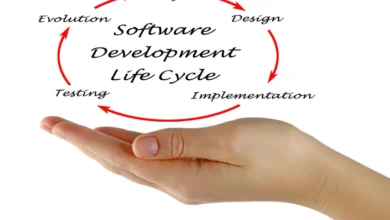
The integration of AI into the software development lifecycle (SDLC) has evolved rapidly over the last twenty-four months. Initially, models like Claude were utilized primarily for snippet generation and documentation assistance. This evolved into "chat-based" coding, where models could interact with local file systems to suggest refactors. However, the limitation remained the "single-thread" nature of these interactions. If a developer wanted to optimize an API endpoint while simultaneously migrating a mobile repository, they would often have to manage those threads manually.
Anthropic’s latest announcement addresses these bottlenecks by introducing a project-level autonomy that functions independently of the developer’s active session. This means a developer can define a high-level goal—such as reducing latency or deprecating an outdated API—and Claude will handle the granular execution. This capability is supported by a background processing architecture that remains active even after the user disconnects from their development environment, allowing the AI to continue testing, profiling, and debugging in the cloud.
Practical Applications and Use Cases
To understand the practical implications of this shift, consider a high-stakes engineering task: reducing P75 latency for an application’s checkout process. Under the previous paradigm, an engineer would manually profile each endpoint, run benchmarks, apply optimizations, test for regressions, and manage pull requests (PRs) across multiple services.
With the new Claude Code functionality, the process is compressed into a single directive. The AI profiles each endpoint, identifies performance bottlenecks, tests multiple optimization strategies in parallel threads, and generates the necessary PRs. Furthermore, the system can handle complex, cross-repo migrations, such as retiring a deprecated v1 endpoint. In this scenario, Claude acts as a multi-agent system, creating a distinct thread for each repository, migrating callers, running unit and integration tests, and—critically—determining the logical dependency order for merging the changes to avoid breaking production builds.
Timeline of the Rollout and Accessibility
Anthropic has structured the release of this technology through a phased, beta-led strategy to ensure stability and user experience quality. As of the current announcement, the features are available exclusively to a select cohort of Claude Pro and Max subscribers.
- Current Phase: Access is currently limited to subscribers who utilize cloud sessions in Claude Code and do not have pre-existing projects on the web or desktop interfaces.
- Expansion Phase (The Coming Week): Anthropic has committed to widening access to a broader segment of the Claude Code user base currently on Pro and Max plans.
- Enterprise Integration: A subsequent, long-term rollout is planned for all users across the standard Claude platform, as well as specific tiers for Team and Enterprise subscribers.
- Existing Projects: For users with established projects, Anthropic has confirmed that these workflows will remain functional in their current state, with a transition plan to upgrade these to the new autonomous infrastructure as the rollout progresses to chat and "Cowork" features.
For those eager to access the beta but not yet included in the initial cohort, Anthropic has provided a formal waitlist via their primary website, emphasizing that the rollout is calibrated based on server load and performance monitoring.
Supporting Data and Industry Context
The move toward autonomous coding agents is backed by growing demand for developer productivity tools. According to recent industry surveys by platforms like GitHub and Stack Overflow, developer "context switching" and "manual boilerplate" tasks account for nearly 40% of the average work week. By automating the management of parallel threads, Anthropic is targeting this specific inefficiency.
Furthermore, the shift toward cloud-based, multi-thread execution is a strategic response to the compute-intensive requirements of large-scale codebases. Modern applications often rely on microservices architectures, where a single change can ripple across dozens of repositories. The ability of an AI model to maintain state across these repositories simultaneously—without losing the "context window" or hallucinating across session boundaries—represents a technical milestone in Large Language Model (LLM) implementation.
Implications for the Developer Ecosystem
The implications of this update are profound for both individual contributors and engineering management. For the individual developer, this technology represents a transition toward "super-individual" productivity, where a single engineer can act as a team lead, managing multiple automated agents to accomplish work that would have previously required a small squad.
However, this also introduces new challenges regarding oversight and governance. When an AI agent is empowered to open PRs, run tests, and merge code, the "human-in-the-loop" requirement becomes a critical bottleneck. Anthropic’s design accounts for this by allowing developers to steer progress from any device, including smartphones. This "remote monitoring" capability ensures that while the AI does the heavy lifting, the final decision-making remains with the human engineer.
From an enterprise perspective, the impact is even more significant. Companies are constantly seeking ways to accelerate technical debt reduction and migration efforts. By deploying autonomous agents to handle the "grunt work" of deprecated code removal or performance tuning, organizations can reallocate their human engineering talent toward higher-level architectural decisions and product innovation.
Official Stance and Future Outlook
While Anthropic has not released specific performance benchmarks regarding the speed of code execution in these new projects, the company’s documentation and blog posts suggest a focus on reliability and "code safety." The emphasis on "identifying which PRs need to merge first" indicates that the AI is being trained on dependency graphs and CI/CD best practices, reducing the likelihood of circular dependencies or deployment failures.
The integration of these features into the wider Claude ecosystem—specifically the eventual rollout to Team and Enterprise plans—suggests that Anthropic views this as a core component of their business strategy. By embedding these capabilities directly into the workflow, the company is effectively positioning itself as an essential layer in the software development stack, rather than just an interface for code generation.
As the industry watches this rollout, the primary question will be how developers adapt to a "managerial" role over their AI assistants. The skill set for a software engineer is shifting from deep, manual implementation to high-level coordination and code auditing. If successful, Anthropic’s autonomous project management could set a new industry standard for how software is built, tested, and maintained in the cloud-native era. Users are encouraged to monitor the company’s official blog for further technical deep-dives into the underlying architecture of these updated projects.