Apple updates TestFlight to support landscape orientation and expanded iPhone Mirroring aspect ratios ahead of the iPhone Duo launch


Apple has officially released a significant update to its TestFlight application, bringing native support for landscape orientation and compatibility with the new, flexible aspect ratios introduced in macOS 27 Golden Gate’s iPhone Mirroring feature. This update marks a critical milestone in the company’s broader strategy to harmonize its ecosystem ahead of the much-anticipated release of the iPhone Duo, Apple’s first foray into the foldable smartphone market. By optimizing its developer-centric distribution platform, Apple is ensuring that the ecosystem remains cohesive as it transitions into a new hardware form factor that requires increased UI/UX flexibility.
Chronology of the iPhone Duo and Software Integration
The trajectory toward this update began in early June 2026, when Apple first introduced the macOS 27 Golden Gate beta. During the initial testing phase, observers noted the implementation of a resizable iPhone Mirroring window, which allowed users to adjust the aspect ratio of the mirrored device screen on their Macs. At the time, industry analysts speculated that this was a foundational step for future hardware, specifically a foldable device that would necessitate a dynamic interface capable of shifting between traditional vertical proportions and a more tablet-like square or landscape view.
The speculation was confirmed during the highly publicized iPhone Duo event. Apple leadership articulated a clear vision: the iPhone Duo would utilize a dual-display architecture—a 5.4-inch outer cover display and a 7.6-inch foldable inner display. To maintain the "Apple experience," the company announced that every native iOS application had been re-engineered to accommodate the "many poses" of the device, effectively ensuring that apps would transition seamlessly from the folded state to the fully unfolded interior display.
The update to TestFlight version 4.4.0 serves as the latest piece of this puzzle. By enabling landscape mode within the beta-testing environment, Apple is empowering developers to stress-test their own applications across the same screen ratios that the iPhone Duo will utilize upon its release. This proactive approach aims to avoid the "letterboxing" or scaling issues that plagued early foldable Android devices, where app developers were often left to play catch-up with hardware manufacturers.

Functional Enhancements in TestFlight 4.4.0
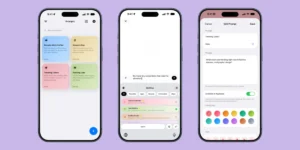
The technical implementation of the landscape mode in TestFlight is a sophisticated departure from the app’s long-standing single-column list format. When rotated, the application shifts into a dual-pane interface. On the left, users can navigate their list of active builds, while the right pane displays the details of the selected application.
This design change is not merely cosmetic; it is functional. The app details screen now makes efficient use of horizontal real estate by segregating information. The "What to Test," "Preview," and "App Description" sections are consolidated into a primary viewing area, while "App" and "Developer" information panels are positioned side-by-side below. This layout mirror-images the spatial management found in professional-grade iPad applications, suggesting that Apple intends for the iPhone Duo’s inner display to function more like a miniature tablet than a traditional phone.
The update also includes under-the-hood optimizations to handle the dynamic aspect ratios introduced in macOS 27. When mirroring the iPhone Duo to a Mac, developers can now snap their TestFlight environment to various windows sizes, and the interface will re-flow its elements in real-time. This is essential for developers who need to verify that their application’s UI elements—such as buttons, text fields, and media galleries—remain accessible and legible regardless of how the user chooses to hold the device.
Market Context and Strategic Implications
The introduction of the iPhone Duo, priced at a premium $1,999, positions Apple squarely in the ultra-high-end segment of the smartphone market. With presales scheduled to begin on October 16 and a general retail availability of October 23, the pressure is on the developer community to optimize their apps for the device’s launch.
From a strategic perspective, Apple’s focus on software-first integration is a hallmark of its market dominance. By updating TestFlight—a tool used by thousands of developers globally—months before the device hits store shelves, Apple is lowering the barrier to entry for the foldable market. If an app works perfectly in TestFlight’s new landscape mode, the assumption is that it will perform reliably on the physical iPhone Duo.

This update also signals a shift in the iOS design language. For years, the iPhone interface was strictly optimized for portrait orientation, with landscape support relegated to specific apps like Safari or video players. The integration of landscape-first layouts into system-critical tools like TestFlight indicates that "Orientation Independence" is now a core requirement for iOS development.
Analytical Perspectives on Ecosystem Stability
The move to normalize landscape support across the iOS ecosystem has significant implications for both enterprise and consumer applications. In the enterprise sector, where foldable devices are often marketed as productivity powerhouses, the ability to split the screen or view complex data sets in landscape mode is a primary selling point. By updating the testing framework now, Apple is signaling to corporate clients that the iPhone Duo will be ready for business applications from day one.
Furthermore, the data suggests that Apple is prioritizing developer retention. By providing the tools necessary to build for the iPhone Duo early, the company is mitigating the risk of a "fragmented" app store experience. When the iPad launched in 2010, the "scaled-up phone app" phenomenon was a major criticism. By forcing the issue through tools like TestFlight, Apple is ensuring that the "foldable experience" is defined by apps that feel native, responsive, and intelligently designed.
Official Response and Developer Guidance
While Apple rarely comments on the specific motivations behind individual app updates, the documentation provided with the TestFlight 4.4.0 release highlights the focus on "improved layout efficiency and multi-tasking capabilities." In briefings with select developer partners, the company has emphasized that the transition to the iPhone Duo architecture is not merely about screen size, but about "fluidity of interaction."
Developers have generally responded positively to the update, noting that the ability to test landscape orientation within the mirror window on macOS 27 saves significant time compared to physical device testing. The ability to simulate the fold-and-unfold transition via software allows for rapid iteration of layouts, which is crucial for apps that rely on complex navigation structures.

Looking Ahead to October 2026
As the October 23 release date for the iPhone Duo approaches, the industry will be watching closely to see how many third-party developers adopt these new layout standards. The success of the device will likely hinge on how well the most popular applications—ranging from social media platforms to professional editing suites—adapt to the 7.6-inch inner display.
The update to TestFlight is a testament to the fact that hardware innovation at Apple is inextricably linked to software infrastructure. By preparing the developer community for the shift toward landscape-centric workflows, Apple is laying the groundwork for a hardware launch that, while high-priced and ambitious, is supported by a robust and ready ecosystem. The company’s ability to guide its vast network of developers toward this new form factor will likely serve as the definitive benchmark for the iPhone Duo’s long-term commercial viability.
As developers continue to integrate these features, the focus will undoubtedly turn to how Apple manages the transition for legacy apps that have not been updated. For now, however, the tools are in place, the specifications are clear, and the infrastructure is prepared for the arrival of the next generation of Apple hardware. The release of TestFlight 4.4.0 is not just a routine update; it is a tactical deployment of resources designed to ensure that the iPhone Duo is a success from the moment it leaves the box.