AI Workflows vs. AI Agents: A Practical Guide to Architectural Decision-Making in Software Engineering

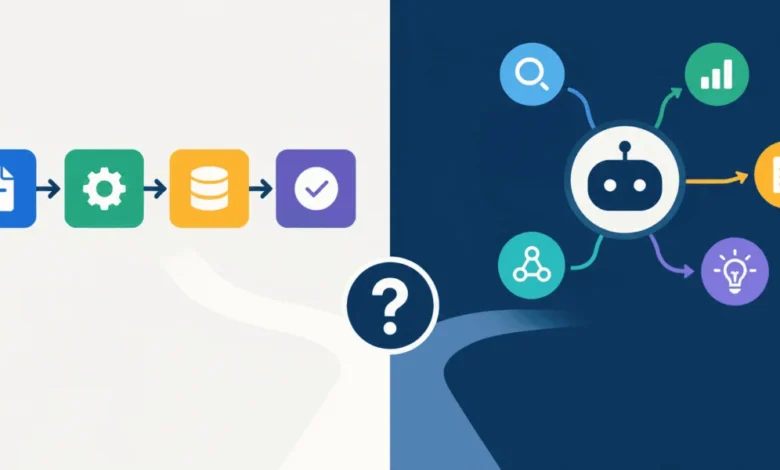
The rapid proliferation of Large Language Models (LLMs) has led to a significant shift in software architecture, yet it has also introduced a pervasive linguistic ambiguity. In the modern developer ecosystem, the term "AI Agent" is frequently applied to a wide array of systems—from basic chatbots with limited tool access to complex, self-directed autonomous entities. This semantic inflation often obscures a critical engineering distinction: the choice between a deterministic workflow and a dynamic agentic system. As organizations rush to integrate artificial intelligence, failing to distinguish between these two paradigms can result in ballooning technical debt, unpredictable system behavior, and unnecessary operational costs.
The Evolution of AI Architecture
To understand the current confusion, one must look at the timeline of generative AI development. Between 2022 and 2024, the industry transitioned from simple prompt engineering to complex orchestration. Initially, developers utilized LLMs as static request-response engines. By 2023, frameworks such as LangChain and LlamaIndex popularized the "chaining" of LLM calls, giving rise to what we now categorize as workflows. By 2025, the focus shifted toward "agentic" loops—systems where the model possesses the agency to iterate on its own execution path.
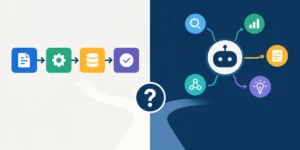
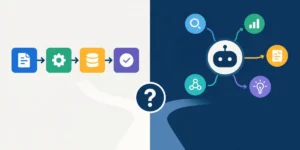
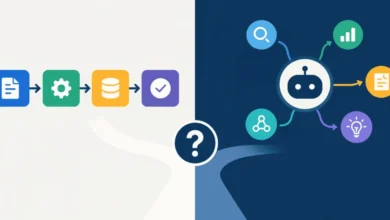
This evolution has created a "hype cycle" where the label "agent" is frequently attached to projects simply to increase their perceived sophistication. However, industry benchmarks from major cloud providers indicate that over 70% of enterprise AI use cases do not require the non-deterministic overhead of an agent. A workflow, or pipeline, represents a system where the control logic is established at design time. Even when incorporating LLMs, the sequence of operations—the branching, conditional logic, and tool invocations—is governed by human-authored code.
Defining the Deterministic Workflow
A workflow operates on a pre-programmed path. Whether it is a customer refund process or a document extraction task, the logic is defined before the software executes. For instance, in a refund processing system, the developer dictates the sequence: classify the intent, verify the receipt, check the purchase date, and trigger the payment gateway. If the receipt is invalid, the flow redirects to a customer notification step. Every possible state in this system can be mapped out on a whiteboard before the first line of code is written.
The advantage of this approach is predictability. Engineering teams can apply traditional unit testing, integration testing, and compliance audits to these systems with high confidence. Because the path is fixed, the system’s behavior remains consistent across thousands of executions, which is a requirement for industries like finance, healthcare, and legal services.
The Autonomous Paradigm: What Defines an Agent?
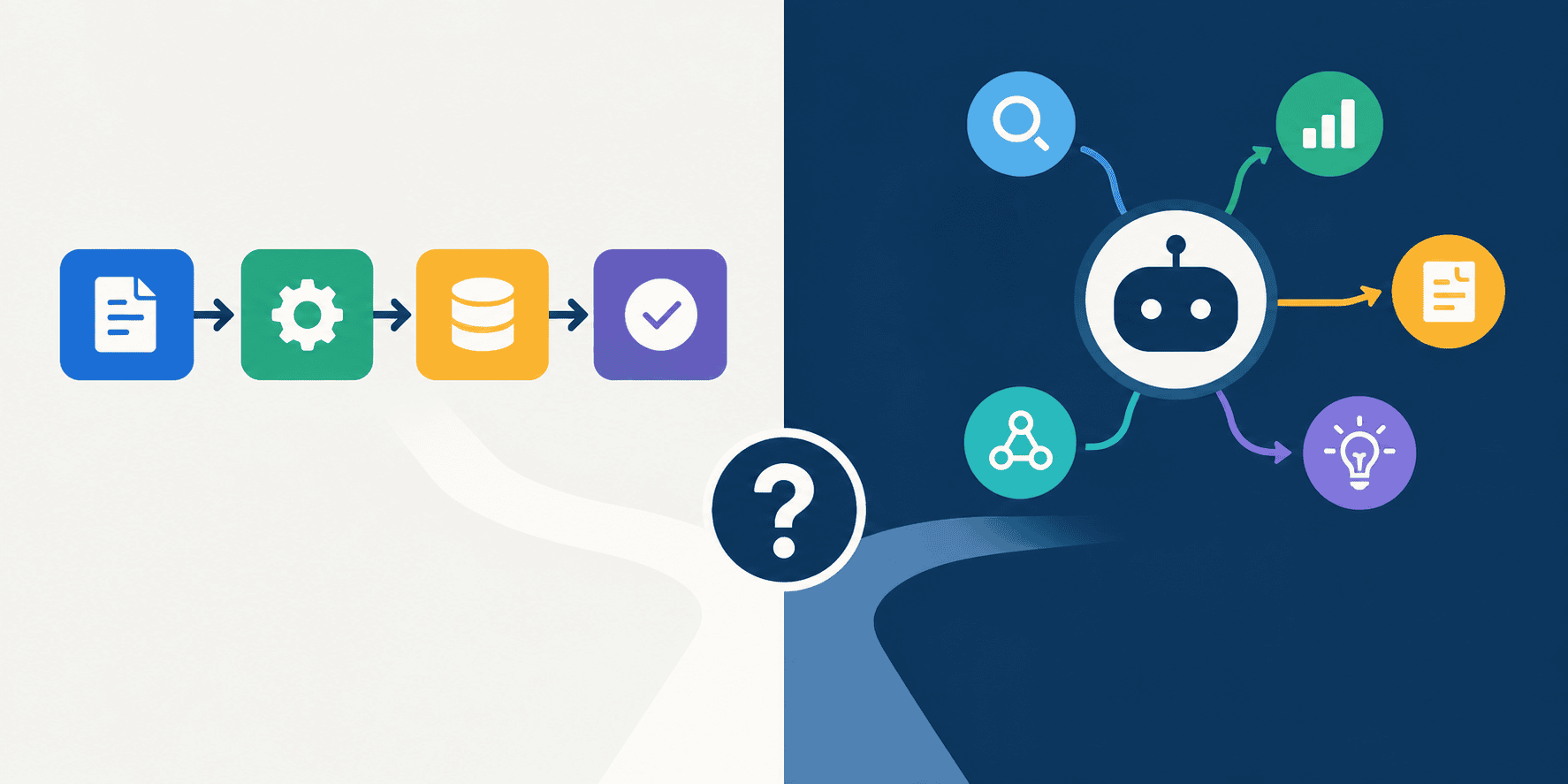
In contrast, an agentic system transfers control to the model at runtime. The developer defines a high-level goal and provides a set of tools, but the LLM determines the sequence of actions. For example, in an IT incident response scenario, the system might be tasked with identifying the cause of a 30-minute spike in checkout failures. Unlike a workflow, where a developer would need to anticipate every possible failure mode, an agent can observe the results of its first inquiry—perhaps a database latency spike—and decide to pivot toward inspecting network configurations rather than continuing down a pre-set list of database checks.
This "reasoning loop" is what distinguishes an agent. The system observes, thinks, acts, and then re-evaluates. If the first action fails to yield a result, the agent has the capability to backtrack or attempt an alternative path. This makes agents powerful tools for open-ended problem solving, but it introduces significant challenges regarding reliability and monitoring.
Critical Considerations Before Deployment
Engineers and product managers are encouraged to perform a "whiteboard test" before committing to an agentic architecture. If the process can be fully mapped out in a flowchart, the flexibility of an agent is likely an unnecessary liability. The added complexity of agentic loops brings with it three primary risks:
- Token Consumption and Cost: Agents often engage in multiple iterations, "thought" processes, and tool-calling loops. This significantly increases the number of input and output tokens per task, potentially driving up API costs by an order of magnitude compared to a static workflow.
- Latency: Each step in an agentic loop requires a round-trip to the model provider. In production environments where sub-second response times are critical, the cumulative latency of an agent can degrade the user experience.
- Observability and Debugging: Debugging a deterministic workflow involves tracing the state through a known set of nodes. Debugging an agent, which may take a unique path for every input, requires sophisticated "trace" analysis to understand why the model made a specific, potentially erroneous, decision.
Data-Driven Decision Framework
To guide the selection process, engineering teams should evaluate their use case against five core criteria:
- Predictability of Steps: If the major branches of the task are known, a workflow is superior. If the path is highly variable, an agent may be required.
- Input Variability: Is the input structured? If you are parsing standardized invoices, a workflow is sufficient. If the input is a vague natural language request from a customer, an agent’s flexibility might be an asset.
- Resource Constraints: For high-volume applications, the overhead of agentic reasoning is rarely justified. Workflows offer the stability required for scaling.
- Compliance and Auditability: Regulated industries require a deterministic audit trail. If a system must be able to justify its path through a sequence of specific policy checks, a workflow provides the necessary transparency.
- The "Hybrid" Strategy: Often, the most effective solution is a workflow that incorporates LLM judgment. Rather than allowing the model to take full control, the model is used as a sophisticated "router" or "classifier" within a human-defined workflow. This provides the reasoning capabilities of AI while maintaining the guardrails of traditional software engineering.
Broader Implications for the Industry
The current trend toward "agent-first" development is beginning to show signs of correction. Early adopters who deployed complex autonomous agents in 2024 are reporting difficulties in production stability, leading to a renewed interest in "constrained autonomy." The industry is moving toward a more nuanced understanding: agents should be reserved for research-heavy, low-stakes, or highly creative tasks, while workflows remain the bedrock of reliable, mission-critical business applications.
As the ecosystem matures, the distinction between these two architectures will likely become as standard as the difference between a batch processor and a real-time service. By shifting the focus away from the "agent" label and toward the requirements of the task, developers can build systems that are not only innovative but also sustainable, cost-effective, and—most importantly—reliable. In the final analysis, the most sophisticated AI systems are often those that use the least amount of agency necessary to achieve the desired result. The goal is not to build an agent; the goal is to solve the problem with the most robust tool available.