Apple has officially reached its highest-ever global smartphone revenue for a third calendar quarter, defying broader market stagnation and reinforcing its dominance in the premium mobile sector. According to the latest data from Counterpoint Research, Apple’s performance in the third quarter of 2026 underscores a paradigm shift in consumer behavior, where the demand for flagship hardware remains resilient despite macroeconomic pressures that have historically throttled the wider smartphone industry. This milestone, fueled by a strategic recalibration of its product lineup and a robust pricing strategy, positions Apple at the zenith of the industry’s financial hierarchy.
A Record-Breaking Quarter: The Financial Breakdown
The data released by Counterpoint Research reveals that Apple’s revenue performance is not merely a product of volume, but a testament to its unparalleled pricing power. While the global smartphone market has faced a protracted period of volatility, characterized by fluctuating shipment volumes and supply chain complexities, Apple managed to capture a record share of total industry revenue.
For the third quarter of 2026, Apple’s average selling price (ASP) surged to an all-time high of $1,031. This represents a substantial 19% year-over-year increase. In a market where competitors often rely on aggressive discounting to move inventory, Apple’s ability to command such a price point suggests that the brand’s ecosystem and premium status remain effectively insulated from price sensitivity. By comparison, Samsung, which retains the lead in total unit shipments, captured 19% of global smartphone revenue, followed by Xiaomi at 6%, OPPO at 5%, and vivo at 4%. These figures highlight the widening chasm between Apple’s revenue-per-unit and that of its closest rivals.
Strategic Catalysts: The iPhone 18 Pro and Market Dynamics
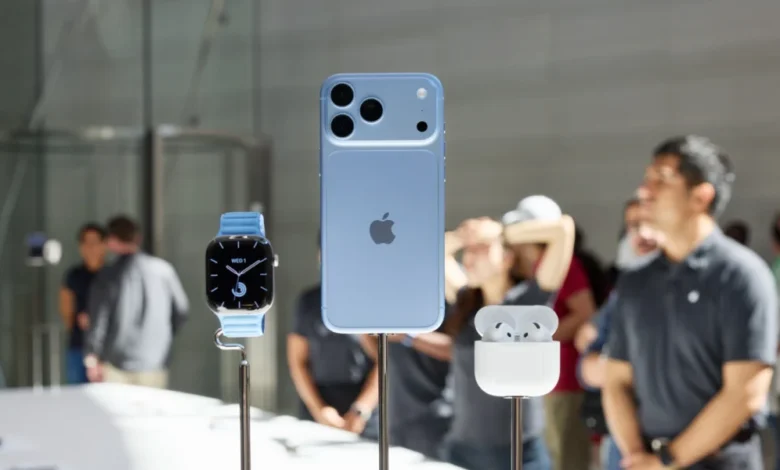
The record-breaking revenue figures are inextricably linked to the launch of the iPhone 18 Pro series. Even though the device arrived late in the third quarter, its impact was immediate and profound. Industry analysts point to several factors that facilitated this surge in revenue:

First, the absence of a base-model iPhone 18 in the initial launch phase funneled consumer demand toward the higher-margin Pro models. By strategically managing the product mix, Apple effectively increased the entry-level price point for early adopters, thereby inflating the overall ASP.
Second, the company implemented targeted price adjustments across its legacy lineup in September. By raising prices on older models, Apple successfully prevented internal cannibalization and maintained the perceived value of its ecosystem.
Third, the company’s supply chain management has been exemplary. Tarun Pathak, Research Director at Counterpoint, noted that Apple has demonstrated a unique capacity to absorb rising costs—particularly in memory components—and pass them on to the consumer without suffering a decline in demand. This resilience is a hallmark of a brand that has successfully positioned its hardware as an essential, rather than discretionary, purchase.
Comparative Market Analysis: Shipments vs. Revenue
While Apple dominates in revenue, the landscape of unit shipments remains a more competitive arena. As of Q3 2026, Samsung continues to hold the top spot in total global shipments, commanding 22% of the market. Apple follows closely at 21%.
However, the margin between the two has narrowed significantly compared to previous years. This convergence is critical because it illustrates a fundamental divergence in business strategy: Samsung maintains volume through a diversified portfolio that spans entry-level, mid-range, and flagship devices, whereas Apple focuses almost exclusively on the high-end market. The fact that Apple is now nipping at Samsung’s heels in total shipments—while simultaneously generating vastly superior revenue—signals that the "premiumization" of the global smartphone market is accelerating. Consumers in emerging markets are increasingly prioritizing long-term value, software support, and brand prestige, trends that disproportionately benefit Apple.

The Chronology of 2026: A Challenging Year for Hardware
The third quarter performance must be viewed against the backdrop of a challenging 2026. The first half of the year was defined by lingering inventory corrections and a cooling of consumer demand in major markets, including China and North America.
- Q1 2026: Market analysts reported a period of stabilization following a lukewarm holiday season in late 2025. Major manufacturers, including Xiaomi and OPPO, focused on clearing out excess inventory, leading to a temporary dip in ASPs across the industry.
- Q2 2026: Supply chain costs began to rise, driven by inflation in raw materials and the high cost of advanced semiconductor nodes. Apple, meanwhile, signaled its intent to maintain margins, preparing for the transition to the iPhone 18 cycle.
- Q3 2026: The official launch of the iPhone 18 series in late September served as the primary catalyst for the revenue surge. By aligning the launch with the end of the quarter, Apple effectively maximized its financial reporting for the period, setting the stage for what is expected to be a record-breaking holiday quarter.
Broader Implications for the Smartphone Industry
The success of the iPhone 18 Pro series carries significant implications for the future of mobile technology. Primarily, it confirms that the "super-premium" segment (phones priced above $800) is the only area of the smartphone market experiencing consistent, healthy growth. Manufacturers that have failed to capture this segment are seeing their revenue share stagnate, forcing a consolidation in the mid-to-low-tier categories.
Furthermore, Apple’s ability to pass on rising memory and R&D costs to consumers validates the high-margin business model. Other OEMs are likely to follow suit, attempting to emulate Apple’s pricing strategy. However, most lack the brand equity and closed-loop software ecosystem required to sustain such prices. This creates a "moat" around Apple, where its software services, privacy reputation, and hardware integration act as a barrier to entry that competitors find difficult to penetrate.
Expert Perspectives on Future Sustainability
While the current results are undoubtedly positive for Apple, analysts remain cautious about the sustainability of such rapid ASP growth. The primary concern is the potential for market saturation. As the price of entry-level premium devices approaches the $1,000 threshold, even loyal customers may begin to extend their device replacement cycles.
"Apple has proven that its customer base is incredibly inelastic," says industry observer Marcus Thorne. "But there is a ceiling to how much you can increase prices before you start to see a decline in the installed base. The challenge for 2027 will be maintaining this revenue momentum while ensuring that the mid-market remains accessible enough to keep new users flowing into the ecosystem."

Conversely, the rise in revenue also reflects the increasing role of smartphones as "all-in-one" computing devices. With advancements in AI-integrated hardware, on-device processing power, and high-fidelity display technology, the smartphone is replacing cameras, portable consoles, and laptops for a significant portion of the global population. This utility justifies the higher price tag, transforming the device from a mere communication tool into a comprehensive digital workspace.
Conclusion: A New Standard for Mobile Excellence
The third quarter of 2026 will likely be remembered as the moment Apple solidified its role as the industry’s primary revenue driver. By prioritizing profitability over sheer unit volume and leveraging the launch of the iPhone 18 series to reset the market’s expectations, Apple has navigated a complex economic landscape with clinical precision.
As the industry moves into the final quarter of the year, all eyes will be on whether this momentum can be sustained through the holiday shopping season. For now, the data from Counterpoint Research serves as a clear indicator of a market in flux, where the gap between the premium leaders and the rest of the field continues to widen. Apple is not just participating in the smartphone market; it is redefining its economic boundaries, proving that in a world of commoditization, quality and brand loyalty remain the most valuable currencies of all.