Analyst Jeff Pu highlights iPhone 18 Pro uncertainty while identifying the iPhone Duo as a primary growth driver for Apple


The tech landscape has shifted significantly this week following Apple’s latest product reveal, where the company unveiled the iPhone 18 series alongside its highly anticipated foldable entry, the iPhone Duo. While the market had braced for steep price increases across the flagship Pro lineup, the actual adjustment—a $100 premium—was received with a sense of relief by investors. Despite this, industry analysts are expressing a nuanced view of the company’s outlook for the remainder of 2026. GF Securities analyst Jeff Pu has issued a "hold" rating for Apple stock, noting that while the iPhone Duo is poised to revitalize consumer interest, the broader iPhone 18 Pro cycle faces significant headwinds characterized by stagnant hardware innovation and potential margin compression.
The Financial Landscape and Pricing Strategy
Market expectations prior to the launch were notably grim. Many analysts, including those at major financial institutions, had predicted that Apple would implement a price hike of $200 to $250 for its Pro and Pro Max models to offset rising component costs and R&D expenditures related to new display technologies. When Apple announced a more modest $100 increase, the market reaction was favorable, viewing it as a strategic move to maintain competitiveness while still padding margins.

However, the moderate pricing does not erase the underlying concerns regarding the iPhone 18 Pro’s market performance. Pu’s assessment indicates that the Pro models lack the "must-have" hardware upgrades that typically drive mass-market upgrades. In the current macroeconomic environment, where consumer spending on premium electronics has seen a slight contraction, the lack of a compelling, revolutionary feature set in the standard Pro models poses a risk to Apple’s ability to drive high-volume sales during the 2026 holiday season.
The iPhone Duo: A Strategic Pivot
While the iPhone 18 Pro represents a steady-state product, the introduction of the iPhone Duo marks a pivotal moment for Apple’s industrial design. Priced at $1,999, the device sits at the lower end of the $2,000 to $2,500 range that analysts had projected. This pricing strategy suggests that Apple is attempting to balance the high manufacturing costs of foldable display technology with the need to capture early adopters who have been waiting for a foldable Apple device for years.
GF Securities projects that Apple will ship approximately 7 million units of the iPhone Duo by the end of 2026. This figure is significant, as it positions the device as the "hero product" of the current lineup. By offering a differentiated, large-screen experience, the iPhone Duo is intended to serve as a beacon for the brand, drawing consumers into the Apple ecosystem who might otherwise have looked to competitors who have been iterating on foldable form factors for the past four years.
Chronology of the 2026 Product Cycle
The lead-up to this announcement has been marked by a series of supply chain leaks and component shortages that dictated the timing of the launch.
- Early 2026: Reports emerged regarding yield issues with the proprietary flexible OLED panels required for the iPhone Duo, leading to speculation that the device would be delayed until 2027.
- Mid-2026: Apple finalized its supply chain partnerships, securing exclusive deals for the hinge mechanisms and ultra-thin glass covers, effectively stabilizing the production timeline for a September release.
- September 2026 (Launch Week): Apple officially unveiled the iPhone 18, 18 Pro, and the iPhone Duo. The reveal was designed to manage expectations, focusing on the refined software integration of the new form factor.
- Post-Launch: The market has shifted its focus to supply chain lead times. As of now, analysts are tracking order fulfillment rates to determine if the 7 million unit projection is sustainable or if production bottlenecks will constrain the initial launch window.
Supporting Data and Market Projections
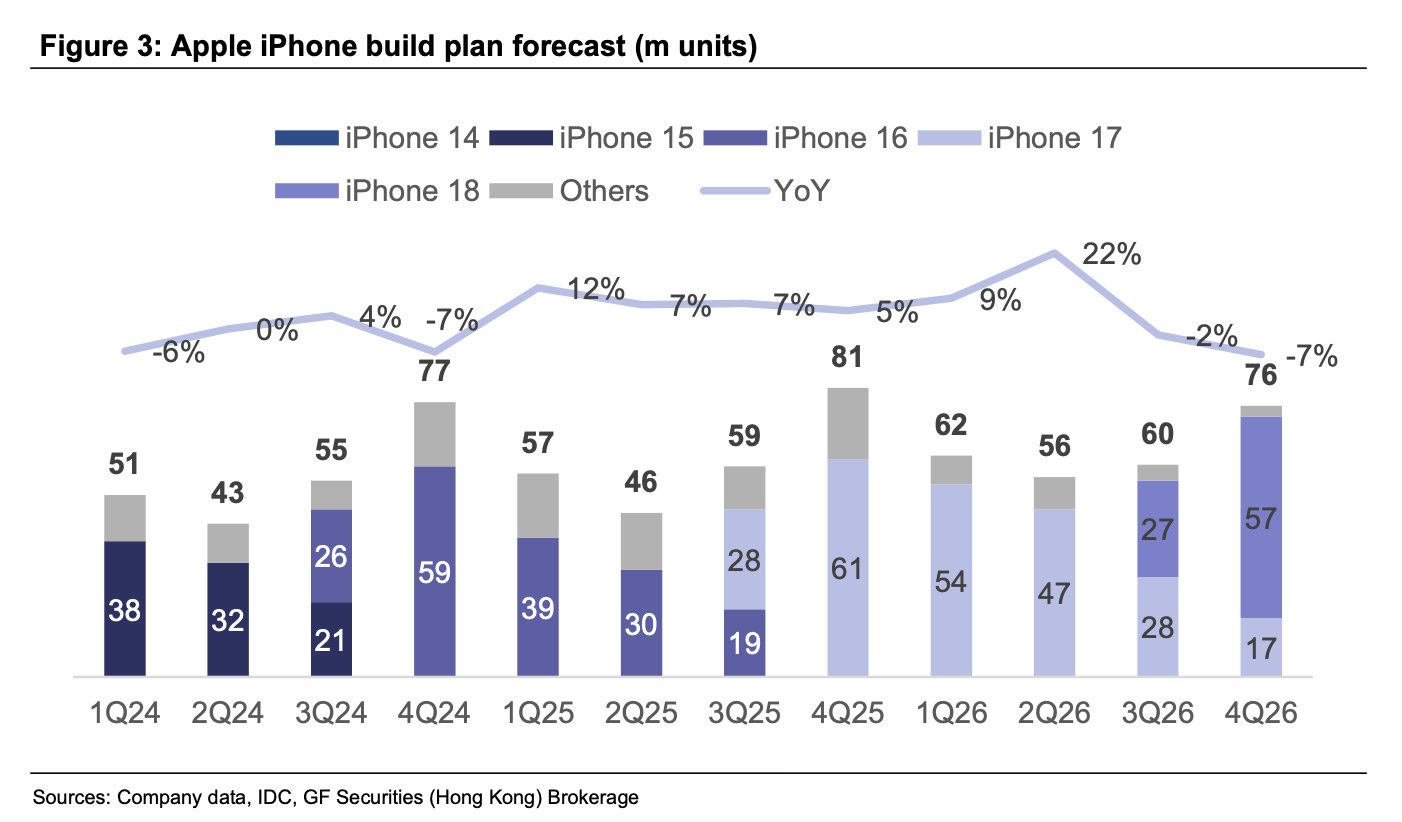
The broader health of Apple’s mobile division is currently under scrutiny. GF Securities has released data concerning the build forecast for the fourth quarter of 2026, which provides a sobering look at the company’s expectations for the coming months. The firm estimates that total iPhone production will reach 76 million units for the quarter, with the iPhone 18 series accounting for 57 million of that total.
When compared to the same period in 2025, these figures represent a 7% decline. This year-over-year contraction is indicative of a market that is reaching saturation. With fewer consumers opting for the standard upgrade cycle, the pressure on the iPhone Duo to perform becomes even more pronounced. The device is not just a luxury item; it is a vital hedge against a cooling smartphone market.

Official Responses and Industry Sentiment
While Apple does not comment on specific analyst notes or supply chain rumors, the company’s recent messaging has centered on the "experience" of the new hardware rather than just specifications. During the keynote, executives emphasized the seamless transition between the compact and expanded display modes of the iPhone Duo, framing it as the culmination of years of research and development.
Independent tech commentators have echoed some of Pu’s concerns regarding the "modest" nature of the iPhone 18 Pro. Many have pointed out that while the camera systems have been incrementally improved, the silicon performance—while market-leading—is reaching a point of diminishing returns for the average user. This has led to a consensus among industry watchers that the real growth in 2026 will be found in how effectively Apple can market the "Duo" lifestyle to power users and creative professionals.
Broader Implications for Apple’s Business Model
The decision to pursue a "Hold" rating reflects a broader uncertainty regarding Apple’s margin trajectory. The cost of producing foldable devices is historically high, and the economies of scale that have made the standard iPhone so profitable are not yet present for the Duo. If Apple cannot effectively manage its supply chain costs, the iPhone Duo could potentially be a drag on overall profit margins, even if it is a success in terms of brand prestige and unit sales.

Furthermore, the "iPhone 18 family" strategy suggests a transition period for the company. Apple is clearly attempting to pivot its revenue model toward high-end, differentiated hardware that commands a premium, while relying on the legacy success of the standard iPhone models to provide the foundational cash flow.
Key indicators to watch over the next three months will include:
- Lead Times: If the iPhone Duo sees shipping dates slip into 2027 within the first week of availability, it confirms high demand but exposes potential manufacturing fragility.
- Supply Chain Revisions: Any changes to the build plan for the iPhone 18 Pro (either upward or downward) will signal how consumer demand is reacting to the $100 price hike.
- Service Integration: How the App Store and Apple’s ecosystem services adapt to the unique aspect ratio of the iPhone Duo will be critical in determining long-term user retention.
In summary, while the iPhone 18 Pro serves as the reliable, if somewhat unexciting, workhorse of the company’s revenue, the iPhone Duo is the primary variable that will define the success of the 2026 fiscal year. Apple is in a delicate position: it must sustain its massive user base with iterative updates while simultaneously pioneering a new category of device that carries both high risk and high reward. Investors and consumers alike will be watching closely as the initial sales data begins to trickle in, providing the first real-world test of Apple’s strategy in an increasingly competitive and cost-conscious market.