Microsoft Azure Databricks Delivers Unprecedented Value with 331% ROI, According to Forrester Study

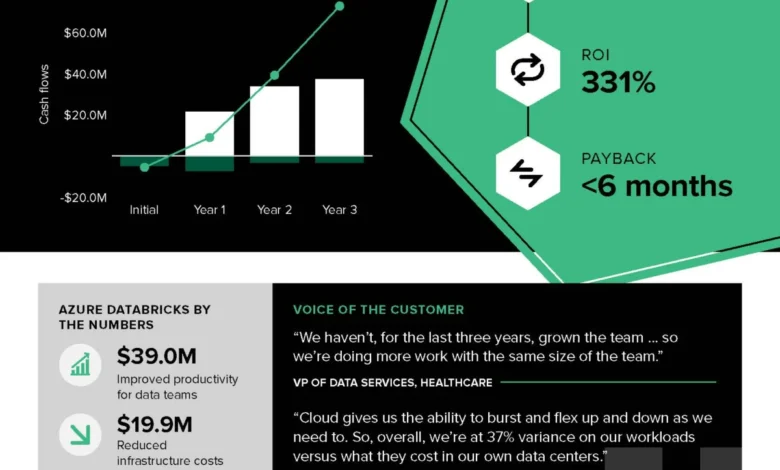
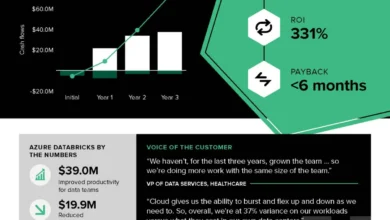
Microsoft Azure Databricks, the native integration of the Databricks Lakehouse Platform within the Microsoft Azure cloud ecosystem, is demonstrating substantial and measurable business value, according to a recent Total Economic Impact™ (TEI) study commissioned by Microsoft and conducted by Forrester Consulting. The report, released in June 2026, highlights a compelling financial return for organizations leveraging Azure Databricks, showcasing a three-year return on investment (ROI) of 331%, a net present value (NPV) of $58.1 million, and a rapid payback period of less than six months for a composite organization.
This comprehensive study delves into the tangible benefits derived from the co-engineered partnership between Microsoft and Databricks, emphasizing how the seamless integration of the Databricks platform as a first-party Azure service translates into significant cost savings, enhanced performance, and accelerated time-to-value for businesses. The findings underscore the strategic advantage of a deeply integrated data and AI solution that aligns with existing Microsoft tools, identity management, and governance frameworks.
The Genesis of the Partnership and its Value Proposition
The strategic alliance between Microsoft and Databricks, solidified through the Azure Databricks offering, aims to provide a unified and optimized experience for data analytics and artificial intelligence workloads. This co-engineered approach ensures that Databricks functions as a native Azure service, eliminating the complexities and inefficiencies often associated with integrating third-party solutions into existing cloud infrastructures. The inherent advantage lies in this "built-in, not bolted on" philosophy, fostering deeper native integration and superior performance.
For technical teams, this means a streamlined workflow, reduced operational overhead, and access to cutting-edge data and AI capabilities without the burden of extensive customization or complex interoperability challenges. For business leaders, the implications are equally profound, translating into lower total cost of ownership (TCO), mitigated risk, and a significantly faster realization of business objectives through data-driven insights. The shared integration roadmap between Microsoft and Databricks ensures continuous optimization and innovation, keeping organizations at the forefront of data and AI advancements.
Forrester’s Total Economic Impact™ Study: Quantifying the Value
To address the critical question of demonstrable business value, Microsoft commissioned the Forrester TEI study. The research methodology involved in-depth interviews with existing Azure Databricks customers to construct a composite organization that represents the typical impact experienced by users. This composite entity was modeled as a $6 billion company operating within a regulated industry, managing approximately 10 petabytes of data.
The study’s findings paint a picture of transformative impact. Before adopting Azure Databricks, the composite organization grappled with a fragmented, costly, and unreliable data estate that proved difficult to govern at scale. Post-implementation, the results were starkly positive: an aggregate benefit of $75.6 million over three years, offset by $17.5 million in costs, leading to a substantial net present value of $58.1 million.
The study identified four primary drivers of this significant financial return:
- Reduced Infrastructure Costs: The seamless integration and optimized architecture of Azure Databricks led to substantial savings in cloud infrastructure expenses. This was achieved by eliminating redundant data copies, streamlining data processing pipelines, and leveraging the efficient resource management capabilities of Azure.
- Increased Productivity and Efficiency: By providing a unified platform for data engineering, data science, and machine learning, Azure Databricks empowered teams to work more efficiently. This included faster data preparation, accelerated model development, and simplified deployment of AI solutions, leading to significant time savings.
- Enhanced Business Agility and Faster Time to Insight: The platform’s ability to democratize access to data and accelerate analytical workloads enabled organizations to derive insights more rapidly. This enhanced agility allowed businesses to respond more effectively to market changes, identify new opportunities, and make data-informed decisions with greater speed.
- Improved Data Governance and Security: The integration of Databricks’ Unity Catalog with Azure’s robust security and governance frameworks provided a centralized and secure environment for managing data assets. This ensured compliance with regulatory requirements and mitigated risks associated with data access and usage.
Beyond the quantifiable financial benefits, Forrester also highlighted several qualitative advantages that contribute to the overall value proposition of Azure Databricks. These include deeper native integration with other Azure services, faster generation of actionable insights, broader accessibility of data across the organization, and enhanced governance capabilities through Unity Catalog. These unpriced benefits are crucial in driving the productivity and cost efficiencies that were ultimately quantified in the study.
The Pillars of Value: Deep Integration and Enhanced Capabilities
The extraordinary returns documented in the Forrester study are fundamentally rooted in the inherent nature of Azure Databricks as a true first-party Azure service. This deep co-engineering by Microsoft and Databricks ensures that the platform integrates seamlessly with the tools and workflows that data professionals and business users already employ. This eliminates the overhead associated with managing disparate systems, transferring data between platforms, and developing custom integration layers, all of which contribute to increased costs and slower progress in traditional environments.
A prime example of this enhanced integration is the synergy between Azure Databricks Genie and Microsoft Copilot Cowork. This integration allows users to infuse their business context and leverage existing intelligence within familiar tools. Azure Databricks Genie, an intelligent interface, enables users to query the lakehouse using natural language. Now, this capability extends directly into Microsoft Teams, Microsoft 365 Copilot, and Copilot Cowork, grounding tasks in trusted data through Genie Ontology. Crucially, every response is meticulously scoped by Unity Catalog, ensuring that users only access information they are permitted to see, thereby maintaining stringent governance while facilitating intelligent workflows.
The depth of integration extends across the entire Azure Databricks platform, encompassing a range of capabilities designed to drive productivity and cost optimization:
- Unified Analytics Platform: Azure Databricks provides a single, cohesive environment for all data and AI workloads, from data ingestion and transformation to advanced analytics, machine learning, and generative AI. This eliminates data silos and the need for multiple specialized tools.
- Optimized Performance: The platform is engineered for high performance, leveraging Databricks’ proprietary Delta Lake technology and Azure’s scalable infrastructure to deliver rapid data processing and complex query execution.
- Enhanced Collaboration: Features designed to foster collaboration among data teams, including shared workspaces, version control, and collaborative notebooks, accelerate project timelines and improve team efficiency.
- Scalable Machine Learning: Azure Databricks offers a robust suite of tools for building, training, and deploying machine learning models at scale, supporting the entire ML lifecycle with integrated MLOps capabilities.
- Generative AI Capabilities: With the increasing demand for generative AI solutions, Azure Databricks provides the foundational infrastructure and tools to develop and deploy sophisticated AI applications, powered by large language models and advanced AI techniques.
These integrated features, while not always directly priced in economic impact studies, are critical enablers of the quantified productivity gains and cost benefits observed by organizations.
Independent Validation of Performance
Beyond the economic impact, the performance of Azure Databricks has also been rigorously tested by independent third parties. Principled Technologies, a respected independent research firm, conducted an industry-standard decision-support benchmark, akin to TPC-DS, on a 10-terabyte dataset. The results demonstrated a clear performance advantage for Azure Databricks. In single-query stream scenarios, Azure Databricks completed queries up to 21.1% faster than Databricks on AWS (when autoscale was disabled). Furthermore, when running four concurrent query streams, Azure Databricks outperformed its AWS counterpart by more than nine minutes, highlighting its superior efficiency and scalability under load. This independent validation reinforces the platform’s ability to deliver not only cost savings but also speed and responsiveness.
Implications for Organizations: A Strategic Advantage
The choice of a data and AI platform represents a significant long-term strategic decision for any organization. Azure Databricks offers a compelling proposition where individual components reinforce each other, creating a virtuous cycle of value. The deep integration drives the cost savings quantified by Forrester, while the optimized performance ensures these gains are sustained and grow as data volumes and usage increase.
At its core, Azure Databricks is built on a foundation of a first-party partnership, meaning that the engineering expertise, roadmap development, and support from both Microsoft and Databricks are fully aligned and dedicated to the success of your data estate. This unified approach reduces complexity, mitigates risk, and accelerates innovation. The measurable value – a 331% three-year ROI with a payback period under six months – is not merely a marketing claim but a validated outcome that explains why an increasing number of organizations are choosing to build their lakehouse environments on Azure Databricks.
Looking Ahead: The Future of Data and AI on Azure
The findings of the Forrester TEI study are particularly relevant in the current landscape, where organizations are under immense pressure to extract maximum value from their data investments while navigating an increasingly complex technological environment. The continued evolution of Azure Databricks, with ongoing innovations in areas like generative AI and advanced analytics, promises to further enhance its value proposition.
The strategic alignment between Microsoft and Databricks ensures that customers will benefit from a continuously improving platform that is deeply integrated with the broader Microsoft ecosystem. This includes ongoing advancements in areas such as:
- AI and Machine Learning: Further integration of advanced AI services and tools, making it easier for organizations to build and deploy sophisticated AI models for a wide range of applications.
- Data Governance and Security: Continued enhancement of Unity Catalog and Azure’s security features to provide robust, scalable, and compliant data governance solutions.
- Developer Experience: Improvements to developer tools and workflows, making it easier for data professionals to build, deploy, and manage data and AI solutions.
- Cost Optimization: Ongoing efforts to optimize the platform’s cost-efficiency, ensuring that organizations can maximize their return on investment.
As organizations continue to embrace data-driven strategies, the comprehensive and integrated nature of Azure Databricks positions it as a leading platform for unlocking the full potential of data and AI, driving innovation, and achieving sustainable business growth. The validated economic benefits and the promise of continuous innovation make Azure Databricks a strategic imperative for companies looking to thrive in the data-centric future.
Explore Further:
- Download the Full Forrester TEI Study: [Link to the Forrester Study]
- Learn More About Azure Databricks: [Link to Azure Databricks Product Page]
- Discover Databricks Integrations with Microsoft: [Link to Databricks Microsoft Integrations Page]
- Explore Azure for Data and Analytics: [Link to Azure Data and Analytics Overview]
Related posts: