The rapid ascent of Large Language Models (LLMs) and Retrieval-Augmented Generation (RAG) architectures has forced a fundamental reckoning in data infrastructure. As organizations pivot toward AI-integrated workflows, architects are frequently confronted with a binary choice: extend their existing relational databases with vector search capabilities or adopt specialized, purpose-built vector database engines. This debate has been characterized by intense marketing rhetoric from vendors, yet often lacks the empirical performance data required for high-stakes engineering decisions.
To resolve this uncertainty, it is necessary to move beyond anecdotal claims and analyze the comparative performance of pgvector—an open-source extension for PostgreSQL—against the architectural advantages offered by dedicated vector databases such as Qdrant, Pinecone, Milvus, Weaviate, and ChromaDB. By examining real-world benchmarks, operational overhead, and specific workload requirements, organizations can move toward a data-driven strategy for their AI infrastructure.
The Evolution of Vector Search in Relational Systems
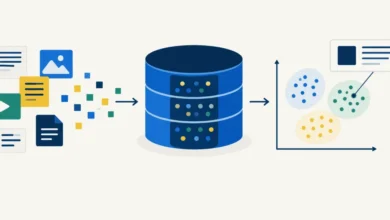
The integration of vector search into PostgreSQL, spearheaded by the pgvector extension, represents a significant shift in database utility. First released to address the growing need for high-dimensional similarity search within the widely adopted Postgres ecosystem, pgvector allows developers to store vector embeddings alongside traditional relational data. This eliminates the "double-write" problem, where developers would otherwise be forced to maintain synchronization between a primary relational database and a secondary vector store.
The technical architecture of pgvector is elegant in its simplicity. By adding a native vector data type and supporting index methods like HNSW (Hierarchical Navigable Small World) and IVFFlat, it allows users to perform approximate nearest-neighbor searches directly within standard SQL queries. Because it operates within the existing Postgres process, it benefits from the database’s robust ACID compliance, backup systems, and mature ecosystem of tooling.
The Rise of Dedicated Vector Infrastructure
In contrast, dedicated vector databases—often termed "AI-native" databases—were designed with the specific goal of optimizing high-dimensional vector operations from the kernel up. These systems, including Qdrant, Pinecone, Milvus, and Weaviate, treat vector search as the primary workload rather than an add-on feature.
From a chronological perspective, the surge in dedicated vector databases began in earnest around 2021-2022, as the limitations of early, unoptimized vector implementations became apparent. These platforms differentiate themselves through distributed computing capabilities, native GPU acceleration, and specialized storage engines designed to handle the unique indexing requirements of billions of vectors. For instance, Milvus offers sophisticated sharding and partitioning strategies specifically for massive-scale enterprise environments, while Pinecone offers a serverless abstraction that prioritizes developer velocity over infrastructure management.
Methodological Benchmarking: Bridging the Gap
To understand the performance ceiling of these technologies, one must look at controlled, transparent benchmarking environments. A recent, industry-standard comparison conducted on AWS r6id.4xlarge instances provides a high-fidelity look at how these systems handle 50 million Cohere embeddings (768 dimensions).
It is important to note the nuances in such data. When Postgres is combined with auxiliary extensions like pgvectorscale—which implements the StreamingDiskANN algorithm—it performs substantially differently than a vanilla pgvector setup. The benchmark revealed that at 99% recall, the pgvector-based setup achieved an impressive 471.57 queries per second (QPS), significantly outperforming Qdrant’s 41.47 QPS. However, this throughput advantage came with a trade-off in latency consistency. Qdrant demonstrated superior tail-latency management, with p99 latencies nearly 50% lower than the Postgres-based configuration.
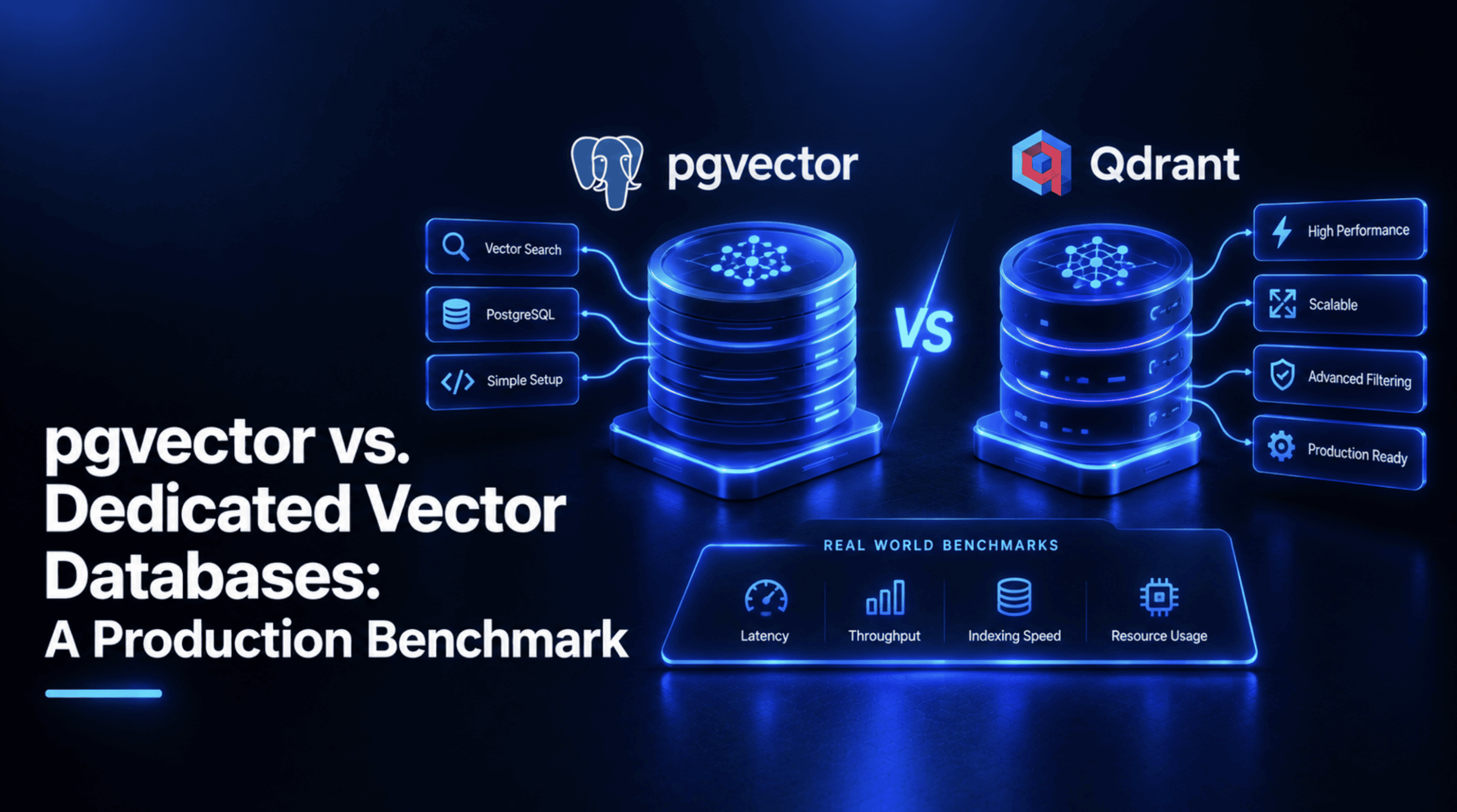
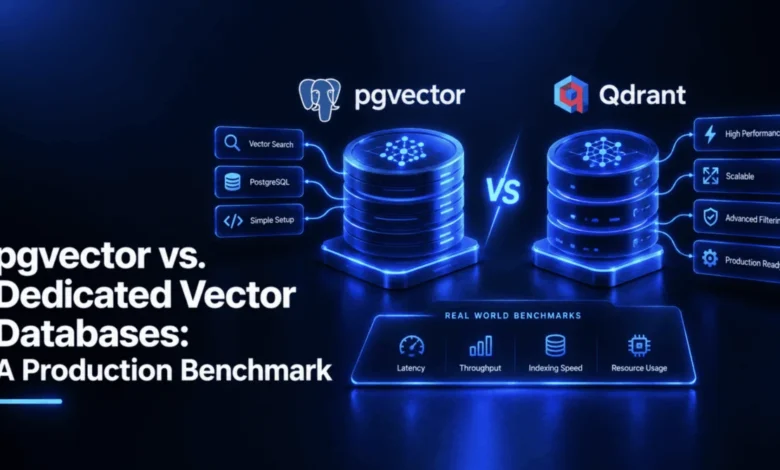
These metrics suggest that the "better" choice is highly dependent on the service-level agreement (SLA) of the application. If the primary goal is high-throughput batch processing or standard search queries, the pgvector ecosystem provides remarkable efficiency. Conversely, if the application demands strict sub-40ms p99 response times under heavy, concurrent load, the architecture of a dedicated system like Qdrant provides more predictable performance.
Operational Implications and Strategic Selection
The decision to migrate to a dedicated vector database or remain within the PostgreSQL fold is rarely a purely technical one; it is frequently an operational one.
The Case for pgvector:
For the vast majority of startups and mid-market enterprises, the operational simplicity of pgvector is an overwhelming advantage. By keeping relational data and embeddings in the same table, developers maintain transactional integrity. A single BEGIN...COMMIT block can update a user’s profile and their associated semantic embedding simultaneously. Furthermore, the cost of adding a Postgres extension is zero in terms of infrastructure headcount. If a team already employs a Database Reliability Engineer (DBRE) to manage Postgres, the marginal cost of supporting vector search is negligible.
The Case for Dedicated Databases:
The argument for dedicated systems becomes compelling at the "hyper-scale" threshold. As the dataset approaches hundreds of millions or billions of vectors, the performance degradation of a general-purpose database becomes more pronounced. Dedicated databases offer features that are currently difficult to replicate in Postgres, such as:
- Distributed Architectures: Native support for sharding across multiple nodes, which is essential for massive datasets.
- Built-in Vectorization: Systems like Weaviate can manage the embedding generation process natively, reducing the amount of middleware code required.
- Advanced Filtering: Specialized databases often handle complex, multi-modal metadata filtering more efficiently than standard relational
WHEREclauses when combined with high-dimensional search.
Chronology of Adoption and Industry Trends
The current market landscape is moving toward a period of consolidation. Throughout 2024 and 2025, the trend among enterprise technology leaders has been a move toward "hybrid" strategies. Many companies begin with pgvector to minimize technical debt and accelerate time-to-market. Only when the performance requirements reach a critical inflection point—often characterized by unsustainable p99 latencies or the need for multi-region distribution—do they consider offloading the vector workload to a dedicated provider.
This "wait-and-see" approach is validated by the rapid rate of innovation within the pgvector ecosystem. Recent updates have closed much of the gap between dedicated systems and Postgres, with improved indexing algorithms and memory management strategies arriving at a rapid cadence.
Evaluating Your Specific Workload
When determining which path to take, architects should perform a fact-based audit of their requirements:
- Scale: Is the dataset likely to exceed 10 million vectors in the next 18 months? If not, the overhead of a dedicated system is likely premature.
- Consistency Requirements: Does your application require strict relational-to-vector consistency? If so, the transactional benefits of Postgres are difficult to ignore.
- Latency SLA: What is the maximum acceptable latency for the 99th percentile of your users? If the requirement is consistently under 30ms, the tail-latency profile of a dedicated database may be necessary.
- Operational Maturity: Does your team have the capacity to maintain a new, distributed system? The cost of "Ops" is often underestimated in total cost of ownership (TCO) calculations.
Conclusion
The narrative that "pgvector is always sufficient" or "dedicated databases always win" is a simplification that serves vendor interests more than engineering reality. The empirical evidence suggests that both approaches have reached a level of maturity where they can serve most production workloads effectively.
For the majority of organizations, the most pragmatic approach is to start with the simplest, most integrated solution. By utilizing pgvector within an existing PostgreSQL instance, teams can gain the immediate benefits of vector search while maintaining the stability of a proven relational foundation. Should the growth of the data or the complexity of the query load eventually exceed the capabilities of that architecture, the transition to a dedicated vector database becomes a natural, well-justified evolution rather than a reactionary migration. In the final analysis, the "best" database is the one that meets the specific performance constraints of the application while minimizing the complexity of the underlying infrastructure.