Farwave reimagines digital audio consumption through a celestial-inspired global interface

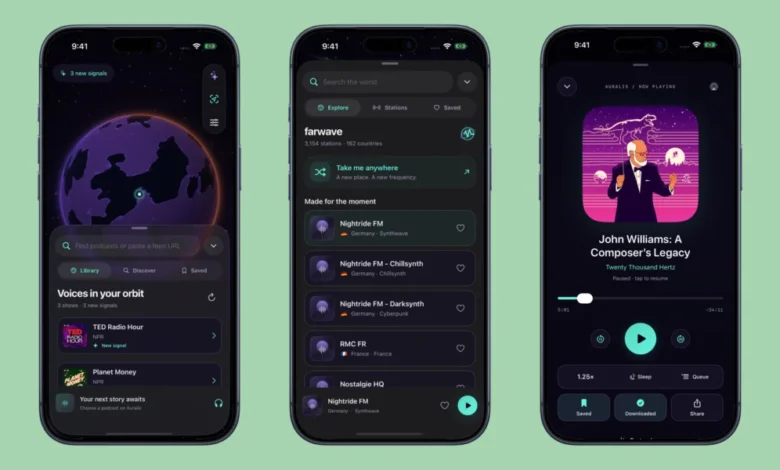
The landscape of digital audio consumption has long been dominated by monolithic streaming platforms that prioritize algorithmic recommendations over intentional exploration. Farwave, a newly released application for iOS and iPadOS, seeks to disrupt this paradigm by gamifying the discovery of global radio, podcasts, and local music through a 3D-rendered, planet-based interface. Developed for users seeking a more tactile and exploratory experience, the app moves away from the traditional list-based navigation that has defined the medium since the inception of the iTunes era.
A New Philosophy of Audio Discovery
In the current digital ecosystem, listeners are often funneled into curated bubbles. Major platforms utilize sophisticated machine learning models to predict user preference, which, while efficient, often limits the diversity of content exposure. Farwave approaches this challenge by visualizing the world as a tactile, navigable object. By treating global radio stations as geographic points of interest on a 3D globe, the developer has transformed the act of searching for content into a process of exploration.
The core functionality of the app is centered on the "Radio Planet," where users can rotate a 3D Earth to pinpoint local stations from virtually any region. This design choice mimics the analog experience of tuning a shortwave radio, where the thrill of discovery was inherent in the uncertainty of the signal. The inclusion of a "Take Me Anywhere" feature reinforces this intent, providing a randomized gateway to international cultures, languages, and musical genres that might otherwise remain inaccessible to the casual listener.
Chronology and Development Trajectory
The development of Farwave reflects a broader movement in the "Indie App" sector toward specialized, high-fidelity interfaces that emphasize user agency. While the official release occurred in September 2026, the application represents the culmination of nearly two years of iterative design focused on spatial UI (User Interface) mechanics.

The development timeline followed a strategic path:
- Early 2025: Initial prototyping of the 3D globe interface, focusing on low-latency audio streaming integration.
- Q3 2025: Integration of RSS feed support to facilitate the "Podcast Planet," allowing for a more robust content ecosystem.
- Q1 2026: Beta testing of the local file import system, ensuring that the app could serve as a standalone music player for audiophiles who prefer managing their own libraries.
- September 2026: Public launch on the App Store, optimized for iOS 18 and subsequent versions.
Technical Architecture and Feature Set
Farwave distinguishes itself from standard aggregators by segmenting content into three distinct "planets," each governed by its own UI logic. This architectural decision is not merely aesthetic; it serves to declutter the user experience by separating real-time, ephemeral content—such as live radio—from persistent, archived media like podcasts and personal music files.
The Radio Planet
This section utilizes a geographic database to map radio stations. When a user interacts with a location, the app pulls live metadata, allowing for seamless transitions between stations. The inclusion of a comprehensive listening history ensures that users can return to serendipitous discoveries, a critical feature for those exploring non-English language broadcasts.
The Podcast Planet
Recognizing the dominance of established podcast directories, Farwave provides a hybrid approach. Users can search for podcasts via standard search functionality or manually input RSS feeds. The inclusion of professional-grade features—such as adjustable playback speeds, variable silence trimming, and offline downloads—positions the app as a viable competitor to more established podcast clients.
The Music Planet
The music component serves as a local media player. While the app explicitly excludes integration with proprietary streaming services like Apple Music—likely due to API restrictions and the developer’s focus on personal library management—it allows for the import of audio files via the Files app or direct transfer from a computer. By treating each artist as a unique "signal," the app gamifies the organization of personal libraries, offering an offline-first experience that appeals to users concerned with data privacy and long-term ownership of their media.

Market Context and Industry Implications
The success of applications like Farwave is indicative of a shifting sentiment in the software market. According to recent industry reports, there is a growing trend among "power users" to migrate away from subscription-heavy streaming services toward independent apps that offer greater control over metadata and file management.
From a data perspective, the streaming industry saw a plateau in net-new subscribers for major platforms throughout 2025. This has created a vacuum that independent developers are increasingly filling with niche, feature-specific tools. By offering a "Pro" tier at $2.99 monthly or $14.99 annually, Farwave utilizes a sustainable monetization model that avoids the "data-mining-for-advertising" trap prevalent in free-tier streaming services.
Official Positioning and User Accessibility
The developer has positioned Farwave as a tool for the curious listener. By leveraging the advanced processing capabilities of iOS 18, the app maintains a fluid frame rate during the 3D globe manipulation, a technical requirement that ensures the UI does not feel sluggish or "cheap."
The decision to offer a free version that includes the primary radio discovery tools acts as a low-barrier entry point, while the Pro features—podcast management and local music imports—cater to the "heavy user" segment. This tiered approach is a standard, yet effective, strategy for indie developers aiming to build a loyal user base while maintaining the operational costs associated with hosting and server-side audio processing.
Broader Impact on Digital Audio
The emergence of Farwave challenges the "content-first" philosophy of modern media. In the era of algorithmic discovery, the user’s role is often reduced to that of a passive recipient. Farwave attempts to restore the role of the user as an active navigator.

If this model proves successful, we may see a wider adoption of spatial interfaces in audio applications. The ability to visualize content—whether it be geographic, as in Farwave, or thematic—could provide a necessary evolution for a medium that has remained largely unchanged in its presentation for over a decade.
Conclusion and Future Outlook
As Farwave continues to iterate, the primary challenge for the development team will be maintaining a balance between the aesthetic "novelty" of the 3D planets and the functional reliability required by daily listeners. The integration of offline features and robust file management suggests that the developer is aiming for longevity rather than a fleeting trend.
For users currently feeling the fatigue of algorithmically driven playlists and homogenized audio feeds, Farwave offers a refreshing, tactile alternative. By decentralizing the listening experience and returning the power of discovery to the individual, the app serves as a case study for how independent developers can effectively challenge the status quo through thoughtful design and a focus on the user’s autonomy. As it stands, Farwave is a notable entry in the weekly rotation of indie applications, signaling a potentially significant shift in how we interact with our digital audio libraries in the years to come.