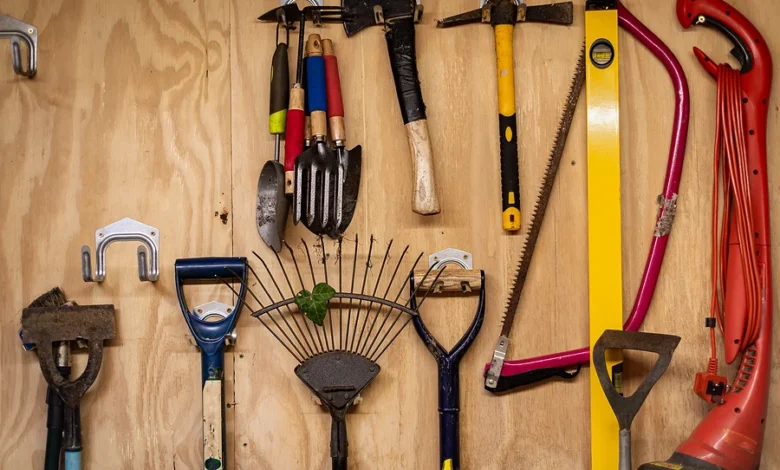
The modern technological landscape is undergoing a profound shift, transitioning from a focus on rapid, disruptive innovation to a necessary preoccupation with the long-term sustainability of digital infrastructure. As software becomes the foundational layer for everything from smart home appliances and automotive dashboards to critical industrial control systems, the "innovation-at-all-costs" mentality is increasingly clashing with the reality of software entropy. This evolution, often described as the "maintenance era," suggests that the future of technology will be defined not by the sheer volume of new releases, but by the capacity of organizations and individuals to manage, update, and sustain complex digital ecosystems over time.
The Myth of "Set and Forget" Technology
For decades, the consumer and enterprise markets operated under the assumption that technology products were static assets. A toaster, a car, or a factory lathe were expected to function exactly as they did on the day of purchase, with minimal intervention. However, the integration of connectivity and artificial intelligence has fundamentally altered this paradigm. Software is not static; it is a living entity that requires continuous patches, API updates, and security modifications to remain functional.
Data from the software industry highlights the scale of this burden. According to studies on software lifecycle management, technical debt—the implied cost of additional rework caused by choosing an easy solution now instead of a better approach that would take longer—accounts for up to 40% of development budgets in large enterprises. This financial drain is exacerbated by the "constant flux" of modern services, where a change in a third-party API or a cloud provider’s infrastructure can render previously functional tools obsolete overnight.
A Chronology of the Innovation-Maintenance Gap
The current crisis of maintenance has roots in the rapid expansion of the "as-a-service" model over the last fifteen years.
- 2010–2015: The proliferation of cloud-connected smart devices led to a surge in consumer expectations for "always-improving" products.
- 2016–2020: As the number of connected devices grew, manufacturers began struggling with the backend costs of long-term support. High-profile product "sunsetting" events became more common, leaving consumers with "brick" devices.
- 2021–2023: The rise of generative AI introduced a new layer of volatility. Developers found that traditional verification tools were insufficient, requiring a constant cycle of updates to keep pace with evolving threats like deepfakes and adversarial prompts.
- 2023–Present: The industry has begun to recognize that current staffing models, which prioritize the creation of new features, are structurally unequipped to handle the ongoing "maintenance of intelligence."
The Institutional Bias Against Maintenance
A significant factor contributing to the current instability is the corporate incentive structure. In many Silicon Valley firms, internal promotion and compensation models are heavily weighted toward "ship" metrics—the launch of new products or the implementation of novel features. Maintenance is frequently viewed as "undifferentiated heavy lifting," a chore that does not provide the same career visibility as innovation.
This cultural bias is perhaps most visible at companies like Google, which has faced long-standing criticism for its tendency to abandon products. When the organizational reward system prioritizes the "new," the "old" inevitably decays. This is not merely a user experience issue; it represents a significant economic failure. When a business fails to provide a clear path for the long-term support of a digital tool, it forces users to invest in replacements prematurely, creating an unsustainable cycle of consumption and waste.

Industrial Implications: IT vs. OT
The divide between Information Technology (IT) and Operational Technology (OT) provides a cautionary tale for the broader tech sector. In industrial plants, OT engineers have historically prioritized stability, uptime, and predictability—the hallmarks of a maintenance-first culture. When IT departments attempt to overlay rapid, cloud-based software updates onto these environments, they often encounter resistance.
This resistance is not a refusal to progress, but a rational response to the introduction of entropy. In a manufacturing environment, an unvetted software update could lead to hours of downtime or safety risks. The challenge, therefore, is to harmonize the IT philosophy of iterative improvement with the OT philosophy of robust, consistent operation. Bridging this gap requires a new class of professional: the "lifecycle engineer," whose primary role is to ensure that systems remain functional and secure, rather than simply adding new capabilities.
Economic and Professional Consequences
The transition to a maintenance era has significant implications for both workforce management and consumer economics.
- Professional Development: Just as legal and medical professionals are required to engage in continuous education, the tech workforce must formalize "maintenance literacy." This involves dedicating specific portions of the work week to technical debt remediation, system auditing, and adapting to interface shifts.
- The Subscription Model: For consumers, the shift is increasingly reflected in the subscription economy. While unpopular with many, the transition to subscription-based pricing for hardware (such as smart home devices) is, in theory, a mechanism to fund long-term maintenance. However, this requires a new social contract: companies must be transparent about the expiration dates of their software support and commit to keeping devices functional for the duration of their physical lifespans.
- Sustainability: The environmental impact of abandoned software is immense. When a device becomes a "brick" because a backend server was turned off or an app is no longer supported, the hardware is destined for a landfill. A mandate for "design for maintenance" would prioritize the longevity of the underlying silicon, reducing the carbon footprint of the tech industry.
Analysis: Toward a Sustainable Future
The "maintenance era" is not a retreat from progress, but an acknowledgment that progress is hollow if it cannot be sustained. The industry must move away from the binary perception that "innovation is good, and maintenance is boring."
For developers, this means building systems that are modular, where individual components can be updated without necessitating a total system overhaul. For businesses, it means valuing the personnel who manage and optimize existing systems as highly as those who design new ones. For policymakers, it may eventually require legislation mandating "right-to-support" provisions, ensuring that manufacturers provide a clear roadmap for software updates for the duration of a product’s expected life.
As computing continues to permeate every aspect of human life—from the way we monitor our health to the way we manage our energy grids—the ability to maintain these systems will become the primary determinant of success. The organizations that thrive in the coming decade will be those that view maintenance not as a cost center, but as a core competency. By embracing the necessity of constant, iterative care, the tech sector can begin to counteract the entropy that currently threatens to overwhelm its greatest achievements.