Understanding the Gossip Protocol in Large-Scale Distributed Systems and Software Architecture

The architecture of modern distributed systems faces a fundamental challenge: how to maintain a consistent, shared state across thousands of nodes without creating a single point of failure. In large-scale environments, centralized management services like Apache Zookeeper often reach their scalability limits, becoming bottlenecks that threaten system availability. To address this, engineers have increasingly turned to the Gossip Protocol, a decentralized, peer-to-peer communication method modeled after the way biological epidemics spread throughout a population. By replacing rigid, centralized oversight with fluid, local interactions, the Gossip Protocol provides a robust framework for high-availability systems that prioritize eventual consistency over strict, immediate synchronization.
The Mechanics of Decentralized State Management
At its core, the Gossip Protocol—often referred to as an epidemic protocol—functions on the principle of local, randomized information exchange. In a typical distributed cluster, every node periodically selects a random subset of its peers to exchange data with. Over time, this repetitive, local gossiping causes information to proliferate throughout the entire network, ensuring that all nodes converge on a shared understanding of the system state with a high probability.
Unlike centralized models where a single master node tracks the health and status of every participant, the Gossip Protocol empowers each node to manage its own membership list and health metrics. This decentralized approach eliminates the "single point of failure" risk. If one node fails, the protocol naturally routes information around the disruption, as other nodes continue to exchange data with the remaining healthy participants. This makes the protocol exceptionally resilient to network partitions and individual hardware crashes.
Chronology and Evolution of Epidemic Algorithms
The conceptual origins of the Gossip Protocol can be traced back to the 1987 seminal paper, "Epidemic Algorithms for Replicated Database Maintenance," by Alan Demers and his colleagues at Xerox PARC. During this era, researchers were seeking ways to manage database replicas across distributed networks without the prohibitive latency of centralized lock-based systems.
In the decades that followed, the protocol evolved from a theoretical framework into a cornerstone of modern cloud architecture. By the mid-2000s, as companies like Amazon began scaling their infrastructure to handle unprecedented traffic, the need for decentralized failure detection became paramount. The development of Amazon’s Dynamo database brought the Gossip Protocol to the forefront of industry standard practices, demonstrating that a system could remain highly available and partition-tolerant (adhering to the principles of the CAP theorem) by utilizing epidemic-style communication for state propagation.
Comparative Analysis of Broadcasting Techniques
To appreciate the efficacy of the Gossip Protocol, one must examine it against traditional broadcasting methods:
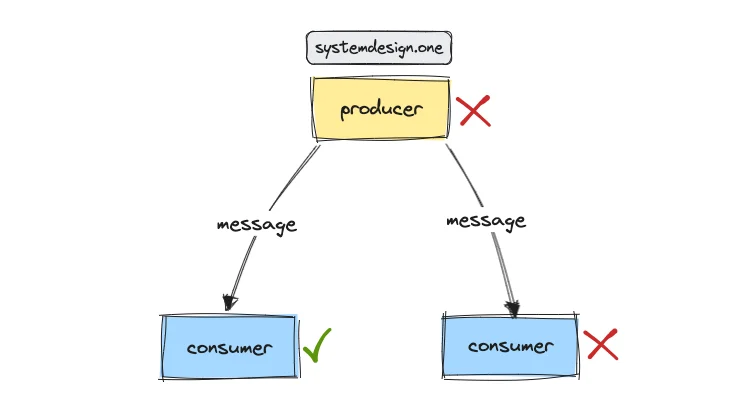
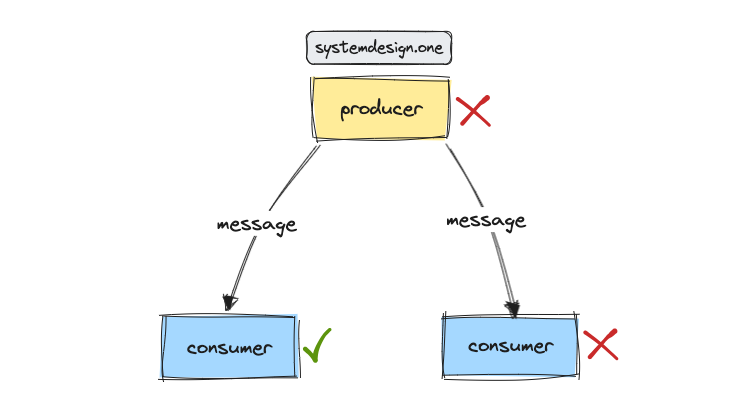
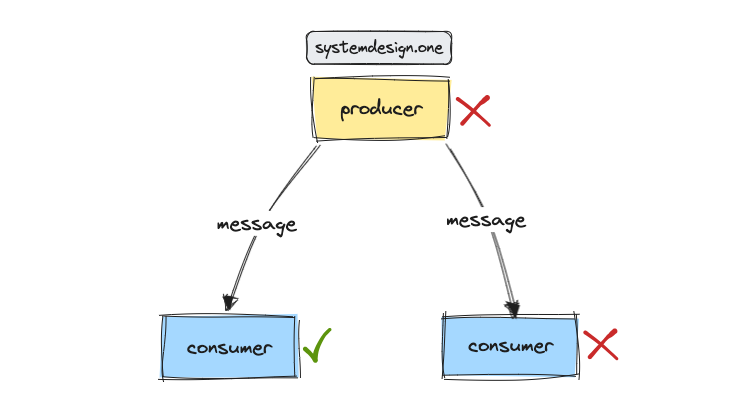
- Point-to-Point Broadcast: In this model, a producer sends messages directly to individual consumers. While straightforward, it relies heavily on persistent retries and complex deduplication logic to handle network instability. If the producer fails, the entire stream halts.
- Eager Reliable Broadcast: Here, every node acts as a relay, broadcasting messages to every other node. While this ensures high fault tolerance, it suffers from the "broadcast storm" problem, where the network becomes congested with redundant packets, leading to significant performance degradation as the number of nodes increases.
- Gossip Protocol: By contrast, the Gossip Protocol strikes a balance. It avoids the congestion of eager broadcasting by limiting the fanout—the number of peers a node contacts—and utilizes randomized selection to ensure that even if some messages are lost, the eventual reach of the information remains statistically near-perfect.
Operational Strategies: Push, Pull, and Push-Pull
The efficiency of a gossip-based system is determined by its communication strategy. Engineering teams typically choose between three primary models based on the specific traffic patterns of their application:
- The Push Model: In this scenario, a node with new information actively transmits it to a random subset of peers. This is highly effective when updates are infrequent, as it minimizes the latency required to spread the "news."
- The Pull Model: Here, nodes periodically poll their neighbors for updates. This model is superior in high-traffic environments where update collisions might occur, as it allows nodes to synchronize their state efficiently without being overwhelmed by constant incoming pushes.
- The Push-Pull Model: Often considered the gold standard for robust systems, this hybrid approach allows nodes to both disseminate their own updates and request information from others. The push phase ensures fast propagation during the initial stages of an update, while the pull phase ensures that any nodes that missed the initial broadcast catch up quickly, ensuring rapid convergence.
Performance Metrics and Data-Driven Insights
The performance of the Gossip Protocol is governed by two primary parameters: the fanout (the number of peers contacted per round) and the cycle (the frequency of the gossip exchange). Mathematically, the number of cycles required for a message to reach all $n$ nodes in a cluster follows a logarithmic growth pattern, $O(log n)$.
For a cluster of 25,000 nodes, studies indicate that a message can propagate across the entire system in approximately 15 cycles. If a system is configured with a gossip interval of 10 milliseconds, the entire data center can be synchronized in roughly three seconds. Crucially, this performance is achieved with minimal overhead; empirical case studies have shown that in a 128-node cluster, the protocol typically consumes less than 2% of total CPU resources and less than 60 KBps of bandwidth. This bounded load is a critical advantage, as it ensures that the overhead of maintaining the system state does not starve the actual business logic of resources.
Addressing the Trade-offs: Consistency and Complexity
While the benefits are significant, the adoption of a Gossip Protocol requires careful consideration of its trade-offs. The primary challenge is its reliance on eventual consistency. Because nodes do not synchronize simultaneously, there is an inherent delay—or "window of inconsistency"—during which different nodes may have different views of the system. In environments requiring strict serializability, such as financial transaction ledgers, the Gossip Protocol is generally insufficient as a standalone solution.
Furthermore, the non-deterministic nature of the protocol presents unique challenges for debugging and testing. Because the path of a message is randomized, it is difficult to reproduce specific failure scenarios. Developers must rely on sophisticated simulation tools and observability platforms that allow for the visualization of network state over time.
Security and Mitigation of Malicious Actors
A frequently raised concern regarding decentralized protocols is the risk of "gossip poisoning," where a malicious node injects false information into the network. To counter this, modern implementations often incorporate a reputation-based system. Nodes track the consistency of the data provided by their peers; if a node consistently broadcasts data that contradicts the consensus, its reputation score drops, and it is eventually ostracized from the gossip cycle. Additionally, cryptographic signing of gossip messages ensures that nodes can verify the authenticity of the information before incorporating it into their local state, effectively preventing unauthorized data injection.
The Broader Impact on Software Architecture
The shift toward the Gossip Protocol represents a broader trend in software architecture: the move away from rigid, hierarchical control toward autonomous, self-organizing systems. By embedding intelligence at the node level, organizations can build systems that scale horizontally almost indefinitely.
Today, the protocol is not just a theoretical interest but a practical necessity in many of the world’s most critical systems. From the membership management in HashiCorp’s Consul to the distributed consistency mechanisms in Apache Cassandra, the Gossip Protocol provides the backbone for systems that must remain functional despite the inevitability of hardware failure, network volatility, and scale. As cloud-native architectures continue to grow in complexity, the ability to maintain a global perspective through limited, local interactions will remain one of the most vital patterns in the software engineer’s toolkit. Through careful configuration of gossip parameters and a focus on eventual consistency, architects can design systems that are not only scalable but inherently resilient to the unpredictable nature of large-scale distributed computing.