Python Context Managers Beyond Opening Files: Mastering Resource Lifecycle Management

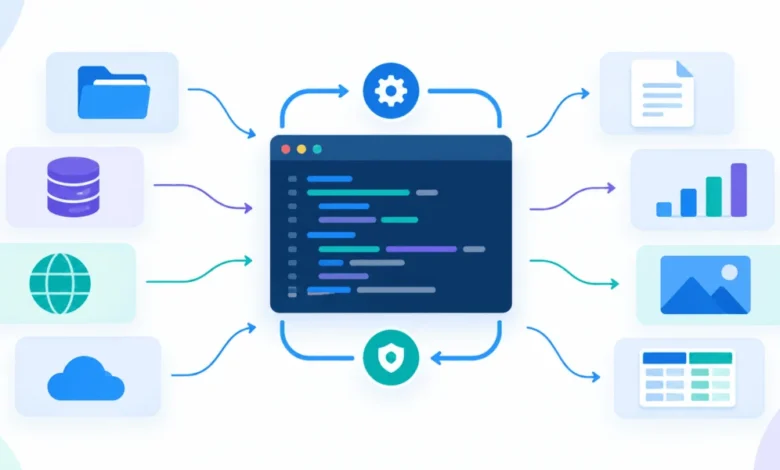
In modern software engineering, particularly within the resource-intensive fields of machine learning and data science, the management of system resources is a critical task that often separates stable production code from fragile, error-prone scripts. While many developers are introduced to Python’s context managers through the simple syntax of opening files, the underlying mechanism of the with statement is a powerful architectural tool for handling temporary states, hardware locks, and environment configurations. By shifting from manual cleanup routines to structured, context-managed patterns, developers can ensure that critical cleanup tasks execute reliably even when processes encounter unexpected exceptions or runtime failures.
The Problem of Brittle Housekeeping
The traditional approach to resource management often relies on linear, imperative code structures that are inherently susceptible to failure. Consider a common scenario in an evaluation script: the developer initializes a scratch directory, modifies environment variables to point to a high-speed disk cache, lowers logging verbosity, and starts a high-resolution performance timer. In a typical implementation, the code that reverts these changes—the deletion of the directory, the restoration of environment variables, and the resetting of logger levels—is placed at the very end of the file.
This design creates a significant vulnerability. If the evaluation function encounters a malformed record or an unexpected data type, it triggers an exception. When an exception occurs, execution is interrupted, and the interpreter jumps out of the function, entirely skipping the manual cleanup code at the bottom of the script. The result is a system left in a corrupted state: "stale" cache paths persist in the environment, loggers remain silenced, and gigabytes of temporary data occupy valuable storage. This is not merely an inconvenience; in automated CI/CD pipelines, such leftovers can lead to non-deterministic failures in subsequent runs, where a previous session’s corrupted state interferes with a fresh, clean execution.
Decoding the Underpinnings of the With Statement
The with statement is fundamentally a structural boundary that guarantees an exit. Under the hood, Python invokes two special methods on the context manager object: __enter__() and __exit__(). When the interpreter encounters a with statement, it evaluates the expression, calls __enter__(), and binds the return value to the name specified by the as keyword.
The true value of this pattern lies in the __exit__() method, which is guaranteed to run regardless of how the block is exited—whether it completes successfully, hits a return statement, or raises an unhandled exception. This guarantee is governed by the Python data model, which specifies that the __exit__() method receives three arguments: the exception type, the exception value, and the traceback. If no exception occurs, these values are passed as None.
A critical detail often misunderstood by developers is the return value of __exit__(). If this method returns a "truthy" value, it effectively suppresses the exception, causing the program to continue as if no error occurred. While useful for specific error-handling scenarios, it can be dangerous if implemented incorrectly, as it can silently swallow legitimate runtime errors. In professional production code, it is standard practice to return False or None, allowing exceptions to propagate and trigger proper error handling or logging at higher levels.
Implementing Custom Resource Management
When a developer encounters a task requiring setup and guaranteed teardown, building a custom class is the most robust approach. For instance, a custom Timer class can replace unreliable manual print statements. By encapsulating the perf_counter() logic within __enter__ and __exit__, the timer remains active for the duration of the code block.
Beyond simple timing, this class-based approach allows for state retention. Because __enter__() returns the timer object itself, the developer can access properties like t.elapsed after the block has finished. This is superior to global variables or manually tracked timestamps, as it creates an immutable scope for the duration of the execution, minimizing the risk of side effects leaking into other parts of the codebase.
Efficiency with the @contextmanager Decorator
For tasks that do not require complex state tracking, the contextlib module provides the @contextmanager decorator. This utility allows developers to write a generator function that performs setup, yields control to the block, and then performs cleanup. This approach reduces boilerplate code significantly while maintaining the same reliability guarantees as a full class.
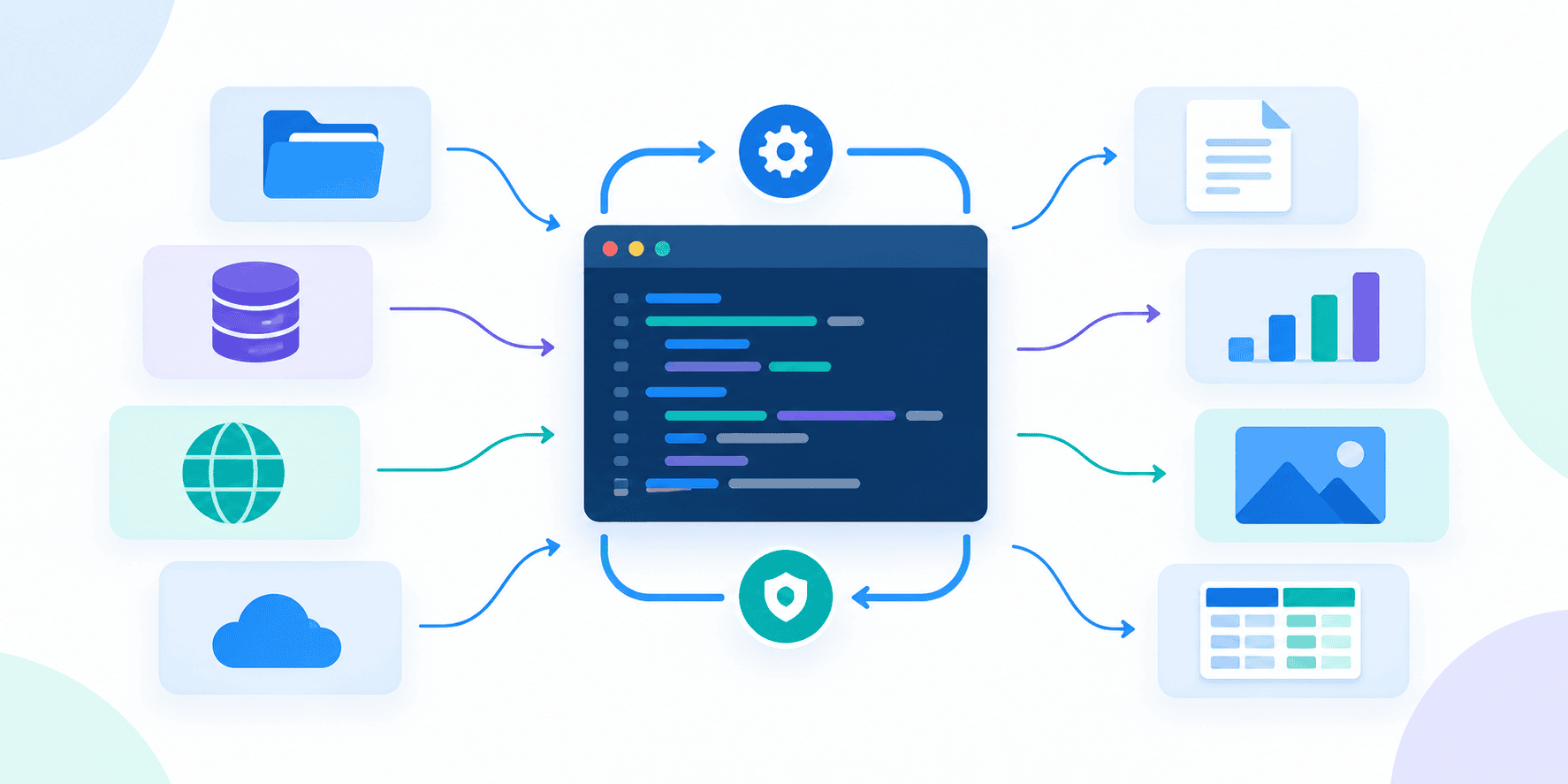
Using the finally block within this generator is the industry-standard way to ensure cleanup occurs. Even if an exception occurs during the yield—effectively while the block is running—the finally block is executed as the generator unwinds. This pattern is particularly useful for silencing logs during sensitive operations or toggling configuration flags, as it keeps the cleanup logic physically proximate to the setup logic, significantly improving code readability and maintainability.
Automated Resource Cleanup with TemporaryDirectory
The standard library also provides sophisticated tools that eliminate the need for custom logic in many cases. The tempfile.TemporaryDirectory class is an essential tool for any script that performs file-heavy operations. By using this manager, the directory and all its contents are automatically removed when the block closes. This eliminates the "debris" problem, where failed runs leave behind clutter that consumes disk space and potentially confuses future runs.
In recent Python versions (3.10 and later), developers can also use parameters such as ignore_cleanup_errors=True to handle edge cases in environments where file locks might persist, such as on Windows operating systems. This represents a significant maturation of Python’s standard library, providing production-ready solutions for common systems-level hurdles.
Managing Dynamic Resources with ExitStack
One of the most complex challenges in software engineering is managing a variable number of resources—for example, opening an arbitrary number of data shards at runtime. Nesting multiple with statements becomes syntactically impossible when the number of files depends on the input. contextlib.ExitStack addresses this by allowing developers to register an arbitrary number of context managers and cleanup functions dynamically.
ExitStack acts as a container that collects cleanup tasks and executes them in reverse order when the stack itself exits. It supports both standard context managers through enter_context() and arbitrary cleanup functions through callback(). This is particularly useful for handling complex resource dependencies, such as network connections, file handles, and mutex locks, where the order of closing is essential to prevent deadlocks or memory leaks.
Ensuring Global State Reversibility
Global state is the enemy of robust code, yet it is often necessary for tasks like modifying environment variables or changing working directories. The unittest.mock.patch.dict() function, while designed for testing, is a highly effective tool for modifying environment variables safely. It captures the existing state of a dictionary (or os.environ), applies the temporary changes, and restores the original state regardless of the outcome.
This is a superior alternative to manual modification, which is error-prone and often results in permanent changes if the script crashes. However, developers must be mindful of concurrency. Since os.environ is global to the process, modifying it within a context manager will affect all threads simultaneously. In highly concurrent or asynchronous environments, it is safer to pass configurations as arguments rather than relying on global state overrides.
Conclusion and Best Practices
The transition from basic file handling to comprehensive resource management is a hallmark of professional software engineering. By selecting the correct pattern—whether a custom class for stateful logic, a decorator for simple linear setups, or ExitStack for dynamic resource collections—engineers can build systems that are inherently self-correcting.
The primary directive remains: cleanup should never be an afterthought. By centralizing the lifecycle of every resource within a with block, developers ensure that their code remains clean, stable, and predictable, even when faced with the inevitable failures of real-world production environments. This proactive approach to resource management significantly reduces the time spent on post-mortem debugging and increases the overall reliability of the application, ultimately ensuring that even if a process fails, it leaves no trace of its failure behind.