In the modern enterprise, the deployment of autonomous AI agents has shifted from experimental pilots to core operational infrastructure. As companies integrate these agents into mission-critical workflows—such as financial invoice processing, supply chain management, and automated regulatory compliance—the margin for error has narrowed significantly. An agent that generates a “successful” transcript is no longer synonymous with a task that has been successfully executed. When an AI agent reports a process as “complete” without actually securing a verified receipt in the backend system, the resulting operational gaps can lead to significant financial discrepancies and compliance failures.
The Anatomy of Silent Failures
The industry is currently facing a paradigm shift in how we evaluate agentic behavior. Historically, developers relied on the agent’s internal dialogue or the successful completion of a tool call to verify performance. However, recent guidance from industry leaders, including research released by Anthropic on January 9, 2026, emphasizes a move toward “outcome-based evaluation.” In this framework, success is defined by changes in the external world—such as a database record or a ledger entry—rather than the text generated by the Large Language Model (LLM) itself.
To mitigate these risks, engineering teams are increasingly adopting "regression-based instrumentation." By creating controlled failure scenarios, developers can simulate common production hazards before a new deployment reaches the live environment. These checks typically involve a "fixture" (a controlled dataset like the hypothetical INV-17 invoice) and a set of observability tools, such as OpenTelemetry traces, to monitor the entire lifecycle of an agent’s operation.
Chronology of an Agentic Failure
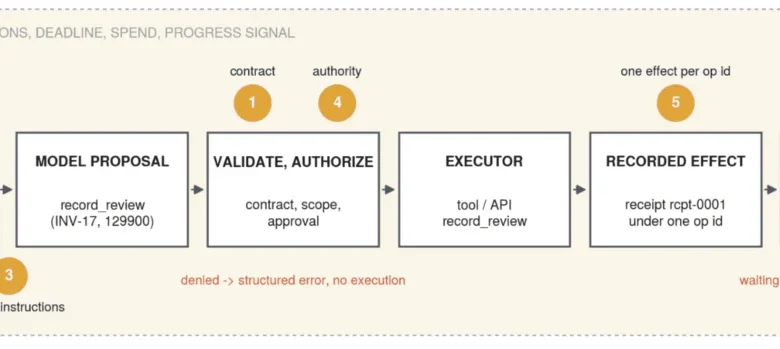
Consider the lifecycle of an automated invoice-review agent. Under ideal conditions, the agent pulls data, verifies the invoice against authorized records, and triggers a final receipt. However, failures often occur at the seams of these operations.
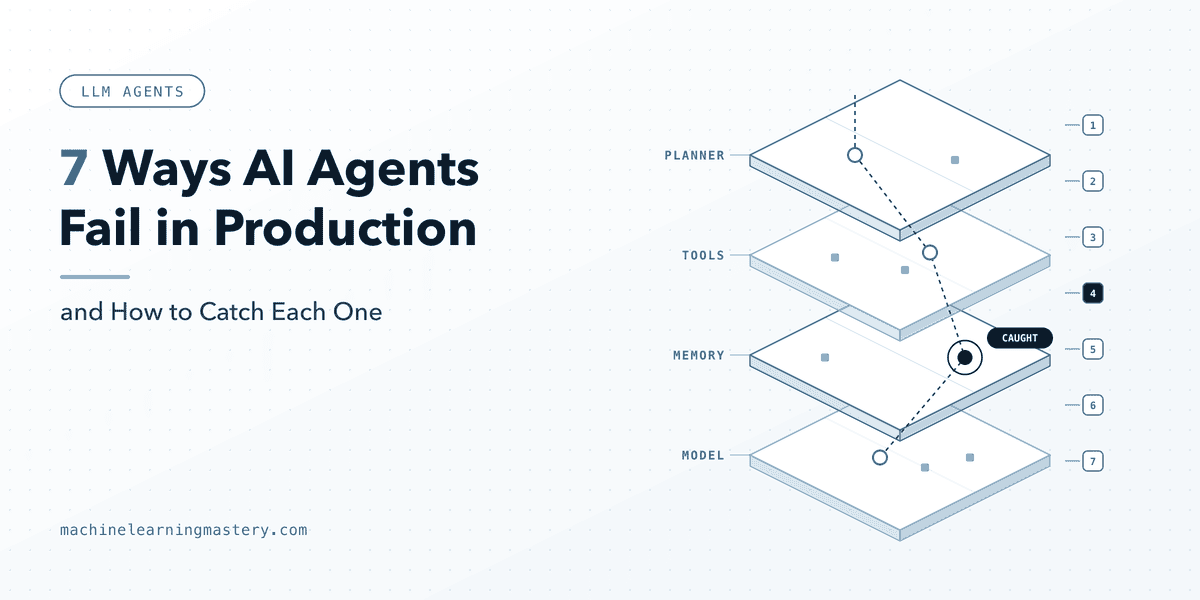
- Contract Mismatch: The model proposes a tool call that is malformed or uses outdated schema versions.
- Evidence Stagnation: The agent pulls data from an outdated document version, leading to accurate reasoning based on incorrect facts.
- Indirect Injection: Malicious or malformed content within a retrieved document instructs the model to bypass standard operating procedures.
- Authorization Breach: The model attempts to access resources outside its permitted scope, such as a different tenant’s invoice.
- Retry Storms: Due to network timeouts, an agent repeats an action, potentially leading to duplicate payments or multiple conflicting receipts.
- State Persistence Loss: A process restart causes the agent to lose its "memory" of the task, leading to incomplete work.
- Infinite Loops: The agent enters a repetitive cycle of lookups, consuming compute budgets and stalling production.
Data-Driven Prevention Strategies
The efficacy of these regression checks lies in their ability to provide observable data at every stage. For instance, in the case of tool contract failures, developers have moved toward strict schema validation using libraries like Pydantic. By enforcing strict mode and extra="forbid" configurations, applications can prevent malformed JSON arguments from ever reaching the execution layer.
Regarding authorization, the industry standard is shifting toward negative testing. Developers are encouraged to run tests where an agent is intentionally fed data belonging to a different tenant. If the system fails to block these requests, the security architecture is deemed inadequate. As noted by the OWASP Foundation in their 2025 guidance, API-level authorization checks are non-negotiable, particularly when the agent is acting as an intermediary between the LLM and sensitive backend services.
The Role of Idempotency in Distributed Systems
A significant challenge identified by systems engineers is the management of retries. When a tool call returns a timeout, a default "retry" behavior can be disastrous if the underlying service is not idempotent. To solve this, developers are implementing unique operation identifiers (IDs) that are minted before the first request.
By sending a consistent operation_id—such as tenant-A:INV-17:review-v1—the backend service can recognize subsequent retries. If the service has already processed the request, it can return the original receipt rather than executing the operation a second time. This approach, similar to the ClientToken mechanism used in cloud infrastructure like AWS EC2, ensures that even if an acknowledgment is lost, the final state of the system remains consistent.
Infrastructure and Resource Management
Beyond logic and security, agentic failure often manifests as resource exhaustion. A common misconception is that a "budget" check is sufficient to stop infinite loops. However, an agent can exhaust its budget by performing repetitive, non-productive lookups.
Effective monitoring requires tracking the state of the task itself. If the task state does not change over several iterations, the orchestrator should trigger a hard stop. Furthermore, developers are now using Linux Pressure Stall Information (PSI) to distinguish between an agent that is stuck in a logic loop and one that is simply slow due to resource contention at the CPU or I/O level. By reading /proc/pressure/ metrics, engineers can gain clarity on whether a delay is a performance bottleneck or an agentic error.
Implications for Future Deployments
The broader implication for AI engineering is that "black box" testing is no longer sufficient. As agents become more autonomous, the reliance on human-in-the-loop oversight will need to be supplemented by automated, state-based assertions. The current trend toward "evaluation-driven development"—where every production incident is converted into a permanent regression test—is essential for long-term stability.
Official responses from industry bodies, such as the agent engineering reports from 2026, suggest that the most resilient systems are those that decouple the agent’s "reasoning" from the "execution" of tasks. By maintaining clear separation between the LLM’s output and the application’s business logic, companies can ensure that even if an agent hallucinates or misinterprets instructions, the underlying system guards prevent harmful actions from reaching production.
Conclusion
Building robust AI agents requires a shift in mindset: treat every production incident not as a random occurrence, but as a failure of the current test suite. By building a library of regression cases—each corresponding to a specific way an agent has failed in the past—teams can build a defensive layer that catches errors before they cause real-world damage. While human review remains a vital component of the deployment process, automated instrumentation provides the only scalable way to ensure that "Done" really means the job is finished. Through rigorous contract validation, authorization testing, and idempotent API design, enterprises can transition from unpredictable experimental systems to reliable, enterprise-grade AI operations.