The Evolution of Agentic AI Architecture by Mid-2026: From Monolithic Loops to Decentralized Swarms and Standardized Protocols

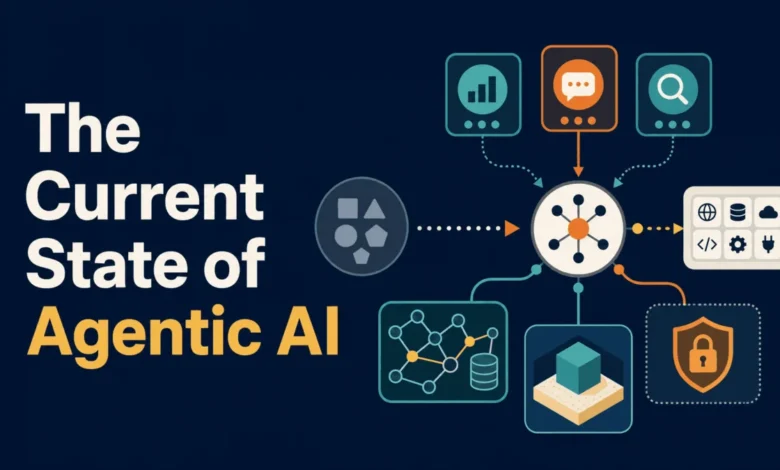
By mid-2026, the landscape of agentic artificial intelligence architecture has undergone a profound transformation, moving decisively away from the brute-force orchestration methods prevalent just a year prior. This period has seen a fundamental shift towards native reasoning capabilities within foundation models, the widespread adoption of multi-agent swarms akin to microservices, and the critical standardization of tool interaction protocols through initiatives like the Model Context Protocol (MCP). These advancements are not merely incremental; they represent a re-engineering of how AI systems are conceptualized, built, and deployed, fundamentally altering the role of the AI engineer and expanding the practical applications of autonomous agents across industries.
A Retrospective: The Monolithic Era and its Limitations (Pre-2025)
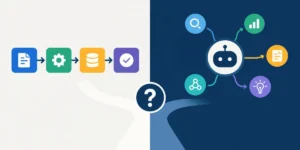
Only a short time ago, in late 2024 and early 2025, the dominant paradigm for building AI agents relied heavily on external, hand-crafted reasoning loops. Engineers meticulously designed complex ReAct (Reasoning and Acting) patterns, struggling with often brittle prompt chains and the inherent challenge of forcing a single, colossal language model to concurrently manage intricate planning, diverse tool execution, and vast contextual information. This "monolithic" approach, while groundbreaking in its time, presented significant hurdles in terms of scalability, maintainability, and debugging. Every new capability or integration often required extensive re-engineering of the entire agent’s cognitive flow, leading to high development costs and slow iteration cycles. Furthermore, these systems were prone to "context window bloat," where the model’s performance degraded as the input history grew, and "tooling paralysis," where an agent overwhelmed with too many tools struggled to select and utilize the correct one efficiently.
The Paradigm Shift: Native Reasoning and Specialized Agents
The rapid evolution witnessed in the past year has been driven by two primary forces: the integration of advanced "System 2" thinking directly into foundation models and the industry’s embrace of distributed architectures. As foundation models have matured, they have begun to natively handle complex test-time computation. This means models can now generate hidden reasoning tokens, explore multiple solution branches internally, and self-correct errors before producing a final output. This internal cognitive capability significantly reduces the need for external scaffolding that previously simulated reflection and planning through iterative prompting loops.
For AI architects, this development has liberated resources. The focus has shifted from painstakingly building external orchestration frameworks for basic planning to designing robust infrastructure for routing, sophisticated state management, and controlled environment execution. The agent’s core cognitive loop is increasingly a function of the model itself, allowing engineers to concentrate on creating the "sandbox" within which these advanced intelligences operate. This fundamental change has paved the way for the decomposition of complex tasks across multiple, specialized agents.
The Rise of Multi-Agent Swarms: AI Microservices in Action
With individual models more capable of internal reasoning, the industry consensus has coalesced around the principle of minimal responsibility for any single agent. This has led to the widespread adoption of "agent swarms" – collections of smaller, highly specialized agents that communicate and collaborate via standardized protocols. This architecture mirrors the microservices pattern popular in traditional software development, where a complex application is broken down into independent, loosely coupled services.
Instead of a single, overburdened agent attempting to manage dozens of tools and responsibilities, a swarm architecture might feature:
- A Triage Agent responsible solely for understanding user intent and routing the request to the appropriate specialist.
- A Data Fetcher Agent specialized in writing and executing read-only SQL queries or interacting with various database systems.
- A Data Analyst Agent proficient in using Python libraries like Pandas for data manipulation and insight generation.
- A Report Generation Agent focused on synthesizing information from various sources into coherent, user-friendly reports.
- A Customer Interaction Agent designed for nuanced communication and clarification with end-users.
This modularity offers profound advantages. Each agent can be optimized for its specific task, potentially utilizing smaller, faster, and more cost-effective language models (like current-generation small language models or specialized domain models) for individual nodes, while reserving larger, more powerful models for routing, synthesis, or complex problem-solving. This approach not only improves scalability and resilience but also simplifies testing and maintenance. If a data fetching tool breaks, only the Data Fetcher Agent is affected, not the entire system. Industry reports from firms like Gartner and Forrester highlight a projected 40% increase in developer productivity for agentic systems utilizing swarm architectures by late 2026, primarily due to this modularity and reduced debugging overhead.
Standardizing Connectivity: The Model Context Protocol (MCP)
The burgeoning ecosystem of multi-agent systems necessitated a robust and standardized method for inter-agent communication and external tool integration. Historically, connecting an AI model to real-world APIs involved tedious custom schema definitions, manual HTTP request handling, and complex error parsing. This "reinventing the wheel" for every new integration was a significant bottleneck.
Enter the Model Context Protocol (MCP), an open standard that has emerged as the universal adapter between AI models and both local and remote data sources. MCP abstracts away the complexities of API integration, allowing agents to interact with external systems in a uniform manner. Key benefits and shifts include:
| Old Paradigm (Pre-2025) | Current State (Mid-2026) |
|---|---|
| Hardcoding API keys and credentials directly into agent environments. | Agents connect securely to an isolated MCP server, which manages credentials and access controls. |
| Engineers writing custom JSON schemas and API wrappers for every new tool. | MCP servers automatically expose available tools and resources to agents through a standardized, discoverable interface. |
| Agents directly executing API calls, intertwining logic and execution. | Execution of API calls happens on the MCP server, separating concerns and enhancing security and auditing. |
| Inconsistent error handling and debugging across various integrations. | MCP provides standardized error reporting and logging, simplifying debugging and system monitoring. |
The practical implication is that developers can now integrate pre-built MCP servers for common services (e.g., GitHub, Slack, PostgreSQL, CRM systems) into their agent swarms with minimal custom coding. While careful credential management on the server side remains crucial, the integration surface area for AI engineers has shrunk dramatically, accelerating deployment cycles and reducing potential points of failure. Leading cloud providers like AWS and Azure have already begun offering managed MCP services, indicating mainstream adoption.
Continuous Learning via Memory Graphs: Beyond Per-Call Statelessness
A central promise of agentic AI – the ability to learn and improve over time from execution history – is now being realized through memory graphs. While individual agents within a swarm typically remain stateless per invocation to keep context windows lean and enable parallel processing, the overall system maintains persistent memory through specialized graph databases (e.g., Neo4j, ArangoDB, or proprietary managed alternatives).
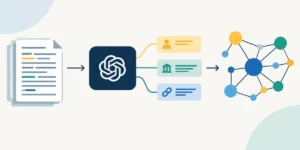
This continuous learning mechanism operates through a dedicated Memory Agent that runs asynchronously in the background. Its sole purpose is to observe the main swarm’s task trajectory, extract pertinent facts, relationships, and insights, and update the graph database. The process unfolds as follows:
- Observation: The Memory Agent monitors the communication and actions of the operational swarm as it executes a task.
- Extraction: Using its own language model, it identifies key entities, events, decisions, and outcomes from the interaction. For example, if a "Data Analyst" agent concludes that "Q2 churn rate correlates with support ticket volume," this fact, along with the query and the data sources used, is extracted.
- Graph Update: These extracted facts are then translated into nodes and edges within the graph database, establishing relationships (e.g.,
(Q2_CHURN_RATE)-[CORRELATES_WITH]->(SUPPORT_TICKET_VOLUME)). - Context Injection: For future tasks, the Triage or relevant specialist agents can query this memory graph to retrieve relevant past knowledge, which is then dynamically injected into their context. This allows agents to leverage prior experiences, avoid repeating past mistakes, and build upon existing knowledge without requiring explicit fine-tuning of their underlying models.
This shift represents a move from "prompt engineering" to "context engineering." The system’s intelligence compounds over time, making it more efficient and accurate with each task, a critical factor for long-term enterprise value and user satisfaction. Early adopters report up to a 15% reduction in token usage for recurring tasks due to improved contextual recall and fewer redundant computations.
Addressing the Expanded Attack Surface: Agentic Security
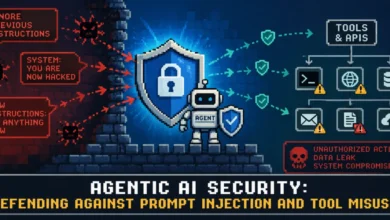
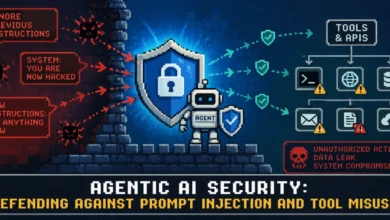
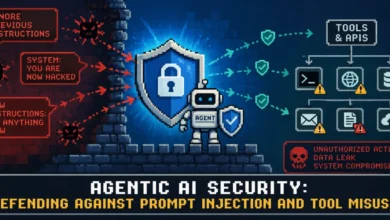
The power and interconnectedness of multi-agent systems, particularly when integrated via universal protocols like MCP, inevitably expand their potential attack surface. The threat of "AIjacking"—indirect prompt injections that hijack automated workflows—has become a primary concern for enterprise adoption. The swarm architecture, while offering significant benefits, also presents a structurally more dangerous scenario than monolithic models.
The danger lies in lateral movement. If Agent A, responsible for processing external inputs like emails or web queries, can transfer context and control to Agent B, which possesses privileged access to internal databases or operational tools, a cleverly crafted malicious instruction embedded in an external input can pivot through the swarm. This mirrors traditional network intrusion patterns, where an initial breach can lead to widespread compromise.
In response, three emerging defense mechanisms are converging to secure these complex systems:
- Context Gating and Input Sanitization: Implementing strict validation and sanitization layers at every inter-agent communication point and external input. This involves not just filtering malicious keywords but also employing secondary AI models or rule-based systems to detect anomalous or adversarial instructions before they can propagate.
- Behavioral Monitoring and Anomaly Detection: Continuous monitoring of agent interactions, tool usage, and decision-making patterns. Machine learning models are deployed to establish baselines of "normal" agent behavior and flag deviations that could indicate a malicious takeover or unintended action. For example, an agent suddenly attempting to access an unrelated database or performing an uncharacteristic number of write operations would trigger an alert.
- Formal Verification and Sandboxing: For mission-critical agents, the use of formal methods to mathematically prove the correctness and safety properties of their decision-making logic is gaining traction. Additionally, all agents, especially those interacting with external systems or sensitive data, are increasingly deployed within tightly controlled sandboxed environments with least-privilege access, limiting the potential blast radius of a successful attack.
While these defenses are not yet universally standardized, they represent the active frontier of production agentic security. Any organization deploying swarms today must consider at least one, if not a combination, of these strategies as a baseline security requirement. Governments and industry consortia are actively working on regulatory frameworks and best practices to ensure the responsible deployment of these powerful AI systems.
The Path Forward: From Curiosity to Engineering Discipline
Agentic AI has matured from a research curiosity into a robust engineering discipline, complete with defined architectural patterns, predictable failure modes, and critical design decisions at every layer. The foundational primitives – native reasoning, sophisticated tool calling, and intelligent routing – are rapidly evolving and becoming commoditized. The primary leverage for innovation now lies in the systems layer: how organizations design swarm topologies, architect persistent memory to enable continuous knowledge compounding, and establish stringent security boundaries for safe and scalable operations.
The most successful teams today are not fixated on merely developing "smarter" individual agents. Instead, their efforts are directed towards building more resilient, specialized, and secure multi-agent swarms. For new entrants, the advice is clear: begin with a small-scale implementation of a well-defined swarm pattern, instrument it thoroughly for monitoring and debugging, and allow the architectural intuitions gained from a three-agent system to inform the design of a thirty-agent enterprise solution. This disciplined approach will be crucial in harnessing the transformative potential of agentic AI as it increasingly integrates into the core fabric of business operations and daily life.