Google Named a Leader in The Forrester Wave: External Threat Intelligence Service Providers, Q3 2026

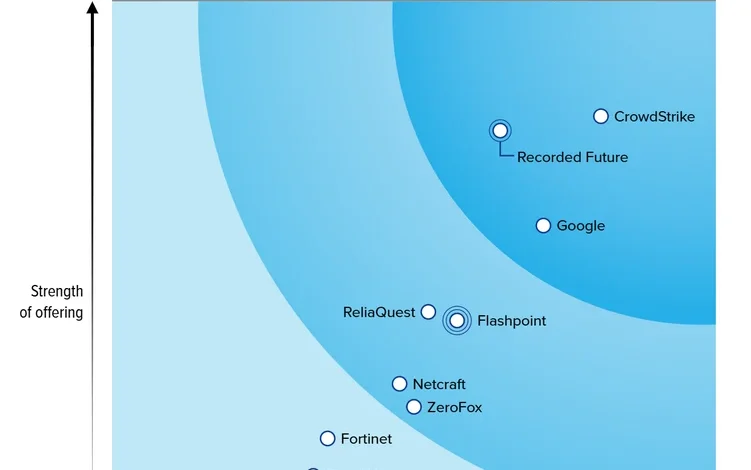
In an era defined by hyper-sophisticated cyber campaigns, state-sponsored espionage, and automated ransomware syndicates, enterprise security teams face an unprecedented volume of threats that routinely overwhelm traditional, reactive defensive frameworks. Modern cybersecurity operations can no longer rely on fragmented data feeds and retrospective analysis to safeguard critical infrastructure. Instead, security leaders require high-fidelity intelligence, deep underground visibility, and real-time contextual awareness to anticipate adversary maneuvers before an intrusion materializes. Recognizing these shifting industry demands, independent research firm Forrester has named Google a Leader in The Forrester Wave: External Threat Intelligence Service Providers, Q3 2026 report.
The comprehensive industry evaluation underscores Google’s dominance in the external threat intelligence landscape, highlighting the technology giant’s unique convergence of frontier artificial intelligence, elite human expertise, and hyperscale data collection. According to the Q3 2026 evaluation, Google achieved the highest possible score of 5.0 across nine distinct criteria, spanning both Current Offering and Strategy categories. This recognition marks a significant milestone in the evolution of enterprise defense, validating Google’s strategic integration of its foundational AI capabilities with world-class frontline threat intelligence.
The Evolution of Threat Intelligence in the Age of AI
The cybersecurity landscape has undergone a radical transformation over the past decade. Historically, threat intelligence consisted of static indicators of compromise (IoCs)—such as malicious IP addresses, file hashes, and domain names—delivered through periodic feeds that security operations center (SOC) analysts had to manually triage and operationalize. However, as threat actors began adopting automation, living-off-the-land techniques, and AI-driven evasion tactics, static feeds became obsolete.
By the mid-2020s, the industry recognized that effective threat intelligence required an operational shift from passive observation to active, agentic analysis. Organizations needed systems capable of autonomously conducting multi-step investigations, analyzing complex malware binaries at machine speed, and mapping adversary behaviors directly to established frameworks like MITRE ATT&CK.
Google’s positioning as a Leader in the Q3 2026 Forrester Wave reflects its aggressive response to this paradigm shift. By unifying the frontline incident response capabilities of Mandiant, the crowdsourced malware visibility of VirusTotal, and massive Google-scale infrastructure, the company has constructed an intelligence ecosystem designed to intercept threats at their inception. Furthermore, the integration of advanced artificial intelligence has transformed how security teams interact with threat data, moving from manual query-based searching to autonomous, agent-driven threat hunting.
Anatomy of a Leader: High Scores Across Critical Criteria
The Forrester evaluation measured vendors against rigorous standards, analyzing current offerings, ongoing strategies, and market presence. Google’s perfect score of 5.0 across nine evaluation criteria highlights the breadth and depth of its security portfolio.

Among the standout areas highlighted in the report are Deep and Dark Web Monitoring and Intelligence Collection Sources. Security practitioners have long struggled to gain reliable visibility into illicit forums, credential-dumping marketplaces, and closed messaging channels where threat actors plan attacks and trade stolen assets. Google’s specialized monitoring capabilities enable organizations to identify exposed corporate credentials, preemptive threat actor reconnaissance, and emerging exploit discussions long before they translate into active breaches. Forrester specifically awarded Google the highest possible score in this domain, reflecting the unmatched scope of its collection infrastructure.
In addition to data collection, Google excelled in analytical rigor. The company received top marks in Analyst Tradecraft and Services, Attribution and Frameworks Used, and Analyst Experience. This foundation is sustained by hundreds of dedicated researchers operating within the Google Threat Intelligence Group (GTIG). Stationed across more than 30 countries and fluent in over 30 languages, GTIG researchers combine deep regional insights with rigorous, evidence-based attribution models. Their findings map directly to the MITRE ATT&CK framework, providing security teams with interactive graphs and actionable context that strip the guesswork out of detection engineering.
The Advantage of Proprietary Frontier AI Models
One of the most consequential differentiators highlighted in the Forrester report is Google’s unique position as both a frontier AI model developer and a quantum computing pioneer. Unlike many cybersecurity vendors that rely on third-party AI wrappers or off-the-shelf application programming interfaces (APIs), Google builds and refines its security solutions using its proprietary Gemini models.
This native integration yields profound technical advantages for enterprise defenders. Because Google Threat Intelligence has direct access to foundational AI architectures, its specialized threat intelligence agents do more than simply summarize unstructured text. These agents are continuously fine-tuned and stress-tested against Google’s internal AI safety and performance benchmarks, eliminating the latency and usage restrictions frequently associated with third-party integrations.
As noted in the Forrester report, "Google’s recent Gemini advancements accelerated the success of many of its AI-enabled functionalities." For security analysts, this translates to immediate contextual awareness during critical incidents, faster detection rule updates, and a drastic reduction in mean time to resolution (MTTR). Beyond consuming standardized intelligence reports, defenders can now deploy custom analysis agents tailored to their organization’s specific threat profile, local regulatory environment, and industry vertical. These autonomous agents conduct campaign attribution and pioneer complex agentic malware analysis, utilizing codified Mandiant tradecraft to transform overwhelming data streams into decisive tactical advantages.
Strategic Vision, Ecosystem Openness, and Community Engagement
Beyond its current technical capabilities, Google secured top scores in the Strategy category, specifically within the Roadmap, Partner Ecosystem, Intelligence Dissemination, and Community criteria.
While enterprise security platforms often attempt to lock customers into proprietary ecosystems, Forrester noted that Google maintains a refreshing, partner-centric approach. The report explicitly stated that “Google maintains an open, partner-centric approach that avoids lock-in to the Google SecOps ecosystem and benefits from a strong community presence across the broader Google Cloud Security ecosystem.” This philosophy ensures that organizations utilizing Google Threat Intelligence can seamlessly integrate high-fidelity feeds and agentic enrichments into their existing security stacks, whether they use Google Security Operations or alternative security information and event management (SIEM) platforms.

Measuring Business Value and Operational Impact
The ultimate measure of any enterprise security solution is its tangible impact on organizational risk reduction and operational efficiency. To quantify these benefits, independent economic analyses—such as recent studies conducted by IDC on Google Threat Intelligence—have demonstrated substantial returns on investment for enterprise users.
Organizations deploying Google Threat Intelligence report identifying up to 139% more proactive threats before they impact operations. Furthermore, cyber threat intelligence (CTI) teams experience a 46% increase in overall efficiency. By automating time-consuming tasks such as malware triage, report summarization, and context gathering, security professionals are liberated from routine administrative burdens. This enables skilled analysts to focus their efforts on high-value investigations, threat hunting, and strategic posture improvement.
From a defensive perspective, accelerating detection engineering allows organizations to identify malicious infrastructure—such as newly registered command-and-control servers or staging domains—before adversaries can launch coordinated campaigns. By disrupting attack chains early in the reconnaissance and initial access phases, security teams effectively shrink adversary dwell time and mitigate catastrophic business disruption.
Implications for the Future of Enterprise Defense
The naming of Google as a Leader in The Forrester Wave: External Threat Intelligence Service Providers, Q3 2026, signals a maturation point in the cybersecurity industry. As generative artificial intelligence and agentic workflows transition from experimental concepts to core operational necessities, the boundaries between human expertise and machine speed continue to blur.
Organizations navigating this complex threat environment face a clear imperative: adopt proactive, intelligence-driven defenses or remain permanently reactive to agile, well-resourced adversaries. By combining the collective visibility of VirusTotal, the frontline investigative pedigree of Mandiant, and the revolutionary processing power of Gemini AI, Google has established a new benchmark for what external threat intelligence can achieve.
For security leaders, CISOs, and enterprise architects, the findings of the Q3 2026 Forrester report provide a validated roadmap for selecting intelligence partners capable of meeting future challenges. As cyber threats grow increasingly automated and sophisticated, the deployment of autonomous, context-aware intelligence agents will no longer be an optional luxury, but the foundational bedrock of resilient enterprise security architecture.
Related posts: