The AI Cybersecurity Paradox: How Organizations Can Turn the Tables on Dark AI Threat Actors

The rapid integration of artificial intelligence into the global digital ecosystem has fundamentally altered the threat landscape, forcing a paradigm shift in how Chief Information Officers (CIOs) and security leaders approach enterprise defense. According to the 2025 Data Breach Investigations Report published by Verizon Business, the cybersecurity sector has witnessed a staggering 34% increase in vulnerability exploitation over the past year. This surge is widely attributed to the democratization of advanced AI tools, which have empowered threat actors to conduct more sophisticated and rapid attacks. As Gartner projects that the discovery of vulnerabilities will continue to skyrocket in the coming years, the mandate for corporate leaders is no longer just about prevention, but about achieving a state of operational resilience that renders the "AI apocalypse" a manageable business risk rather than an existential threat.
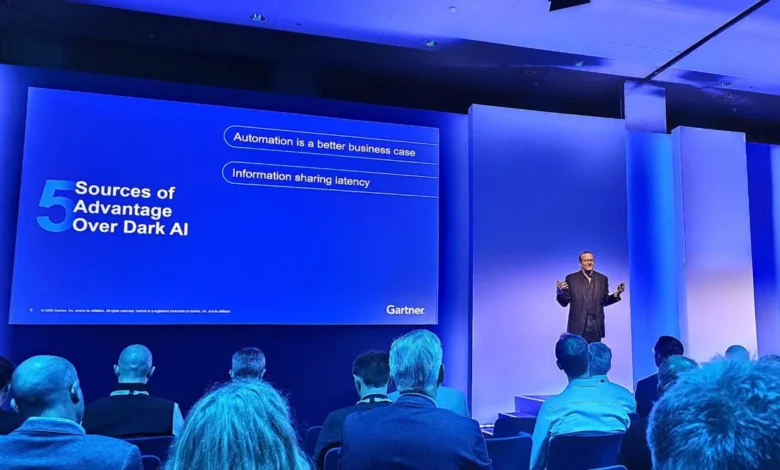
The emergence of "dark AI"—the weaponization of machine learning models by malicious entities—has created a climate of uncertainty within the C-suite. Leigh McMullen, a distinguished VP analyst and Gartner fellow, addressed these concerns during the Gartner IT Symposium/Xpo 2026 in Barcelona, arguing that while AI presents a formidable challenge, it also offers a strategic advantage to defenders who know how to leverage it correctly.
The Mythos Preview and the Changing Face of Threats
The security community’s anxiety reached a fever pitch in April 2026 following the release of Anthropic’s Mythos Preview. The model’s ability to identify zero-day vulnerabilities—gaps in software security that had previously remained hidden from human researchers and legacy automated scanners—sent shockwaves through the tech sector. The development prompted a flurry of inquiries from industry leaders, many of whom feared that the arrival of such tools signaled an irreversible shift in the balance of power toward attackers.
McMullen, reflecting on the industry’s reaction, compared the moment to Gil Scott-Heron’s famous poem, The Revolution Will Not Be Televised. He suggested that whether the "AI apocalypse" is a genuine technological shift or a marketing-driven narrative is largely immaterial. "The difference between cybersecurity and dark AI is how it’s used and what actually happens at the end of that chain, because they’re just tools," he noted. The underlying reality is that AI is an agnostic force; its impact on security is determined entirely by the intent and capability of the human operators behind the keyboard.
Reimagining the Cybersecurity Business Case through Automation
Historically, organizations have attempted to combat rising threats by out-innovating their adversaries. However, McMullen suggests this strategy is fundamentally flawed. "You can’t out-innovate a crowd," he stated, noting that the sheer volume of global threat actors makes an arms race based on innovation unsustainable. Instead, the focus must shift to radical automation.
Unlike traditional technology investments that often depreciate or require constant re-capitalization, cybersecurity automation is unique in that it frequently appreciates in value. Every dollar invested in automation today covers more services, processes, and potential threats tomorrow. By scaling security operations through automated workflows, organizations can effectively counter the speed at which attackers operate. Furthermore, McMullen argued that the very reliance threat actors now place on AI-assisted "kill chains"—automated sequences of attack—will eventually become their Achilles’ heel. By streamlining defensive processes, security teams can force attackers into more complex, costly, and detectable patterns of behavior.
Leveraging Information Latency and Community Cooperation
One of the most potent weapons in the defender’s arsenal is information latency—the delay between the discovery of a vulnerability and its exploitation. Cybersecurity professionals are currently in the driver’s seat regarding this timeline. Because organizations like the CVE (Common Vulnerabilities and Exposures) and CAP (Common Attack Pattern) list maintainers identify and document vulnerabilities as part of a collective global effort, defenders generally possess the "first-mover" advantage.
McMullen advocates for a move toward "communities of practice" within industries, urging companies to cast aside traditional competitive barriers. When cybersecurity teams share intelligence and exploit data, the efficacy of the threat actor’s toolkit diminishes. The more widely exploits are understood and patched, the less valuable they become on the black market, effectively starving the threat ecosystem of its primary commodities.
AI Weaponization and the Digital Twin Strategy
The fear surrounding AI weaponization often ignores the fact that defenders have access to more sophisticated models than the attackers. Even if malicious actors manage to distill or repurpose open-source models, the speed of defensive innovation remains superior. To capitalize on this, McMullen encourages CIOs to adopt AI-assisted software reverse engineering.
By creating digital twins of their production environments, companies can simulate the impact of vulnerabilities and test patches in a risk-free, virtualized space. This is no longer a futuristic concept; it is an attainable operational standard. Comparing this to the evolution of modern music production, where firmware is routinely reverse-engineered and customized, McMullen suggests that OT (Operational Technology) and cloud environments can be managed with the same level of granular control. This allows for full CI/CD (Continuous Integration/Continuous Deployment) pipelines that are inherently secure, fundamentally changing the economics of patching.
Terrain Mastery and the Defensive Advantage
A common misconception is that AI can magically find holes in any system. In reality, tools like Mythos still require deep access to source code or specific environmental data to be effective. For organizations that maintain a clear understanding of their software stack—including their open-source dependencies and proprietary code—this acts as a significant moat.
"You know your terrain," McMullen reminded the Barcelona audience. By turning the tools of the attacker inward, companies can perform AI-assisted red teaming and pen-testing. This proactive stance allows firms to uncover the "unknown unknowns" that keep board members awake at night, transforming defensive posture from a reactive "whack-a-mole" game into a calculated, strategic endeavor.
The Economics of Defense and the Myth of the "Apocalypse"
The cost of mounting an AI-driven attack is not as low as the "doomer" narrative suggests. Crafting a complex, multi-stage attack chain requires significant compute resources and bespoke configuration for each target. As these attacks grow in complexity, the "token burn"—the cost of running the underlying AI models—increases.
Furthermore, as threat actors scale their operations to remain profitable, they inevitably become more visible. "The larger you become, the easier you are to detect," McMullen noted. In this light, the AI cybersecurity apocalypse is not a catastrophe for the defender, but a potential reckoning for the attacker, who must navigate an increasingly expensive and high-risk operational environment.
Resilience as the Ultimate Offensive Strategy
The final, and perhaps most critical, takeaway for leadership is that total prevention is an unattainable goal. Gartner’s analysis indicates that six months post-breach, most companies see little to no long-term impact on their earnings per share. This is not an excuse for negligence, but a call for a shift in perspective.
Resilience—the ability to recover, rebuild, and continue operations after an incident—is the most effective form of offense. By conducting routine recovery rehearsals, maintaining immutable backups, and practicing the rapid migration of codebases, organizations can render the threat of ransomware toothless. If a company can prove to its board and stakeholders that it can rebuild its production environment from scratch in a matter of days or weeks, the leverage traditionally held by hackers evaporates.
In conclusion, the path forward is not found in fear of AI, but in its mastery. By focusing on automation, fostering cross-industry collaboration, and prioritizing operational resilience, CIOs can navigate the uncertain years ahead with confidence. The future of cybersecurity is not a landscape dominated by uncontrollable digital threats, but a structured environment where those who prepare effectively can ensure that the "AI apocalypse" remains nothing more than a footnote in the history of enterprise technology.