MacOS Golden Gate 27.2 Beta 2 Introduces Refined Keyboard-Triggered Volume and Brightness Sliders

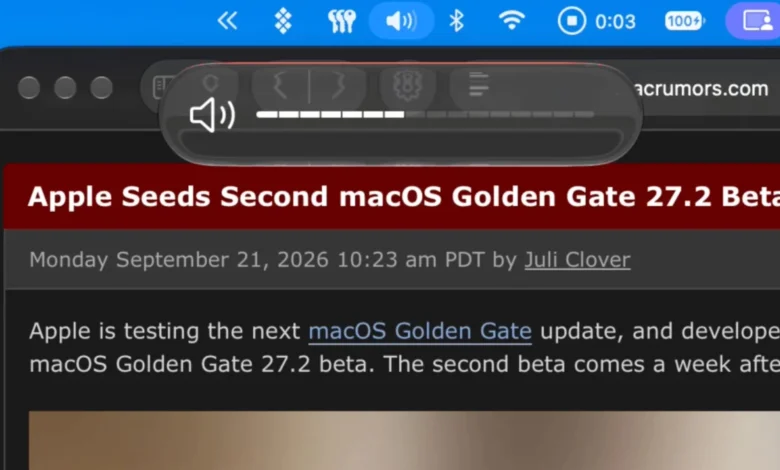
Apple has released the second beta of macOS Golden Gate 27.2 to developers, signaling a subtle but significant shift in the operating system’s visual interface language. The update brings a redesigned aesthetic to the volume and brightness sliders that appear when users adjust settings via keyboard shortcuts. This adjustment reflects Apple’s ongoing commitment to balancing the fluid, translucent "Liquid Glass" design philosophy introduced in earlier iterations of macOS 27 with the granular, functional clarity that long-time users often demand.
A Return to Segmented Precision
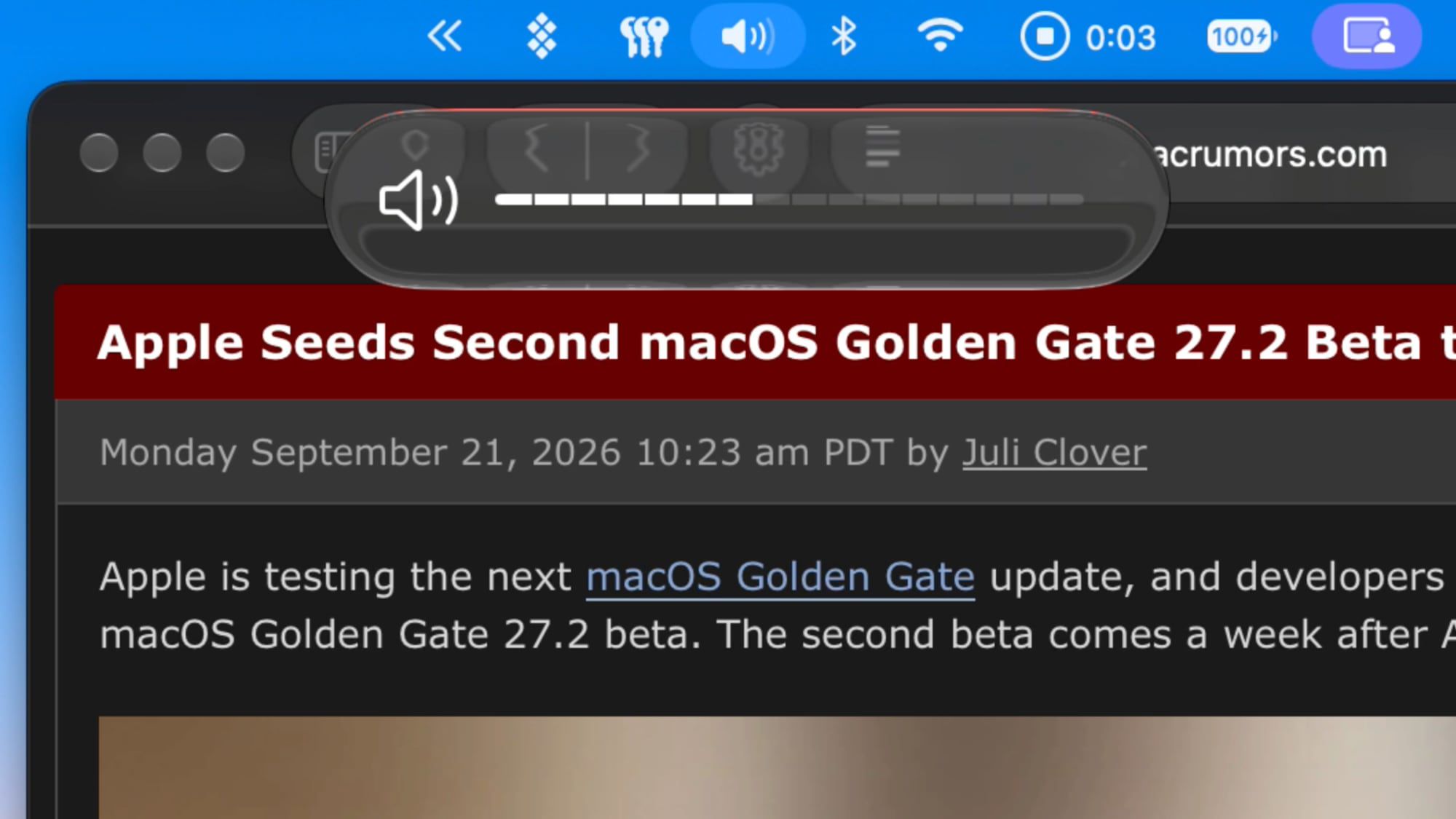
The most immediate change users will notice is the transition from a continuous, thin line to a segmented bar design. This visual evolution serves a functional purpose: providing a clearer, more tactile representation of how individual key presses impact system levels. By breaking the slider into distinct increments, Apple is seemingly addressing user feedback that requested better visual feedback during quick adjustments.
This new look acts as a stylistic hybrid. It draws inspiration from the legacy designs found in macOS Sequoia, which prioritized distinct markers, while maintaining the modern, rounded aesthetics of the current Liquid Glass framework. Furthermore, Apple has streamlined the interface by removing the dual-icon layout—previously situated at both ends of the slider—in favor of a single, larger, and more prominent icon on the left side. This change not only reduces visual clutter but also aligns the UI with the behavior of the menu bar; when a user adjusts volume, the slider appears directly beneath the corresponding sound icon, creating a cohesive spatial relationship between the trigger and the result.
It is important to note that this specific design overhaul is currently limited to keyboard-triggered adjustments. The sliders within the Control Center remain unchanged, retaining their existing, continuous-line interface. This bifurcation in design suggests that Apple is testing different interaction paradigms depending on whether the user is interacting with the system via direct input (keyboard) or secondary input (pointer/mouse within Control Center).
Chronology of macOS 27 Development
The development cycle for macOS 27, codenamed Golden Gate, has been one of the most aggressive in recent years, largely due to the integration of advanced artificial intelligence frameworks. The following timeline outlines the progression of the platform:
- June 2026: Apple officially unveiled macOS Golden Gate during the Worldwide Developers Conference (WWDC), emphasizing the "Siri AI" engine and a complete overhaul of system animations.
- September 10, 2026: Apple confirmed the broad release date for macOS Golden Gate, setting the stage for a mid-September rollout alongside iOS 27 and other platform updates.
- September 14, 2026: The official public launch of macOS 27.2 began, bringing AI-driven enhancements to the desktop ecosystem.
- September 21, 2026: Apple seeded the second beta of macOS 27.2 to developers, introducing the refined slider interface discussed here.
Industry analysts expect the final stable version of 27.2 to arrive by the end of October. This cycle is consistent with Apple’s historical "dot-two" release strategy, which typically focuses on squashing bugs discovered during the initial launch phase while introducing minor quality-of-life UI refinements.
The Role of Artificial Intelligence and System Integration
While the slider design is a minor UI tweak, it exists within the much larger context of macOS Golden Gate’s primary objective: the deep integration of third-party AI. Recent investigations by code researchers have uncovered "Model Delegation" frameworks that allow the system to treat external AI agents like Claude or ChatGPT as native extensions of Siri.
This architectural shift represents a departure from Apple’s historically closed "walled garden" approach to virtual assistants. By allowing third-party models to operate at a system level, Apple is essentially turning the Mac into a modular AI hub. The slider redesign, while simple, benefits from this focus on responsiveness. As the OS becomes more complex through AI-driven tasks, ensuring that core hardware controls (like volume and display brightness) remain intuitive and responsive is essential for maintaining a positive user experience.
Technical Implications and Design Philosophy
The shift toward segmented sliders is not merely an aesthetic choice; it is a UI/UX decision grounded in accessibility and precision. For power users, knowing exactly how many "ticks" of volume are being added or subtracted is a common requirement. In previous iterations of the Liquid Glass design, the smooth, continuous animation of the slider sometimes made it difficult to determine the precise degree of change without looking at the numeric value—which, in some UI states, is hidden.
By implementing the segmented bar, Apple is effectively providing a "visual grid" for the slider. This allows for faster cognitive processing of the adjustment. When a user presses the volume key, the immediate visual feedback of the segment filling provides a clearer sense of the change’s magnitude.
Furthermore, the decision to anchor the slider beneath the corresponding menu bar icon is an exercise in "Fitts’s Law," which suggests that the time to acquire a target is a function of the distance to and size of the target. By placing the slider directly under the icon the user is mentally focused on, Apple minimizes the eye-tracking distance required to confirm the change.
Developer and Industry Response
While the change is relatively minor, it has been met with positive sentiment within the developer community. Many testers have praised the increased legibility of the new slider. "It’s a small, functional improvement that makes the OS feel more precise," noted one beta tester on a technical forum.
However, some designers have questioned why the Control Center sliders remain excluded from this update. A unified design language is generally preferred in UI design to prevent a fragmented user experience. It is possible that the Control Center—which uses a different architectural layer for its UI elements—will receive an update in a future beta, or perhaps Apple has determined that a continuous slider is better suited for the longer, more complex interaction model of the Control Center.
Broader Context: The "Golden Gate" Era
The broader implications of the macOS 27.2 update cannot be separated from the platform’s focus on performance. Golden Gate is designed to be the foundation for the next decade of Mac computing, characterized by neural processing unit (NPU) utilization and cross-platform synergy.
The refinements seen in the 27.2 beta cycle suggest that Apple is now in a "polishing phase." After the massive architectural changes of the initial 27.0 launch—which included the introduction of the new Siri AI engine—the current focus is on refining the user’s interaction with the desktop environment. The slider update is a clear indicator that Apple is listening to user feedback regarding the "feel" of the OS. The transition from the purely minimalist, high-transparency design of the initial macOS 27 release to a more balanced, readable interface suggests a maturation of the Liquid Glass design language.
Conclusion and Future Outlook
As Apple prepares for the late October release of the finalized macOS 27.2, the update serves as a reminder that even the most advanced operating systems are defined by their smallest interactions. While the world is currently focused on the capabilities of Siri AI and third-party model integration, the success of the platform depends on how effectively these new, powerful tools are integrated into the daily, granular tasks of the user.
The new segmented sliders, while a minor point in a release cycle dominated by AI headlines, represent a commitment to the fundamental principles of interface design: clarity, responsiveness, and user-centricity. Whether or not Apple decides to roll this design change out to the Control Center in future betas remains to be seen, but for now, the update marks a refined step forward for the macOS Golden Gate ecosystem. With the release expected in just a few weeks, developers and early adopters continue to stress-test the beta, looking for other hidden refinements that define the evolving macOS experience.