The modern domestic environment has undergone a radical transformation, evolving from a simple place of residence into a sophisticated, multi-functional entertainment ecosystem. While the early iterations of smart home technology focused primarily on utilitarian convenience—automated lighting, climate control, and security—the landscape in 2026 reveals a shift toward leisure-centric integration. The smart home is no longer just a collection of connected appliances; it has become the primary venue for cinema, competitive gaming, live sports, and social interaction. This evolution marks a departure from the traditional model where consumers sought entertainment at external venues, repositioning the household as the central destination for digital experiences.
The Evolution of the Connected Living Room
The transition of the home into an entertainment hub has been a multi-decade journey, accelerated by rapid advancements in the Internet of Things (IoT) and high-speed connectivity. In the early 2010s, "smart" features were often fragmented, requiring multiple apps and manual configurations. However, by the mid-2020s, the integration of artificial intelligence and standardized communication protocols like Matter has allowed for a seamless interplay between hardware and software.
Historically, high-end entertainment required a physical excursion to a cinema, a concert hall, or a sports stadium. While these venues still hold cultural value, the convenience and quality of home-based alternatives have reached a tipping point. With the advent of 8K resolution, spatial audio, and low-latency cloud gaming, the technological gap between public venues and private residences has narrowed significantly. According to industry analysts, this shift is not merely a byproduct of technological availability but a fundamental change in consumer behavior, where the "experience economy" is being increasingly localized within the four walls of the home.
Chronology of the Smart Home Entertainment Shift
To understand the current state of the market, it is essential to trace the milestones that led to the dominance of the integrated home hub:
- 2010–2015: The Infrastructure Phase. The rollout of 4G LTE and the initial adoption of smart TVs laid the groundwork. Streaming services began to challenge physical media, though they remained secondary to cable and satellite television.
- 2016–2020: The Ecosystem Expansion. Voice assistants like Amazon Alexa and Google Assistant became central controllers for home systems. The rise of 4K content and the expansion of original programming on streaming platforms shifted consumer focus toward on-demand viewing.
- 2021–2024: The Integration Era. The global pandemic acted as a catalyst, forcing a rapid upgrade of home networks and a surge in gaming console sales. During this period, the concept of the "virtual watch party" and high-fidelity home audio systems gained mainstream traction.
- 2025–2026: The Hub Realization. By 2026, the smart home has reached a level of maturity where entertainment is the primary driver of IoT sales. Devices are no longer judged by individual specs but by how well they contribute to a holistic "scene" or "experience."
Smart TVs as the Central Gateway
The smart TV has emerged as the undisputed anchor of the digital home. According to a report from Parks Associates in early 2026, 61% of internet-connected households in the United States now utilize a smart TV as their primary device for streaming video. This dominance is driven by the TV’s ability to act as a centralized dashboard for various forms of media.
The smart TV is no longer just a display; it is a sophisticated computer capable of hosting complex applications. Modern interfaces integrate live sports, social media feeds, cloud gaming services like Xbox Cloud Gaming or NVIDIA GeForce NOW, and professional-grade fitness programs. This convergence has led to a massive expansion in market value. Fortune Business Insights projects that the global connected TV market will grow from $359.1 billion in 2026 to an estimated $505.31 billion by 2034. This growth reflects the increasing reliance on these devices as the primary portal through which consumers interact with the digital world.
Consumer Behavior and Subscription Trends
The economic model of home entertainment has shifted toward a recurring, multi-platform engagement strategy. Deloitte’s 2026 Digital Media Trends survey highlights a significant trend: the average U.S. consumer now maintains four separate video-on-demand (VOD) subscriptions. Approximately 90% of U.S. households pay for at least one streaming service, underscoring the ubiquity of this consumption model.
However, the trend goes beyond simple video consumption. "Super-fans"—consumers who engage deeply with specific franchises or genres—are spending more time and money on cross-platform experiences. A fan might watch a live match on their smart TV while simultaneously tracking betting odds on a tablet and participating in a fan community on a smartphone. This "multi-screening" behavior is a hallmark of the modern entertainment hub, where the home environment supports several layers of digital interaction at once.
The Rise of Specialized Digital Markets
As the home becomes a flexible venue, specialized entertainment sectors are seeing unprecedented growth. The online gambling and digital betting market is a prime example. Mordor Intelligence estimates the online gambling market will reach $121.93 billion in 2026, with a projected trajectory to hit $211.99 billion by 2031.
Several factors contribute to this growth:
- 5G Rollout: The deployment of 5G networks has reduced latency, making real-time betting and high-definition live-dealer games more accessible within the home.
- Regulatory Harmony: Major jurisdictions have moved toward more consistent regulations, allowing licensed apps to operate with greater transparency and safety for the consumer.
- IoT Integration: Smart home systems can now incorporate these activities into the broader "entertainment mode," where lighting and sound systems adjust to create a casino-like atmosphere for the user.
Similarly, the gaming industry has moved toward a "platform-agnostic" future. High-end gaming no longer requires a dedicated, expensive PC or console for every user; instead, smart TVs and low-cost streaming sticks can deliver AAA gaming experiences directly from the cloud.
Creating the "Atmospheric Experience"
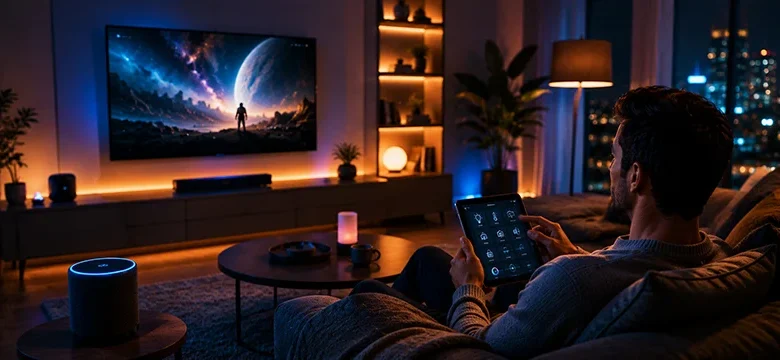
What differentiates a smart home from a traditional one is the ability to curate an atmosphere. IoT devices are now programmed to work in concert to create immersive environments. Through a single voice command or a pre-set routine, a user can initiate a "Movie Night" protocol: the smart blinds close, the Philips Hue or Govee lights dim to a cinematic amber, the smart thermostat drops the temperature to a comfortable level, and the surround sound system calibrates based on the room’s acoustics.
This level of automation has turned domestic tasks into experiential triggers. The IoT ecosystem is no longer just about saving energy or time; it is about maximizing the quality of leisure. For businesses in the IoT sector, this represents a significant shift in marketing and product development. Devices are now marketed based on their "interoperability" and their contribution to the "smart experience."
Industry Implications and Market Analysis
The economic impact of this shift is profound. Fortune Business Insights reports that smart entertainment devices are expected to dominate the smart home market in 2026, commanding a 28.78% share. North America remains the leading region, holding a 31.70% share of the global smart home market as of 2025.
For IoT manufacturers, the message is clear: hardware must be "content-aware." A smart speaker is significantly more valuable to a consumer if it automatically switches to a low-latency mode when a gaming console is turned on, or if it syncs with a smart TV to provide a wireless rear-channel audio experience.
Industry leaders have begun to respond to these trends. Statements from major tech conglomerates suggest a move toward "ambient intelligence," where the home anticipates the user’s entertainment needs. "We are moving away from a world where you have to tell your house what to do," noted one senior executive from a leading smart home platform during a 2025 industry summit. "The future is a home that understands you are sitting down for a football game and automatically optimizes your network for the lowest possible latency while dimming the lights to reduce glare on the screen."
Broader Societal and Economic Impact
The transformation of the home into an entertainment hub has broader implications for urban planning and the commercial real estate sector. As the home becomes the "destination," physical entertainment venues are being forced to innovate, offering experiences that cannot be replicated at home, such as immersive 4D effects or large-scale social events.
Furthermore, the rise of the smart home hub has intensified the debate over data privacy. With devices constantly monitoring user preferences to "optimize" the entertainment experience, the volume of personal data being collected is unprecedented. Regulators are increasingly looking at how smart TV manufacturers and IoT companies handle "viewing habits" and "environmental data," leading to new frameworks for digital privacy in the domestic sphere.
In conclusion, the smart home has transcended its original purpose of simple automation. By integrating high-fidelity media, interactive gaming, and atmospheric control, it has become a sophisticated platform for the modern entertainment economy. As connectivity continues to improve and AI becomes more deeply embedded in domestic hardware, the home will only further solidify its status as the most important venue in the digital age. The question for the future is no longer how we will go out to be entertained, but how our homes will evolve to bring the world’s entertainment to us.